

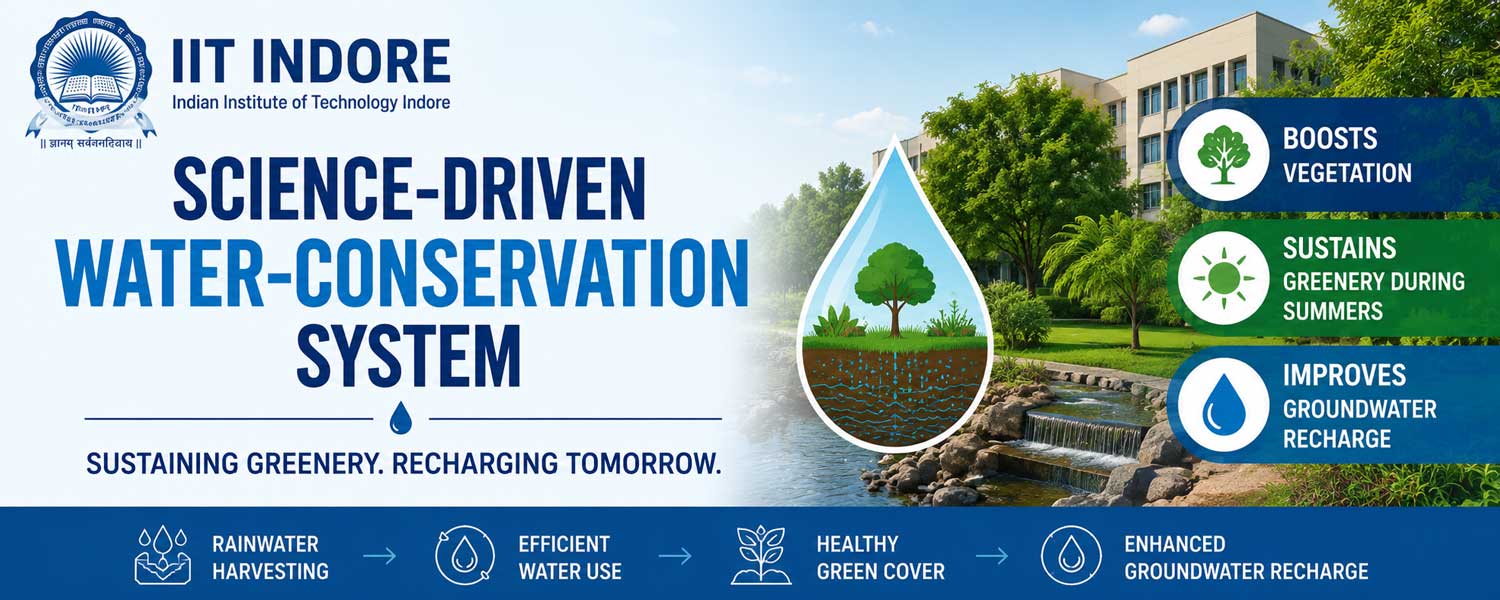
IIT Indore implements a science‑driven water‑conservation system that boosts vegetation, sustains greenery during summers, and improves groundwater recharge on campus.
IIT Indore adopts science‑based water management
The Indian Institute of Technology Indore (IIT‑I) is transforming its campus into a model of climate‑resilient infrastructure through a science‑driven water‑conservation and management system. The institute has integrated recycled water use, smart monitoring, and sustainable landscaping practices to improve water efficiency, recharge groundwater, and enhance vegetation cover.
Director Suhas Joshi described sustainability as a lived commitment rather than an abstract goal. “The visible transformation in our greenery is a powerful validation of what can be achieved when scientific insight is translated into purposeful action,” he said. The water‑conservation system now forms the backbone of IIT‑I’s broader campus‑development strategy, guiding decisions on land‑use, construction, and landscape planning.
Building ponds, check dams, and rainwater harvesting
To strengthen its water‑management infrastructure, IIT‑I has constructed water ponds, check dams, and rainwater‑harvesting systems at strategic locations across the campus. These structures capture and hold rainwater, reduce surface runoff, and allow water to percolate into the ground, thereby improving groundwater recharge and soil‑moisture retention.
The institute has also redesigned drainage networks to channel excess rainwater into storage and recharge structures instead of letting it flow away. By slowing down runoff and extending the residence time of water on the campus, the system enables vegetation to access moisture for longer periods, particularly during the hot‑summer months.
From seasonal greenery to year‑round foliage
Previously, the campus experienced seasonal vegetation decline during peak summer, with plants showing signs of stress and reduced canopy cover once surface water reserves dried up. Satellite data now show that IIT‑I’s greenery levels remain stable even in dry periods, indicating that the conservation measures have successfully increased groundwater availability and moisture retention near the root zones.
Institute officials linked this shift directly to the upgraded water‑harvesting infrastructure. With better groundwater recharge and sustained soil moisture, trees and shrubs no longer face acute water scarcity between monsoon seasons, allowing them to maintain healthier foliage and denser cover throughout the year.
NDVI trends reveal greening impact
To quantify the ecological impact of its interventions, IIT‑I analysed Normalized Difference Vegetation Index (NDVI) data from 2021 to 2025. NDVI, derived from satellite imagery, reflects vegetation density and health; higher values indicate more vigorous and extensive green cover.
Observations show a steady rise in NDVI values since 2022, confirming that vegetation density and overall greenness on campus have improved over time. Professor Manish Kumar Goyal, principal investigator of the project, highlighted the significance of this trend. “The NDVI trends from 2022 to 2025 clearly demonstrate the positive impact of water‑harvesting interventions on vegetation growth at IIT‑I,” he said.
By combining satellite‑based monitoring with on‑ground conservation measures, the team has been able to precisely track where water‑retention improvements have translated into visible greening and where further interventions may be needed. This data‑driven approach allows the institute to refine its strategies and scale practices across different zones of the campus.
Enhancing biodiversity and moderating climate
The improved water‑management system does more than sustain trees and lawns; it also supports broader ecological benefits. The institute reports that the conservation initiatives are helping reduce soil erosion, support biodiversity, and moderate local temperatures on campus.
By retaining water in the landscape, the measures increase evapotranspiration and shade cover, which together help cool the surrounding microclimate. This effect is particularly noticeable in previously exposed, heat‑prone areas where tree‑canopy expansion has created pockets of cooler, more comfortable environments for students and staff.
Improved moisture and plant diversity have also attracted a wider range of insects, birds, and small animals, enhancing the campus’s biodiversity profile. The green spaces, now more resilient to seasonal extremes, function as small ecosystems that contribute to habitat connectivity and urban‑wildlife support.
A replicable model for climate‑resilient campuses
IIT‑Indore’s water‑conservation initiative highlights how institutions can turn technical insight into tangible environmental outcomes. By embedding hydrological science, satellite monitoring, and landscape planning into its infrastructure development, the campus has created a replicable model for other educational institutions and urban campuses seeking to build climate‑resilient ecosystems.
For policymakers and planners, the project demonstrates that targeted water‑harvesting and soil‑moisture‑retention strategies can yield measurable greening and cooling benefits within a few years. As India’s cities and institutions face rising temperatures and water‑security challenges, IIT‑I’s experience offers a practical roadmap for turning campuses into green, water‑sensitive hubs that balance built infrastructure with thriving natural systems.
Disclaimer
The information in this article is based on available public sources and official statements as of the time of publication. While we aim for accuracy, we do not guarantee completeness or correctness. We advise readers to verify key details from official sources before making any decisions. The website (iitiimsamvaad.com) is not liable for any loss or damage arising from the use of this content. The authors are also not responsible for any such loss or damage.