
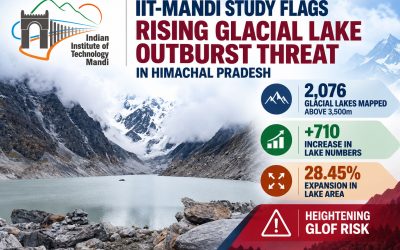
IIT-Mandi Study Flags Rising GLOF Threat in Himachal Pradesh
IIT-Mandi maps 2,076 glacial lakes above 3,500m in Himachal; lake numbers rise by 710 and area expands 28.45%, heightening GLOF (Glacial Lake Outburst Floods) risk.

IIT-Mandi maps 2,076 glacial lakes above 3,500m in Himachal; lake numbers rise by 710 and area expands 28.45%, heightening GLOF (Glacial Lake Outburst Floods) risk.
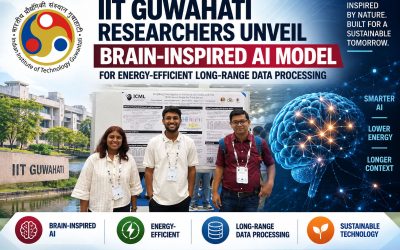
IIT Guwahati’s SustainAI Lab develops SH²RFSSM, a brain-inspired AI model that processes long data sequences with substantially lower energy than conventional AI.
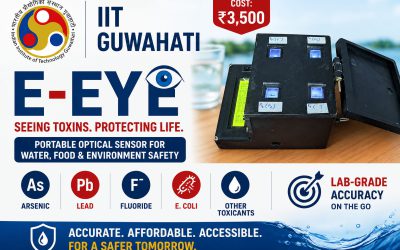
IIT Guwahati researchers create ‘E-Eye’, a Rs 3,500 portable optical sensor that detects arsenic, lead, fluoride, E. coli and other toxicants in water, food and environmental samples with lab-grade accuracy.
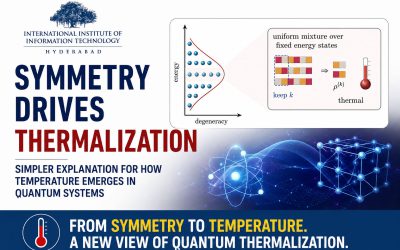
IIIT Hyderabad researchers show that symmetry alone can drive thermalization in quantum systems
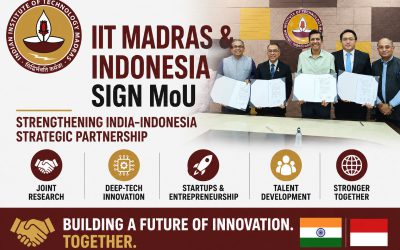
IIT Madras Global Research Foundation and Indonesia’s education ministry sign MoU to strengthen joint research, deep-tech innovation, startups and talent development under the India–Indonesia strategic partnership.
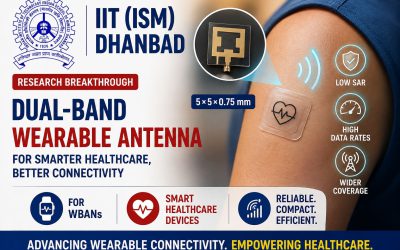
IIT (ISM) Dhanbad researchers develop a 5×5×0.75 mm dual-band wearable antenna with low SAR, high data rates and wider coverage for WBANs and smart healthcare devices.
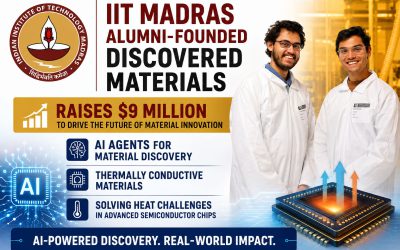
Discovered Materials, founded by IIT Madras alumni, raises $9 million to use AI agents for discovering thermally conductive materials that address heat challenges in advanced semiconductor chips.
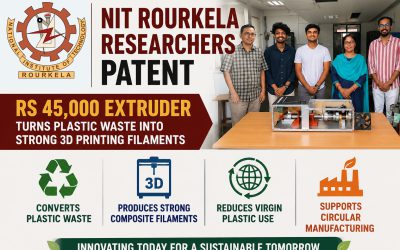
NIT Rourkela researchers patent a Rs 45,000 extruder that converts plastic waste into strong composite filaments for 3D printing
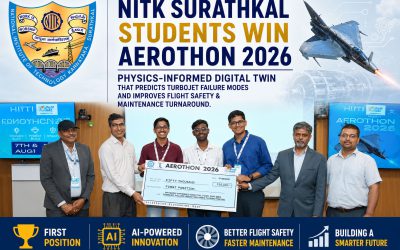
NITK Surathkal students win Aerothon 2026 with a physics-informed digital twin that predicts turbojet failure modes and improves flight safety and maintenance turnaround.
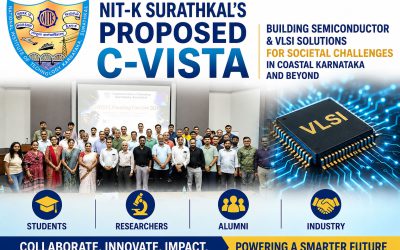
NIT-K Surathkal’s proposed C-VISTA will connect students, researchers, alumni and industry to build semiconductor and VLSI solutions for societal challenges in coastal Karnataka and beyond.