

IIT Kanpur and Gati Shakti Vishwavidyalaya Forge MoU for Logistics and Aerospace Innovation
IIT Kanpur and GSV Vadodara sign MoU on March 24 for joint education, research, and skilling in transportation, logistics tech, and aerospace training.
MoU to strengthen India’s transport and logistics ecosystem
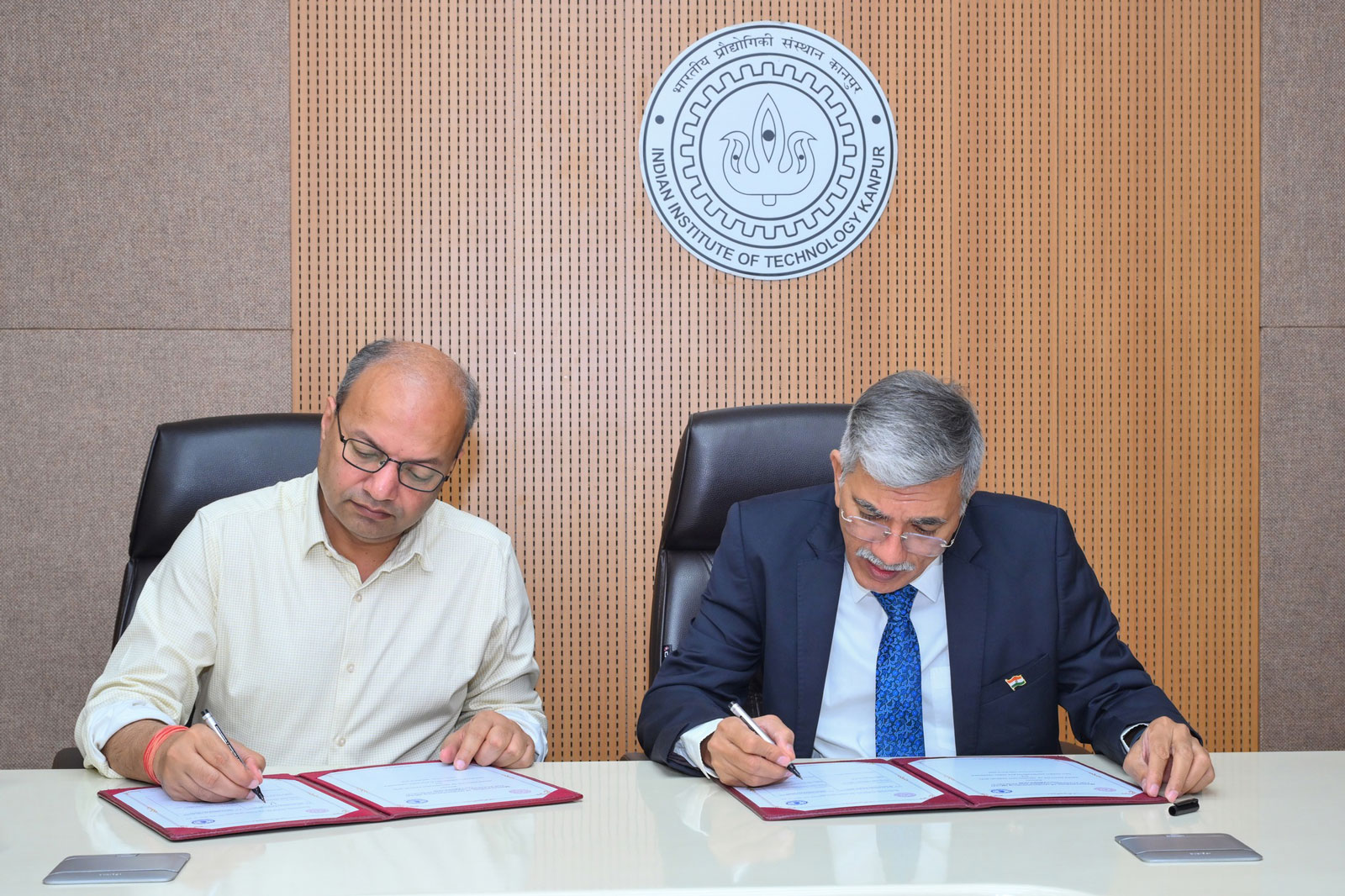
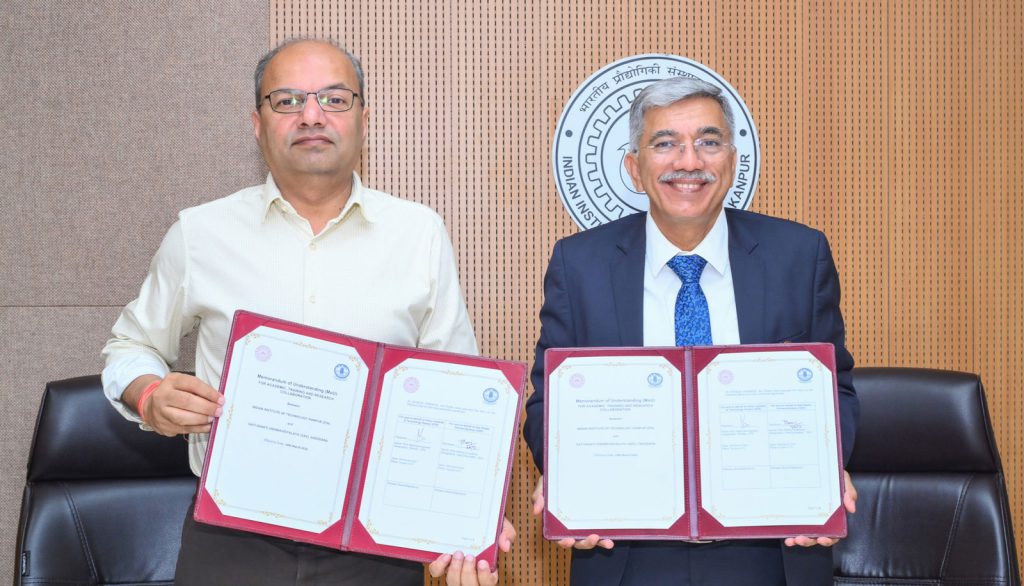
The Indian Institute of Technology Kanpur (IIT-K) and Gati Shakti Vishwavidyalaya (GSV) in Vadodara sealed a pivotal Memorandum of Understanding (MoU) on March 24. This pact targets collaboration in education, training, skilling, and research, zeroing in on transportation and logistics technology. IIT-K announced the development on Wednesday, signaling a boost for India’s infrastructure ambitions.
The MoU was signed on 24 March by Professor Manindra Agrawal, Director of IIT‑Kanpur, and Professor Manoj Choudhary, Vice‑Chancellor of GSV. The ceremony took place in the presence of several senior officials, including Professor Tarun Gupta, Dean of Research and Development at IIT‑K; Professor Yogesh Singh Chauhan, Head of the Department of Electrical Engineering and Coordinator of the Centre for Railway Research; and Professor Deepu Philip, Professor In‑charge of the Startup Incubation and Innovation Centre (SIIC) and Technopark@IITK.
Strategic focus on transport, logistics, and aerospace
The collaboration targets transportation and logistics technology, aligning closely with national priorities such as the PM Gati Shakti National Master Plan for multi‑modal infrastructure. By integrating IIT‑Kanpur’s research strength with GSV’s mandate to build a world‑class logistics university, the MoU aims to create a pipeline of skilled professionals, researchers, and innovators in this domain.
One key component of the agreement is the provision of aerospace training and advanced laboratory exposure for GSV undergraduate students at IIT‑Kanpur. Under the arrangement, selected GSV students will gain access to IIT‑K’s specialised labs, rail‑research facilities, and incubation hubs, allowing them to work on projects related to railway technologies, drone‑based logistics, smart‑mobility systems, and logistics automation.
The MoU also enables joint research initiatives between faculty and research groups at both institutes. These collaborations will focus on areas such as rail‑network analytics, supply‑chain optimisation, intelligent transport systems, and last‑mile delivery innovations, using data‑driven and AI‑based methods to improve efficiency and sustainability.
Joint training, skilling, and capacity building
Beyond classroom education, the MoU emphasises training and skilling programmes tailored to the transport and logistics sector. The two institutions plan to develop short‑term courses, certificate programmes, and industry‑oriented workshops that address emerging skill gaps in infrastructure planning, freight management, port‑and‑corridor operations, and digital‑supply‑chain technologies.
Faculty and experts from IIT‑Kanpur will contribute to curriculum design, learning modules, and teaching at GSV, while GSV will provide domain‑specific context and industry‑linked case studies from the logistics‑sector ecosystem. The arrangement also opens the possibility for Dual‑Degree or credit‑mobility programmes, where GSV students can spend semesters at IIT‑Kanpur and vice versa, depending on joint‑programme structures.
Leveraging IIT‑K’s research and incubation strengths
The involvement of Professor Deepu Philip from the Startup Incubation and Innovation Centre (SIIC) and Technopark@IITK underlines the MoU’s focus on innovation and entrepreneurship in the logistics and transportation space. The collaboration will enable GSV students and faculty to access IIT‑K’s incubation ecosystem, mentorship networks, and industry linkages, helping them convert research ideas into startups and industry‑ready solutions.
Joint projects may explore smart‑warehouse technologies, AI‑based freight‑routing algorithms, autonomous‑vehicle integration in logistics, and digital‑document and customs‑automation platforms. By embedding entrepreneurship within academic collaboration, the partnership seeks to position India as a leader in next‑generation logistics technologies rather than only as a consumer of global solutions.
Deepening railway and electrical‑engineering cooperation
The participation of Professor Yogesh Singh Chauhan, Head of the Department of Electrical Engineering and the Centre for Railway Research at IIT‑Kanpur, highlights the importance of rail‑transport and electrification technologies in the collaboration. The two institutions can jointly develop and validate technologies related to rail‑signalling systems, traction‑power management, energy‑efficiency improvements, and condition‑monitoring of rail infrastructure.
These efforts are expected to feed into both academic programmes and industry‑practice, offering students exposure to real‑life rail‑system challenges and advanced electrical‑engineering solutions. Through joint seminars, test‑bed deployments, and field visits, the MoU aims to build a strong, practice‑centred learning environment for future rail and logistics engineers.
Building a long‑term academic and innovation partnership
By signing the MoU, IIT‑Kanpur and Gati Shakti Vishwavidyalaya are laying the foundation for a long‑term strategic partnership that goes beyond symbolic collaboration. The framework enables regular faculty exchanges, joint publications, co‑hosted conferences and hackathons, and student‑project showcases, creating a continuous flow of knowledge and innovation between the two institutes.
The collaboration also supports India’s broader goal of building interdisciplinary, mission‑oriented education models, where engineering, data science, and management converge to solve complex infrastructure and logistics problems. As GSV evolves into a dedicated logistics and connectivity university, its partnership with IIT‑Kanpur will help align its academic and research agenda with cutting‑edge global trends, ensuring that graduates are equipped to lead India’s 21st‑century logistics transformation.
Disclaimer
The information in this article is based on available public sources and official statements as of the time of publication. While we aim for accuracy, we do not guarantee completeness or correctness. We advise readers to verify key details from official sources before making any decisions. The website (iitiimsamvaad.com) is not liable for any loss or damage arising from the use of this content. The authors are also not responsible for any such loss or damage.