


IIT Roorkee’s PSP study guides policy and investment for pumped storage hydropower to enable renewable integration and grid stability.
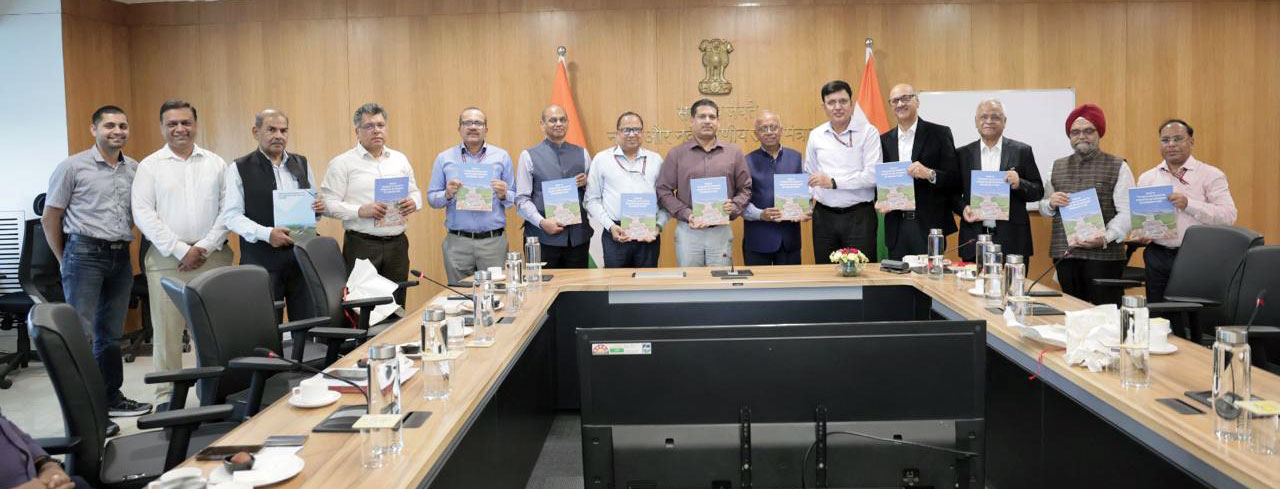
The Indian Institute of Technology Roorkee has published a landmark report, “Paving the Way Forward for Pumped Storage Hydropower (PSP) Development in India”, providing strategic direction for scaling long-duration energy storage to support India’s Net Zero 2070 commitment. Released by MNRE Secretary Shri Santosh Kumar Sarangi, the comprehensive study led by Prof. Arun Kumar addresses critical barriers and opportunities in PSP deployment.
MNRE Leadership Endorses PSP Priority
Shri Sarangi highlighted PSP’s strategic necessity: “Pumped Storage Hydropower enables large-scale renewable integration and grid stability essential for Net Zero targets. Evidence-based studies like this guide policy, investment, and implementation for sustainable energy ecosystems.”
India aims for 500 GW renewable capacity by 2030, requiring 50+ GW storage to manage solar/wind variability. Current PSP capacity stands at just 4.7 GW despite 100 GW potential across 70 identified sites, underscoring urgent scaling needs.
Systematic Framework Addresses Deployment Challenges
Prof. Kumar’s team systematically diagnoses PSP roadblocks and prescribes targeted solutions across multiple dimensions. Policy bottlenecks including fragmented clearances spanning 5+ years yield to proposed single-window approvals targeting 18 months. MoEFCC pre-clearance for 30 priority sites and unified central-state coordination streamline execution.
Financial constraints prompt innovative models: Viability Gap Funding covering 40% project costs, sovereign-guaranteed green bonds, and blended finance pooling World Bank/ADB resources with domestic development finance institutions. Land acquisition challenges leverage LULC mapping for low-conflict sites and geophysical surveys favoring off-river closed-loop configurations minimizing submersion impacts.
Private sector hesitancy dissolves through competitive bidding with performance incentives and hydrological risk allocation frameworks protecting developers from geological uncertainties.
Next-Generation Configurations Expand Opportunities
The report explores innovative PSP topologies maximizing India’s geography. Seawater PSP targets western coastline sites in Gujarat, Maharashtra, and Tamil Nadu, utilizing Arabian Sea elevation heads with variable salinity materials ensuring equipment durability. Desalination co-location enhances commercial viability.
Abandoned mine PSP repurposes 500+ exhausted coal mines in Jharkhand, Odisha, and Chhattisgarh for decentralized 50-200 MW units, achieving mine land reclamation alongside grid services. Off-river closed-loop systems comprising 80% future capacity avoid river dependencies, accelerate environmental clearances, and maintain 70% round-trip efficiency.
Economic Viability Demonstrated
Detailed levelized cost analysis confirms PSP competitiveness: ₹6.5-8.2/kWh versus battery storage’s ₹10-12/kWh with 50-year asset life spanning lithium-ion’s 8-12 years. Revenue streams include peak shaving arbitrage (₹15+/kWh), ancillary services (₹5 crore/MW-year), and renewable forecasting value creation yielding IRR >12%.
Multiple business models prove viability: pure storage configurations, pumped hydro combined cycle with gas integration, hybrid solar-PSP plants, and green hydrogen co-location serving steel/fertilizer off-takers.
Technology Indigenization Imperative
Prof. Kumar emphasized domestic R&D: “India imports 60% PSP electromechanical equipment costing USD 2 billion annually. Heavy investment in indigenous development builds export competitiveness.” Priority technologies include ternary variable-speed units expanding operating range, seawater-resistant materials, and digital twin platforms enabling real-time optimization.
IIT Roorkee’s Hydro Dynamics Lab leads prototyping while NABL-accredited testing validates domestic turbine designs meeting 90% IEC 60193 standards.
Leadership Consensus Validates Strategic Priority
IIT Roorkee Director Prof. Kamal Kishore Pant affirmed institutional commitment: “PSP enables reliable, scalable sustainable energy supporting national priorities and global climate goals.”
CEA Chairman Shri Ghanshyam Prasad reinforced: “Coordinated policy and accelerated deployment meet India’s energy demands sustainably through PSP-renewable synergy.”
Comprehensive Stakeholder Engagement
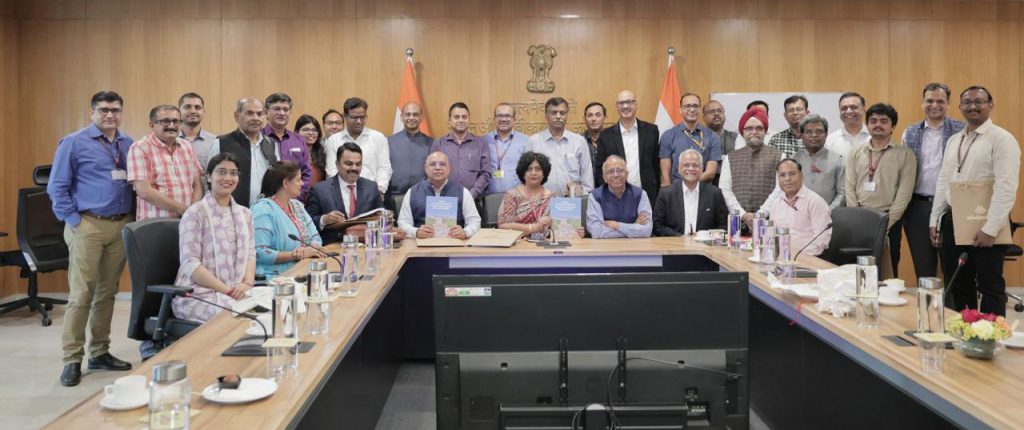
The release event convened broad representation including MNRE Additional Secretary Shri Mayank Tiwari, SECI MD Akash Tripathi, KSEBL CMD Minhas Alam, CEA officials, PSP developers (JSW, Tata Power), equipment suppliers (BHEL, ANDRITZ), consultants (Ernst & Young, PwC), CPSUs (NHPC, NTPC), state utilities, advisory firms, financial institutions (REC, PFC), and technology providers.
Phased Implementation Blueprint
Immediate Actions (2026-28): Fast-track 10 GW across 15 pre-cleared sites, pilot seawater PSP in Gujarat, establish PSP Cell within CEA.
Medium-term Scale-up (2029-35): Deploy 40 GW additional capacity, mandate 20% PSP allocation in RE tenders >500 MW, launch National PSP Mission.
Long-term Vision (2036-50): Achieve 70 GW operational capacity, export PSP technology to SAARC/Africa markets, establish India as global PSP technology hub.
Transformative Economic Impact
PSP deployment catalyzes ₹7 lakh crore investment across 50 states/UTs, generates 5 million construction jobs, and creates 50,000 permanent operations positions. Renewable curtailment falls from 15% to <2%; grid inertia improves 40%; system reliability reaches 99.98%.
Strategic advantages counter China-dominated battery supply chains. Domestic manufacturing targets 70% indigenization by 2035, leveraging India’s established 60% global hydro turbine market experience.
Global Best Practices Incorporated
IIT Roorkee integrates proven models: China’s 50 GW PSP leadership, USA’s Bath County 3 GW single facility, Europe’s variable-speed pioneers at Goldisthal (250 MW). India’s unique hydrographical advantages – Himalayan elevation heads, coastal elevation differentials – position PSP as optimal versus import-reliant batteries.
Policy Influence and Implementation Catalyst
Prof. Kumar acknowledged MNRE leadership: “Developed through nationwide stakeholder coordination, this report provides actionable PSP implementation blueprint.” The study establishes IIT Roorkee at the forefront of India’s energy discourse, bridging research-policy-industry divides.
Beyond technical excellence, the PSP roadmap delivers profound societal transformation: reliable electricity access, economic development multipliers, cleaner environment. IIT Roorkee positions India as Global South clean energy leader through this comprehensive PSP blueprint- accelerating Net Zero 2070 via strategic gigawatt deployment, policy innovation, and indigenous technology leadership.
Disclaimer
The information in this article is based on available public sources and official statements as of the time of publication. While we aim for accuracy, we do not guarantee completeness or correctness. We advise readers to verify key details from official sources before making any decisions. The website (iitiimsamvaad.com) is not liable for any loss or damage arising from the use of this content. The authors are also not responsible for any such loss or damage.