

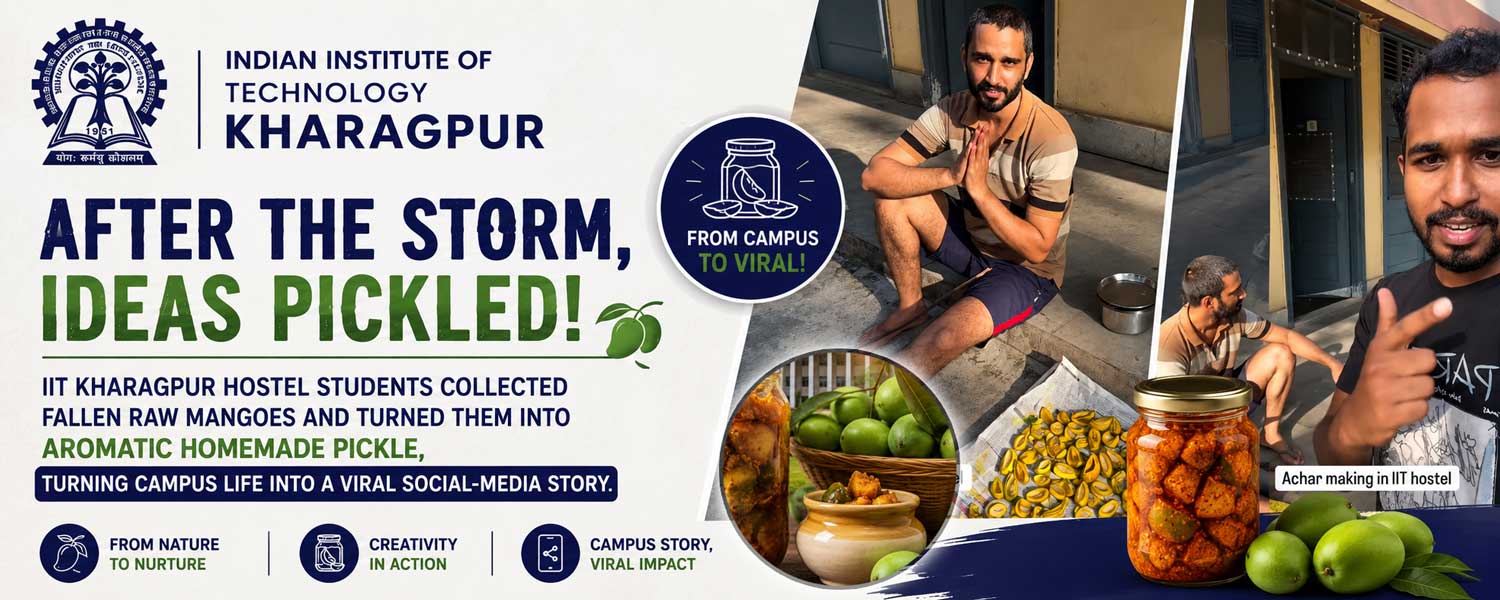
After a storm shook IIT Kharagpur, hostel students collected fallen raw mangoes and turned them into aromatic homemade pickle, turning campus life into a viral social‑media story.
Storm‑fallen mangoes inspire a hostel pickle project
Hostel life at the Indian Institute of Technology Kharagpur (IIT‑KG) turned unexpectedly wholesome after a storm swept through campus and scattered dozens of raw mangoes near the students’ hostels. Rather than letting the fruit go to waste, a group of students decided to transform the storm‑fallen mangoes into homemade achar (mango pickle) right inside their hostel kitchen. The heartwarming initiative quickly caught the internet’s attention and became a trending example of campus creativity and resourcefulness.
The students saw the fallen mangoes not as debris but as an opportunity to create a flavourful, shareable treat. By repurposing the fruit, they combined practicality with culinary tradition, turning a minor natural disruption into a collective, joyful activity.
A viral Instagram video from BC Roy Hall
The episode gained wider visibility after student Ajay Patel posted a short video on Instagram, documenting the pickle‑making session from inside BC Roy Hall. In the clip, Patel introduces his friend Narayan and jokes that IIT students do not only study engineering – they also master domestic skills like making mango pickle. The lighthearted tone and behind‑the‑scenes peek into hostel life helped the video go viral across social‑media platforms.
Patel’s caption also frames the moment as a slice of everyday campus culture, highlighting how IIT students balance academic rigour with fun, hands‑on activities. The video offers a glimpse of the informal, community‑driven spaces that often lie behind the institute’s serious academic image.
From storm to sun‑dried mango pieces
Narayan walks viewers through the process, explaining that after the recent storm, raw mangoes fell from the trees surrounding the hostel. The students collected the fruit, washed it, and carefully chopped the mangoes into pieces suitable for pickling. They then mixed the mango pieces with turmeric and salt, a traditional first step that preserves the mangoes and helps draw out moisture.
The team laid the seasoned mango pieces out to dry in the sun for a couple of days, allowing them to pickle faster and develop a firmer texture. This simple sun‑drying stage turned a random aftermath of the storm into a structured, multi‑day cooking project that brought the hostel residents closer together.
Crafting the classic spice mix
The video also highlights the spice paste prepared specifically for the achar. Narayan proudly displays the homemade blend, which includes mustard seeds, fennel, kalonji (nigella seeds), and fenugreek – all staples of a classic Indian mango pickle. He explains that the combination gives the achar its characteristic pungent, bitter‑sweet, and tangy profile, instantly recognisable to most Indian households.
By grinding and mixing the spices by hand, the students emphasized the homemade, artisanal nature of their pickle, staying away from store‑bought mixes. This attention to authenticity resonated with viewers who missed the taste and craft of traditional home‑made achar.
Campus trees and student‑driven creativity
The clip also pans to show mango trees standing within the hostel campus, underlining how close the students’ ingredients were to their daily lives. The proximity of fruit‑bearing trees to living spaces created a natural, almost poetic connection between campus ecology and hostel culture. Instead of letting infrastructure and nature feel like separate worlds, the students bridged the two through food.
The storm‑to‑pickle transformation became more than a recipe‑sharing moment; it became a symbol of student‑led innovation and sustainability, showing how small, everyday resources can be turned into shared joy and lasting memories inside an IIT hostel.
Disclaimer
The information in this article is based on available public sources and official statements as of the time of publication. While we aim for accuracy, we do not guarantee completeness or correctness. We advise readers to verify key details from official sources before making any decisions. The website (iitiimsamvaad.com) is not liable for any loss or damage arising from the use of this content. The authors are also not responsible for any such loss or damage.