


IIT Kanpur Cracks Meteorite Mystery: Shockwaves Erase Rock Magnetism at Dhala Crater
Unraveling a Cosmic Puzzle
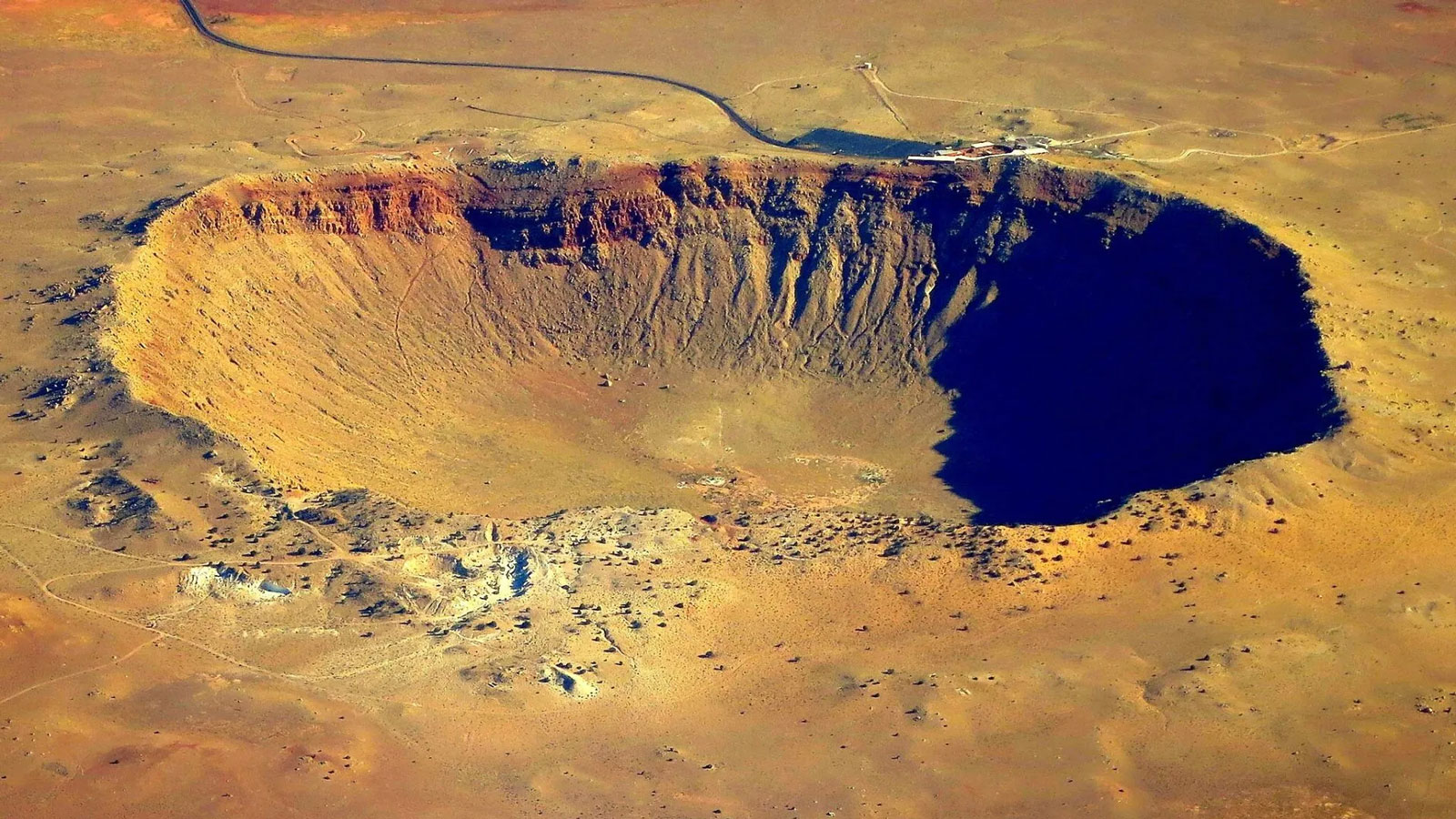
Impact craters worldwide pose a magnetic enigma: why do surrounding rocks often lose their ancient magnetic signatures? A groundbreaking study from IIT Kanpur, Savitribai Phule Pune University, and CSIR-National Geophysical Research Institute provides answers. Analyzing Madhya Pradesh’s 2.5-billion-year-old Dhala crater – India’s oldest and largest confirmed impact site (11 km diameter) – researchers reveal that meteorite shockwaves physically dismantle rocks’ internal magnetic “compasses,” scrambling atomic alignments.
This discovery, published in Geophysical Research Letters, challenges assumptions that heat alone demagnetizes rocks. It explains “magnetic dead zones” on Earth and Mars’ colossal craters, advancing planetary science and resource exploration.
Solving a planetary magnetism puzzle
Scientists may have solved a long‑standing puzzle about why rocks around massive meteorite craters often lose their magnetic properties. A team led by researchers from the Indian Institute of Technology (IIT) Kanpur, Savitribai Phule Pune University, and the CSIR–National Geophysical Research Institute discovered that the sheer force of a meteorite’s shockwave physically disrupts the internal “compasses” of atoms within rocks, effectively erasing their magnetic memories.
The study, centred on the ancient Dhala impact structure in Madhya Pradesh, could help explain the mysterious magnetic dead zones observed around large impact craters on Earth as well as on Mars, where colossal impact basins often show similarly anomalous magnetic signatures.
Probing the 2.5‑billion‑year‑old Dhala crater
The team focused on the 2.5‑billion‑year‑old Dhala crater, collecting samples of three distinct rock types: pristine impact‑affected rocks, violently shattered rocks called monomict breccia, and fully melted rocks formed during the cosmic strike. Back in the laboratory, the researchers prepared cylindrical sections of these samples for microscopic analysis, controlled heating cycles, and precise magnetic testing.
They found that the untouched impact rocks preserved a strong and stable magnetic record carried by a mineral called titanomagnetite. Within this mineral, individual atoms behave like microscopic compass needles, freezing in alignment with the Earth’s magnetic field at the time the rock formed. The melted rocks also showed strong magnetism, because they cooled from a liquid state and essentially recorded the contemporary field, much like a freshly formatted computer hard drive capturing the latest data.
However, the shattered breccia rocks displayed extremely weak and erratic magnetic signals, far fainter and more disordered than those in the other rock types. This contrast suggested that the impact process itself, rather than just heat, played a decisive role in erasing the rocks’ magnetic signatures.
How shockwaves scramble magnetic “bar magnets”
The researchers demonstrated that when the meteorite struck the Earth, the resulting shock wave generated immense pressure and temperature, causing microscopic fractures and drastic grain‑size reduction in the magnetic minerals. In normal rocks, these magnetic regions form stable multi‑domain states, where larger, well‑aligned domains act like robust miniature bar magnets and hold a coherent magnetic direction.
During the impact, the shockwave crushed these domains into much smaller, unstable sizes and physically rotated the microscopic grains into random orientations. This physical scarring effectively scrambled the internal regions that function as microscopic bar magnets, making it impossible for the shattered rock to maintain a steady, measurable magnetic field.
Scientists had long assumed that rocks lost their magnetism mainly because they were heated above a critical temperature – the Curie point – which randomises the atomic alignments and erases the magnetic record. The prevailing view also held that shock demagnetisation mattered primarily on planets like Mars, where the global magnetic field had already shut down.
This new work challenges that view, showing that shockwaves alone can severely erase a rock’s magnetic signature, even in the presence of an active, strong magnetic field like Earth’s. The Dhala study therefore provides direct evidence that shock demagnetisation operates as a powerful, temperature‑independent mechanism around impact sites.
Implications for Earth, Mars, and planetary history
The findings have practical and scientific implications for both planetary exploration and resource discovery. Understanding how violent impacts erase magnetic memories sharpens the tools geoscientists and space agencies use to map subsurface structures and interpret planetary magnetism.
Many ancient impact sites on Earth trap valuable groundwater or host large deposits of rare minerals essential for electronics, energy, and modern technology. Clearer knowledge of how impact‑related demagnetisation works helps researchers target these resources more accurately by distinguishing between intrinsic rock magnetism and impact‑related anomalies.
Beyond Earth, the study offers a better lens for reading the “magnetic diaries” of other planets, particularly Mars. By accurately interpreting how shockwaves reset magnetic signals, planetary scientists can reconstruct the timing and scale of catastrophic cosmic events that shaped the surfaces and interiors of rocky worlds. In this way, the Dhala crater research not only explains a local geophysical puzzle but also deepens our understanding of how impacts have sculpted the entire solar system.
Disclaimer
The information in this article is based on available public sources and official statements as of the time of publication. While we aim for accuracy, we do not guarantee completeness or correctness. We advise readers to verify key details from official sources before making any decisions. The website (iitiimsamvaad.com) is not liable for any loss or damage arising from the use of this content. The authors are also not responsible for any such loss or damage.