

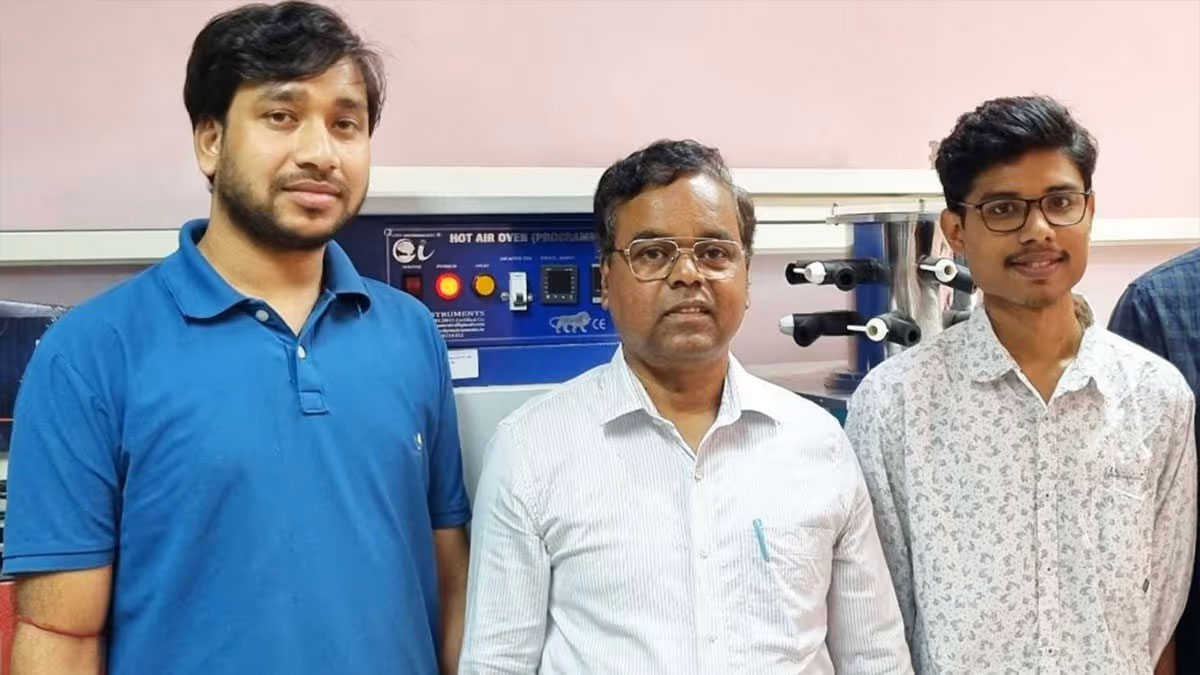
Researchers at IIT Guwahati have created a breakthrough MXene‑based material that can simultaneously produce hydrogen fuel and purify seawater, addressing two critical global challenges – clean energy scarcity and lack of safe drinking water. The innovation marks a major advance in sustainable materials for a green hydrogen economy and solar‑powered desalination.
Scientists at IIT Guwahati have developed a novel MXene‑based material capable of generating hydrogen fuel and purifying seawater, offering a dual‑purpose solution to energy and water security. The MXene catalyst enables efficient hydrogen production through electrolysis while also supporting solar‑driven desalination, making it a promising technology for India’s clean‑energy and water‑security goals.
MXenes are a family of two‑dimensional materials known for their high electrical conductivity, large surface area, and strong surface reactivity. The IIT Guwahati team engineered ultra‑thin, ribbon‑like MXene structures to boost performance. By embedding ruthenium atoms and creating oxygen‑deficient regions within the material, they enhanced charge transfer and expanded the number of active catalytic sites. This “oxygen vacancy engineering” significantly improves both the stability and activity of the catalyst in demanding electrochemical environments.
In hydrogen production, the MXene catalyst excels in the hydrogen evolution reaction (HER) during water electrolysis. It achieves an exceptionally low overpotential of just 12 mV, outperforming conventional platinum‑based catalysts and reducing the energy required to split water into hydrogen and oxygen. Lower overpotential translates into reduced electricity consumption and lower operating costs, making large‑scale green hydrogen production more economically viable. This aligns with India’s National Hydrogen Mission, launched in 2021, which aims to position the country as a global leader in green hydrogen.
The same MXene material also powers a solar‑driven desalination system. It is integrated into a Janus evaporator, a floating structure that selectively heats the top layer of water using sunlight. This design minimizes heat loss and boosts evaporation efficiency. The system achieved an evaporation rate of about 3.2 kg/m²/hour and operated continuously for five days without salt accumulation, demonstrating robust, low‑maintenance operation. Photothermal conversion – the ability of the material to efficiently turn sunlight into heat – plays a key role in both the hydrogen generation and desalination processes.
By combining electrocatalytic hydrogen production with solar‑assisted desalination, the MXene innovation highlights India’s growing strength in advanced materials science and sustainable technology. It offers a scalable pathway to cleaner energy, especially for coastal regions that rely on seawater desalination, and reinforces IIT Guwahati’s role in developing next‑generation solutions for clean energy and water security.