

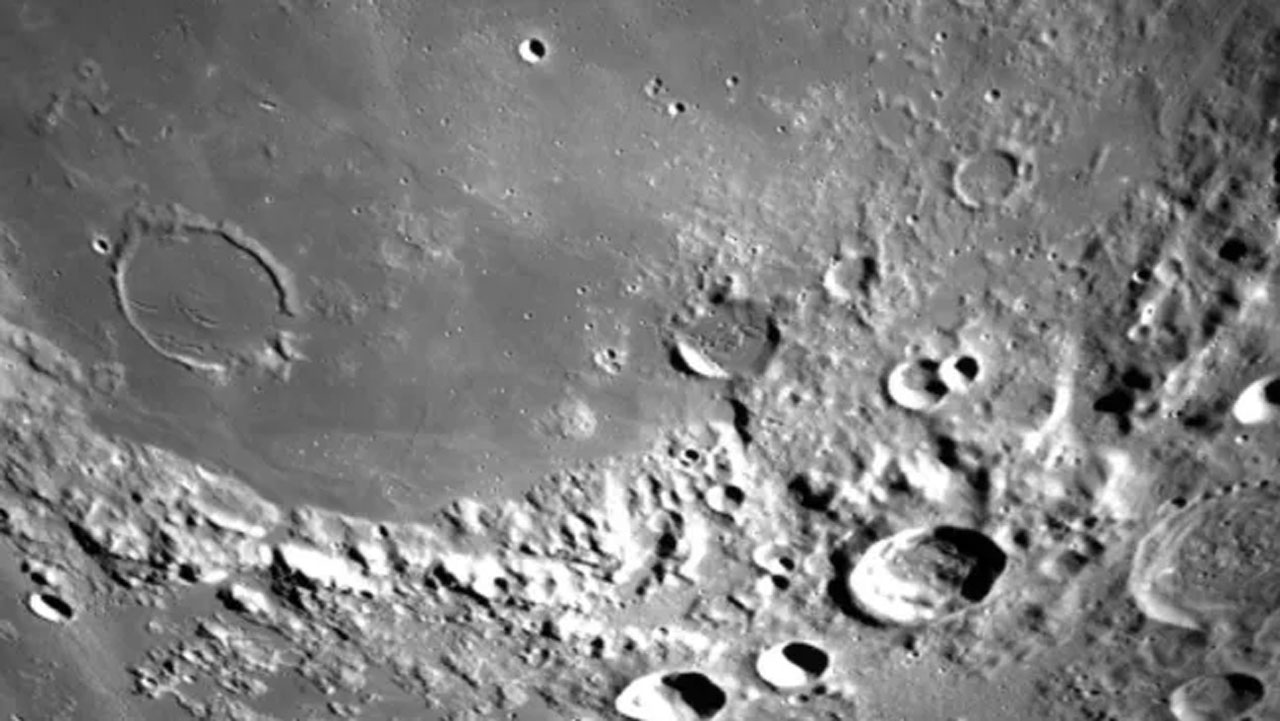
Researchers from the Indian Institute of Technology Kharagpur, in collaboration with the Physical Research Laboratory, have uncovered new insights into the Moon’s deep interior by studying ancient iron‑ and titanium‑rich rocks believed to be 4.3–4.4 billion years old. The work, grounded in high‑pressure laboratory experiments, not only helps solve a long‑standing lunar puzzle but also stands to inform the design and scientific goals of India’s upcoming Chandrayaan‑4 sample‑return mission.
In a major advance for India’s lunar ambitions, scientists from the Indian Institute of Technology Kharagpur, working with the Physical Research Laboratory, have unearthed new clues about the Moon’s earliest evolution. Their study centres on a rare class of iron‑ and titanium‑rich rocks known as ilmenite‑bearing cumulates (IBCs), thought to have formed around 4.3–4.4 billion years ago, when the Moon’s surface was covered by a vast ocean of molten rock. As this “magma ocean” cooled, dense mineral layers sank into the lunar interior, preserving a record of the Moon’s formative stages.
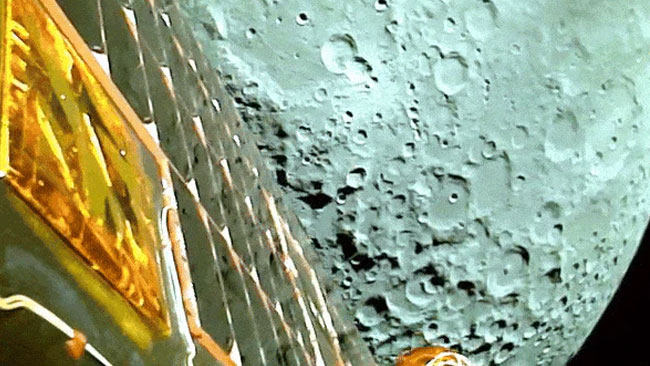
To probe these ancient materials, the research team recreated the extreme conditions of the Moon’s deep interior in the laboratory. They subjected mineral samples to pressures of up to 3 gigapascals and temperatures exceeding 1,500 °C, mimicking the environment present tens to hundreds of kilometres below the lunar surface. These high‑pressure experiments revealed how IBC rocks partially melt and interact with the surrounding mantle, generating magmas closely resembling the titanium‑rich basalts observed on the Moon’s surface.
Lead researcher Professor Sujoy Ghosh, of the Department of Geology and Geophysics at IIT Kharagpur, explained that the results provide an experimental framework to better understand the origin and chemical evolution of lunar samples. “When India brings back lunar rocks, we need to know where they formed and what they tell us about the Moon’s early history,” he said. The details of the study have been published in the peer‑reviewed journal Geochimica et Cosmochimica Acta.
One of the key findings is that the type of magma generated depends strongly on the conditions under which the IBCs melt. At higher temperatures, moderately titanium‑rich melts can directly crystallize into intermediate‑Ti basalts. At lower temperatures, however, the extremely titanium‑rich melts tend to evolve into compositions that are even more titanium‑rich and magnesium‑poor before they mix with other rising magmas. This complex interplay ultimately produces the high‑Ti basalts that earlier missions have detected in certain regions of the Moon.
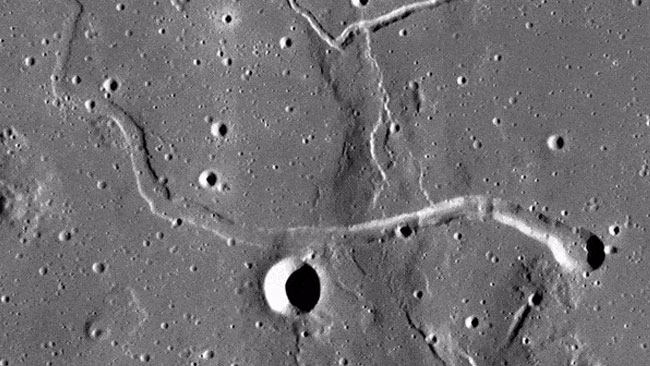
The study also clarifies how such magmas behave deep within the lunar interior. At lower pressures, these titanium‑rich melts can rise toward the surface, contributing to volcanic activity and shaping the Moon’s surface geology over time. At higher pressures, some melts may instead sink back into the mantle, indicating a dynamic system of both upwelling and downwelling – known as mantle overturn. This dual‑directional motion suggests that the Moon’s interior has been more geologically active and interconnected than previously assumed.
Beyond resolving a long‑standing scientific puzzle, the findings have direct relevance for India’s future lunar exploration programme. Chandrayaan‑4 is slated to become India’s first mission explicitly designed to collect lunar samples and return them to Earth, marking a significant technological leap beyond the soft‑landing success of Chandrayaan‑3 in 2023. The IIT‑led research will help mission planners identify where titanium‑rich materials are most likely to be found, guide the selection of scientifically valuable landing sites, and support the interpretation of any returned rock samples.
Scientists expect Chandrayaan‑4 to target a mountainous region near the Moon’s south pole, an area identified by researchers from the Space Applications Centre of the Indian Space Research Organisation (ISRO) as one of the safest and most scientifically promising landing zones. The titanium‑rich basalts studied in the IIT‑Kharagpur experiments are expected to be particularly abundant in such regions, making them prime targets for sampling.
The work also enhances the scientific value of existing orbital data, allowing researchers to better interpret what satellites and instruments are “seeing” from above the surface. By linking surface observations with the deeper processes revealed in the lab, the team is helping to build a more coherent picture of the Moon’s internal structure and thermal evolution.
As India gears up for Chandrayaan‑4, this homegrown research underlines how laboratory‑based planetary science on Earth can directly shape discoveries beyond our planet. According to Professor Ghosh, understanding how these unusual, titanium‑rich magmas form deep inside the Moon and eventually reach the surface is crucial for ensuring that the mission not only lands safely, but also answers some of the most enduring questions about the Moon’s formation and history.