
IIMV FIELD and Andhra Pradesh partner under Sampannakari to incubate 150 women-led SHG enterprises across 26 districts with mentorship, funding, and growth support.
Rural entrepreneurship push
IIM Visakhapatnam’s incubation and startup hub, IIMV FIELD, has joined hands with the Andhra Pradesh government to strengthen women-led self-help group enterprises through a new initiative called Sampannakari. Designed to promote rural entrepreneurship beyond agriculture, the programme will also incubate 150 women-led SHG enterprises from all 26 districts of the state over the next two years. It will give them structured support to grow into sustainable businesses.
Partnership with SERP
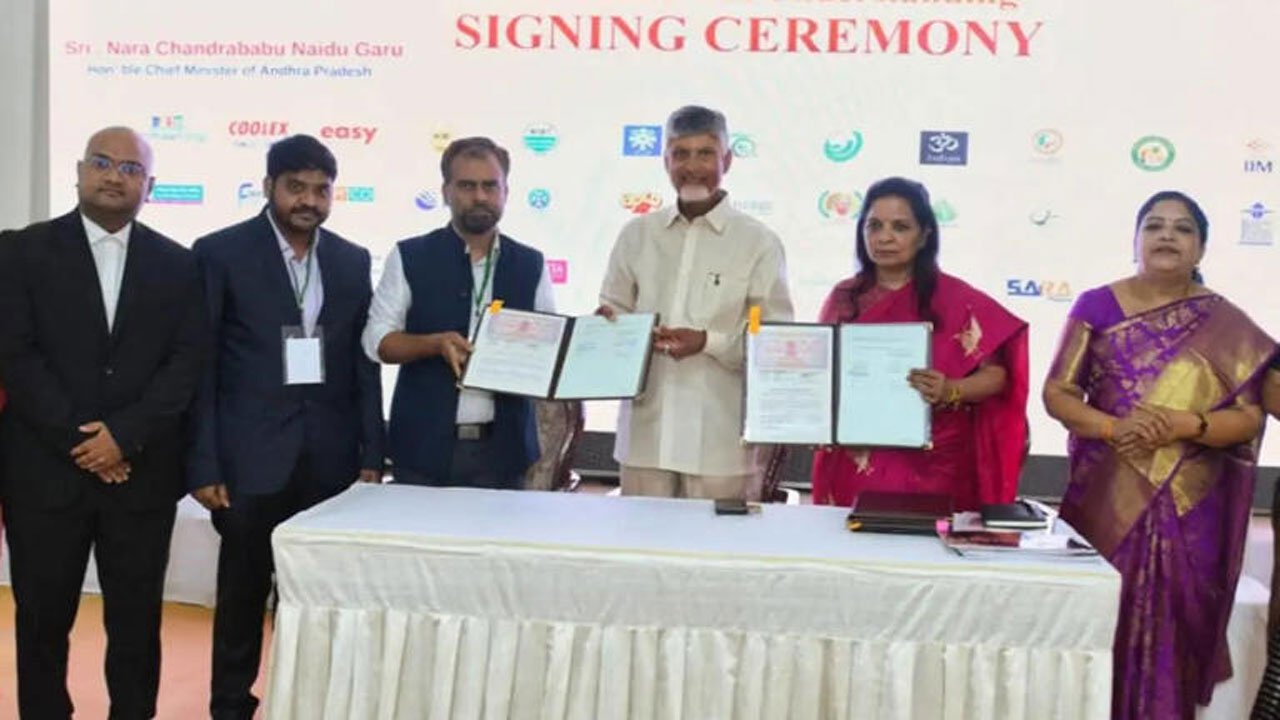
The initiative is being implemented in partnership with the Society for Elimination of Rural Poverty (SERP). It is the state-level agency that will help identify and support eligible rural enterprises. The memorandum of understanding was signed in the presence of Chief Minister N. Chandrababu Naidu, underscoring the state government’s push to build a stronger entrepreneurial ecosystem in villages. Sampannakari is also being taken up under the Deendayal Antyodaya Yojana – National Rural Livelihoods Mission of the Ministry of Rural Development.
The programme is intended to build on similar efforts in states such as Karnataka, Kerala and West Bengal. Rural enterprise development has already gained momentum through incubation-led models in those states. In Andhra Pradesh, the focus is on helping women-led SHG enterprises move beyond traditional livelihood activities and enter higher-value non-farm sectors such as food processing, small-scale manufacturing and service-based businesses. Officials believe this shift will help reduce overdependence on agriculture and create more stable income streams for rural families.
Vision for grassroots entrepreneurship
IIM Visakhapatnam director Prof. M. Chandrasekhar said the initiative is closely aligned with Chief Minister Chandrababu Naidu’s vision of “one family, one entrepreneur.” He also described Sampannakari as a grassroots entrepreneurship programme aimed at rural households rather than urban startup ecosystems.
Prof. Chandrasekhar said the initiative has been designed as a pilot that can generate insights for future policy interventions and larger-scale expansion. He said the model combines financial support, capacity building and continuous mentorship to create a structured ecosystem for rural enterprise growth. According to him, this approach is expected to contribute to sustainable livelihoods and broader rural economic development.
Selecting the enterprises
IIMV FIELD directors Dr. M. Shameem Jawed and Dr. R. Sai Shiva Jayanth said the programme aims to identify and support 150 rural enterprises across Andhra Pradesh. These enterprises may span a wide range of activities, including food processing, small manufacturing and other livelihood-oriented ventures. While the main focus is on businesses that are already operational and recording an annual turnover of around ₹12 lakh, about 10% of the selected ventures may be early-stage enterprises chosen to encourage fresh entrepreneurial ideas.
Two-year incubation support
The selected enterprises will enter a two-year incubation programme that offers continuous handholding support. This support will include assistance in improving revenue generation, strengthening branding and market positioning, optimising costs and increasing profitability. The larger goal is to help these enterprises grow by about 15% annually and evolve into scalable ventures capable of sustaining long-term expansion.
Financial support and scaling
The programme is also built around financial inclusion and market access. Enterprises that show progress and meet defined milestones will be eligible for challenge grants, which are performance-based funding support mechanisms. In addition, they may gain access to subsidised loans or zero-interest financing to meet expansion and working capital needs. Officials said these measures are intended to ease the financial constraints that often prevent rural entrepreneurs from taking their businesses to the next stage.
Outreach and applications
To ensure broad participation, IIMV FIELD and the Andhra Pradesh government have launched wide outreach efforts across the state. Pamphlets and digital resources have been distributed in districts to create awareness about the programme and encourage applications from women-led SHG enterprises. The application process has also been designed to be accessible to rural users, with a mobile-friendly platform, AI-assisted guidance and helpline support for applicants who may need help during the process.
The deadline for applications is April 15, after which the final list of selected enterprises will be prepared. Officials said the selection process will ensure representation from every district, allowing the programme to reflect the diversity of rural entrepreneurship across Andhra Pradesh.
Building a model for rural growth
By focusing on women-led self-help group enterprises, Sampannakari aims to combine economic empowerment with rural development. It seeks not only to support individual businesses, but also to create a wider culture of entrepreneurship in villages. If successful, the initiative could become a model for how academic institutions, government agencies and livelihood missions can work together to nurture grassroots enterprise and open new pathways for rural prosperity.
Disclaimer
The information in this article is based on available public sources and official statements as of the time of publication. While we aim for accuracy, we do not guarantee completeness or correctness. We advise readers to verify key details from official sources before making any decisions. The website (iitiimsamvaad.com) is not liable for any loss or damage arising from the use of this content. The authors are also not responsible for any such loss or damage.