
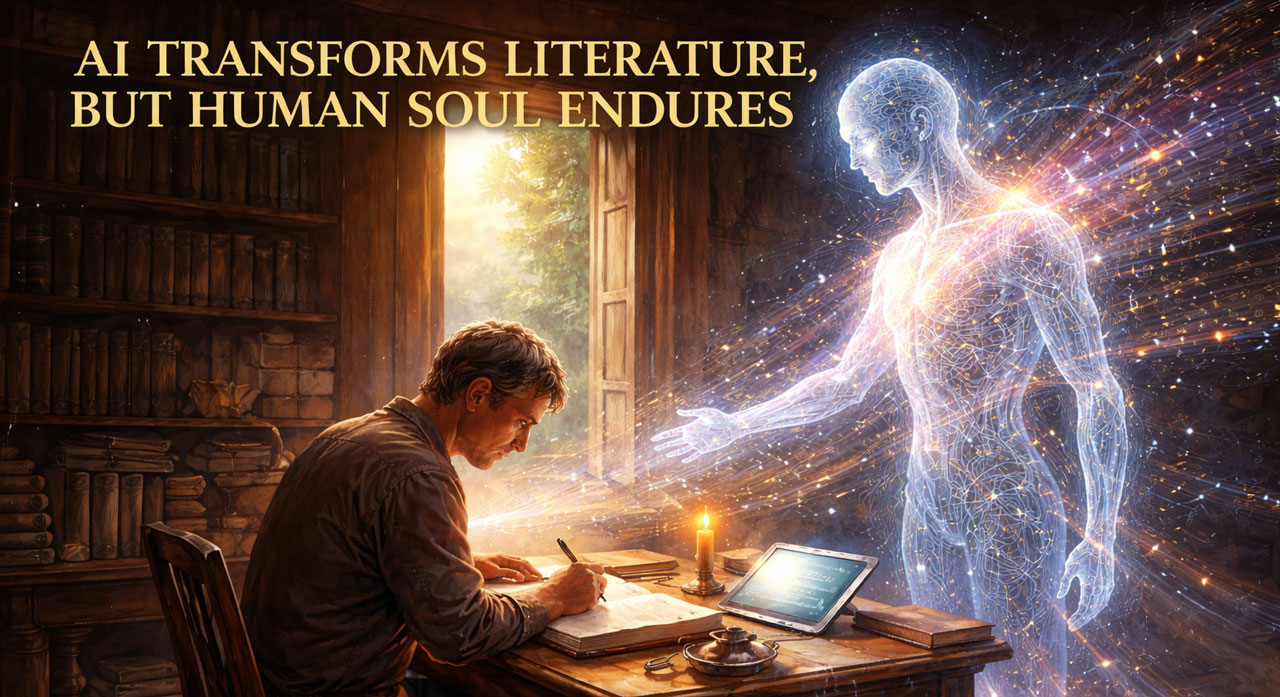
IIT Dharwad session affirms AI’s literary revolution in creation and translation, yet human emotions remain irreplaceable; Kannada digitization and responsible use urged.
Artificial intelligence (AI) is sweeping through literature and translation like a digital storm, slashing timelines from years to seconds. Experts at IIT Dharwad firmly assert it can’t touch the irreplaceable spark of human creativity, emotion, and lived experience. This consensus emerged during a thought-provoking session titled “Artificial Intelligence – Challenges and Opportunities.” Panelists dissected AI’s double-edged sword in reshaping creative fields.
AI’s Literary Leap and Its Boundaries
Technocrat Sanket Patil, delivering insights on “Impact of AI on Literary Creation and Translation,” painted a vivid picture of AI’s expansion beyond engineering into the heart of humanities. “AI isn’t just for circuits anymore – it’s revolutionizing literature,” he declared. He highlighted a game-changer: massive literary works that once demanded years of human toil for translation now process in mere seconds via advanced AI tools. Tools like neural machine translation models can handle nuances in poetry or prose at scale, democratizing access to global classics.
Yet, Patil issued a sobering caveat. “AI excels at generating poems and stories from data patterns, but it falls short of the emotional depth and raw, lived realities that human writers infuse,” he explained. “AI crunches numbers; writers distill life.” This distinction underscores a core truth: while algorithms mimic structure and style, they lack the subjective fire – joy, grief, cultural idiosyncrasies – that makes literature resonate. Patil’s words echoed a broader caution: over-reliance risks diluting authenticity in an era of AI-assisted content floods.
He pivoted to a pressing call: the digitization of Kannada language resources. Linking to ongoing efforts (as seen in initiatives like those covered by Economic Times), Patil stressed that richer Kannada datasets would supercharge AI’s accuracy for regional translations and tools. “More native data means better, culturally attuned outputs,” he urged, positioning Kannada’s digital preservation as key to equitable AI advancement in India’s multilingual tapestry.
Concerns Over Misuse and Future Impacts
Writer HL Omshivaprakash tackled “AI: Education, Employment, and Future Life,” voicing alarm at technology’s shadowy side. “AI’s potential is boundless, but uninformed use breeds misuse – like writers plagiarizing via AI-generated content,” he warned. This trend, he argued, erodes literary integrity, turning creators into copy-paste operators. Omshivaprakash advocated balanced adoption: harness AI for efficiency, but safeguard originality through ethics and education.
Chairing the session, IIT-Dharwad dean SM Shivaprasad reinforced a measured optimism. Dismissing doomsday scenarios of job apocalypse, he framed AI as a reshaping force. “It’s not elimination—it’s evolution. Jobs will transform, demanding new skills like AI literacy alongside creative prowess,” Shivaprasad said. He championed responsible deployment: treat AI as a collaborator, not a usurper, to amplify human potential in education, employment, and daily life.
Broader Calls for Literary Support
The discussion spilled into cultural advocacy. Sharana Sahitya Parishat president C Somashekar, releasing the conference president’s book during the event, pressed the state government to commit at least 1% of its ₹4 lakh crore budget to literary pursuits. “Literature isn’t a luxury – it’s the soul of society,” he asserted, linking funding to preserving heritage amid tech disruptions.
Mayor Jyoti Patil celebrated Dharwad’s legacy as a cradle of Kannada literature and music, from poet Da Ra Bendre to Navakambha stalwarts. To nurture the next generation, she announced Hubballi-Dharwad Municipal Corporation’s (HDMC) ₹25,000 financial aid for girls educated in Kannada medium. “This promotes language pride and empowers future voices,” Patil beamed, tying local pride to national progress.
Tensions simmered elsewhere: Kannada Sahitya Parishat (KSP) district president Lingaraj Angadi lambasted authorities for neglecting Parishat buildings. He threatened a hunger strike unless ₹27 lakh from the 84th Akhila Bharata Kannada Sahitya Sammelana is released, spotlighting bureaucratic hurdles in cultural upkeep.
Why This Matters Now
Held at IIT Dharwad, this session crystallized a pivotal moment. As AI tools like ChatGPT and Google Translate evolve, literature faces both boon and bane. Digitizing languages like Kannada isn’t optional—it’s essential for inclusive AI that honors India’s 22 official tongues. Responsible use, as panelists urged, means wielding tech to enhance, not erase, human essence.
In an age where AI pens haikus in seconds, the human touch – flawed, fervent, feeling – remains literature’s North Star. Events like this at IIT Dharwad bridge tech and tradition, ensuring innovation serves culture, not supplants it.
Disclaimer
The information in this article is based on available public sources and official statements as of the time of publication. While we aim for accuracy, we do not guarantee completeness or correctness. Readers are advised to verify key details from official sources before making any decisions. The website (iitiimsamvaad.com) and its authors are not liable for any loss or damage arising from the use of this content.