
IIT Gandhinagar Students Reach National Finals with Youth-Led Preventive Health Revolution
IITGN team’s peer-powered model integrates Fit India and ABHA to slash India’s 9-year healthy life gap, tackling $38B economic drain from youth illness.
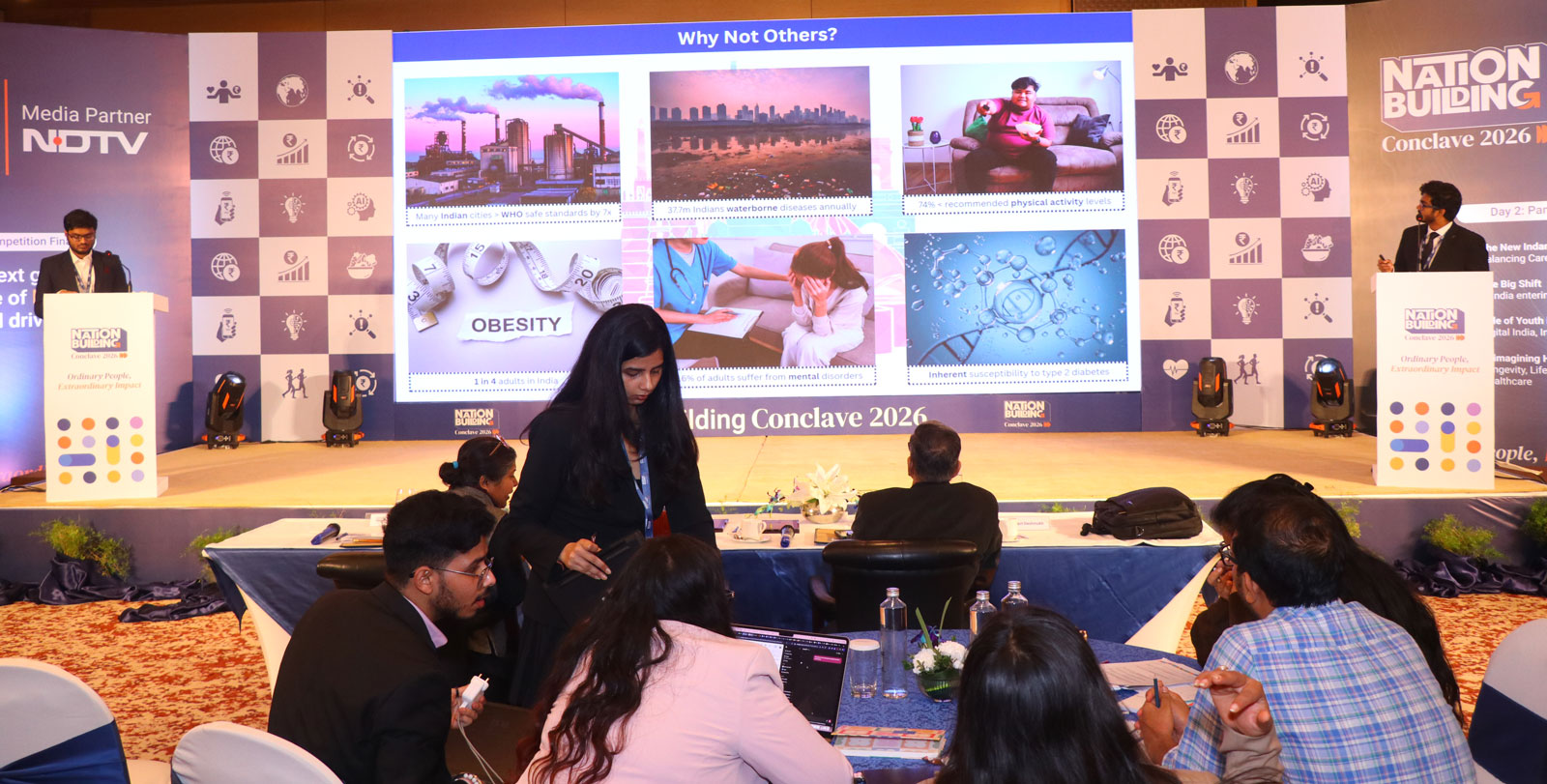
A dynamic student duo from the Indian Institute of Technology Gandhinagar (IITGN) has clinched a spot in the National Finals of the 3rd Nation Building Case Study Competition, India’s premier undergraduate showdown for healthcare innovation. Amid over 135,000 participants from 2,500+ colleges, Team Halcyora’s proposal – a scalable, peer-driven preventive healthcare network – stands out. Timed with World Health Day’s global health focus, it spotlights shifting India from “sick-care” to proactive wellness.
Tackling India’s Hidden Health Crisis
At the model’s core is India’s stark Healthy Life Expectancy (HALE) gap. While average life expectancy hovers at 67.3 years, HALE lags at 58.1 – meaning Indians endure nearly nine years battling preventable chronic ills. Non-communicable diseases (NCDs) like heart disease, diabetes, and cancer drive 61% of deaths, claiming over 5.8 million lives yearly. Tobacco claims another 114 lives hourly, with 35% of adults hooked in some form.
The economic toll is staggering: premature youth morbidity erodes $38.01 billion annually – 1.3% of GDP. Out-of-pocket health costs (39.4% of spending) impoverish 7% of households yearly. “Healthy youth fuel a wealthy economy,” the team asserts. Their vision: harness youth energy to close this gap, boosting productivity and national vitality.
Rupak Banerjee (Dual Major B.Tech in AI and Mechanical Engineering) and Aakash Kushwah (B.Tech Civil Engineering) drew from personal stakes. Rupak mourned his fit-looking grandfather, felled by a smoker’s stroke at 60. “We realized our system treats diseases post-strike, not prevents them,” Rupak says. “It’s personal – 35% tobacco use means urgency. We can’t wait for slow policies; we need a grassroots movement.”
The Peer-Powered Wellness Network Unveiled
Team Halcyora’s “Peer-Powered Wellness Network” weaves into India’s ready-made digital backbone: Fit India’s fitness push and the Ayushman Bharat Health Account (ABHA), with 670 million IDs issued. It flips passive IDs into active wellness hubs for tracking records and consent-based sharing.
The framework splits into dual layers. The lifestyle layer lets users log steps, sleep, and tobacco-free streaks via apps, earning gamified “Health Credits” redeemable for perks like discounted public transport or insurance boosts – mirroring incentives in nations like Singapore. The clinical layer syncs these habits to ABHA for provider insights, enabling early interventions without overwhelming India’s 1:834 doctor ratio.
Enter the “Sathis” – youth volunteers as community sparkplugs. Trained on campuses and neighborhoods, they generate ABHA IDs, enforce Tobacco-Free Zones, and man wellness kiosks. Peer influence normalizes habits: think college “Sathis” leading group walks or quitting challenges, embedding health into daily rhythms.
Visibility tools amplify impact: “HALE Impact Scores” on snacks and smokes – red for long-term harm, green for health boosters. “ABHA Wellness Bonds” link investor returns to community metrics, blending finance with public good.
Feasibility and Economic Blueprint
Zonal judges lauded its seamlessness with Health and Wellness Centres, Ayushman Bharat Digital Mission, and National Health Mission. A 5,000-node pilot eyes ₹40-78 crore capex for digital tweaks, kiosks, and Sathi training – frugal and scalable.
IITGN’s interdisciplinary vibe fueled this. “We solve for India: scalable, cost-effective, culturally attuned,” the team notes. AI for data crunching, mechanical engineering for kiosks, civil for zone planning – a socio-technical lens on health.
Personal Drives and Broader Implications
Rupak’s loss crystallized the mission: outward fitness masks inner risks. Aakash adds infrastructure angles, like zone designs fitting urban slums. Their pitch resonates globally – World Health Day’s “My Health, My Right” echoes preventive empowerment.
If scaled nationally, it could reclaim a decade of healthy years per person. Imagine youth Sathis transforming chai stalls into quit-smoking hubs, campuses into fitness forts. Economic wins: slashed NCD costs, poverty drop, GDP surge.
Path to National Impact
National Finals loom as a proving ground. Success could rally ministries for rollout, proving students can blueprint policy. As India eyes Viksit Bharat by 2047, Halcyora’s model offers a youth-led pivot: from illness firefighting to wellness building.
This isn’t just a competition entry – it’s a call to action. By activating digital infra and peer power, it promises a healthier, wealthier India, where ABHA symbolizes pride, not paperwork.
Disclaimer
The information in this article is based on available public sources and official statements as of the time of publication. While we aim for accuracy, we do not guarantee completeness or correctness. We advise readers to verify key details from official sources before making any decisions. The website (iitiimsamvaad.com) is not liable for any loss or damage arising from the use of this content. The authors are also not responsible for any such loss or damage.