

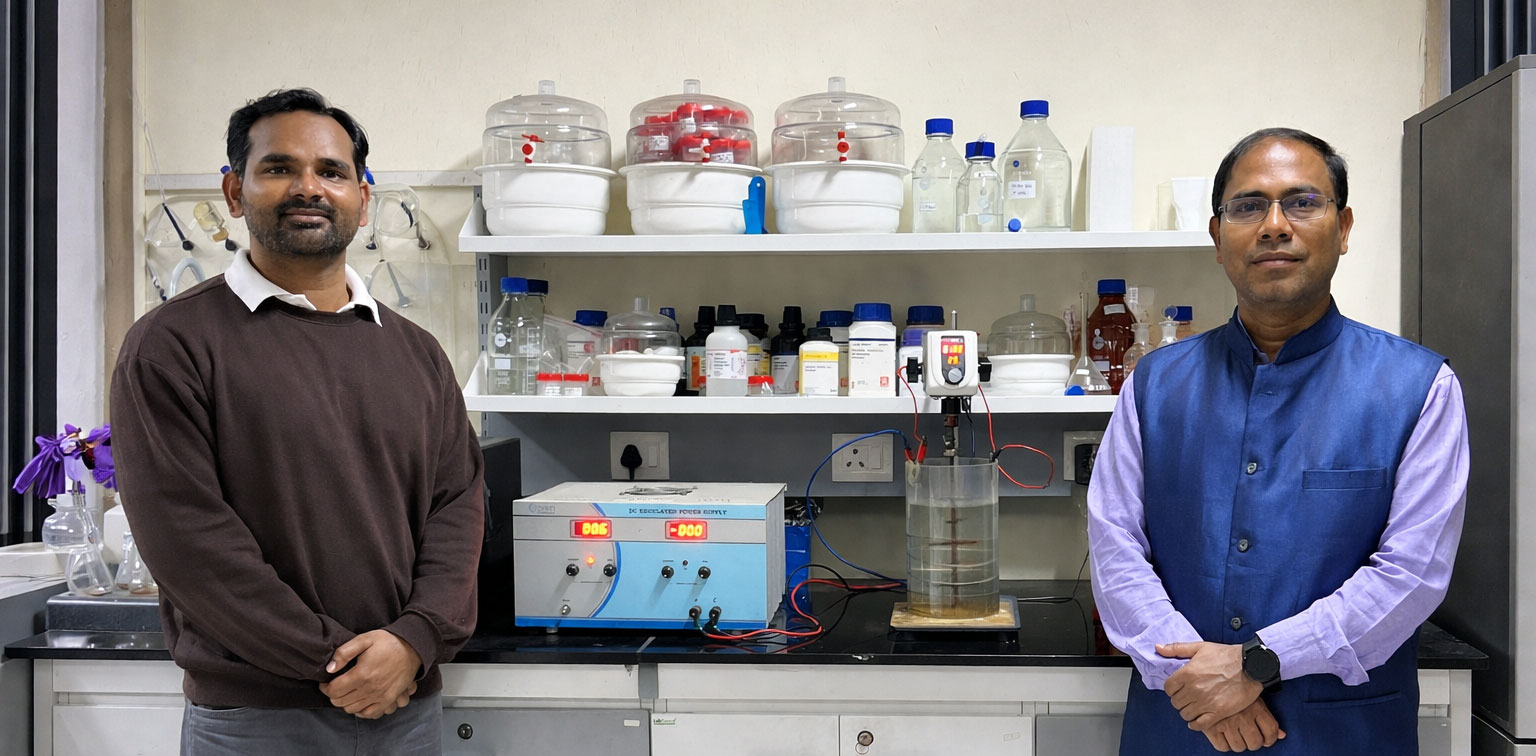
IIT Guwahati develops low-cost EC system removing 99% arsenic rapidly, ideal for rural groundwater treatment in arsenic hotspots.
Removing arsenic quickly and cheaply
Researchers at the Indian Institute of Technology Guwahati (IIT Guwahati) have developed a new water‑treatment system capable of removing up to 99% of arsenic from Arsenic-Laced contaminated water, and at a significantly lower cost than conventional methods. The newly developed electrocoagulation (EC) system can eliminate harmful contaminants within just a few minutes, making it especially useful for rural and semi‑urban regions where advanced water‑treatment infrastructure is often unavailable.
A growing public‑health crisis
Arsenic contamination has become a serious public‑health concern in several parts of the world, driven by rapid industrialisation and increasing dependence on groundwater. Long‑term exposure to arsenic can cause organ damage, skin disorders, and various forms of cancer. The institute notes that nearly 140 million people globally face unsafe arsenic levels, with India, Bangladesh, and parts of South America among the worst‑affected regions.
Existing treatment methods often rely on chemical additives, complex equipment, and lengthy processing times. Many of these systems are difficult to operate and maintain in remote areas and generate large volumes of sludge, which raises disposal costs and environmental concerns. The IIT Guwahati team’s system offers a cleaner, simpler alternative that can work under limited infrastructure.
How the new electrocoagulation system works
Unlike traditional arsenic‑removal methods, the IIT Guwahati team’s electrocoagulation system does not require external chemicals. Instead, it uses electricity to release metal ions from electrodes placed directly in the water. These ions bind with arsenic and other contaminants, causing them to clump together and form larger aggregates that can be removed easily through sedimentation or flotation.
The system also generates fine gas bubbles during the process, which help lift arsenic‑rich flocs to the surface for simplified separation and easier handling. By minimising the need for chemical dosing, the new approach reduces both operational complexity and environmental impact.
Innovative rotating‑electrode design
To improve efficiency, the research team, led by Prof. Mihir Kumar Purkait from the Department of Chemical Engineering, introduced a rotating iron anode paired with a stationary cathode. The rotating anode enhances mixing and mass transfer, ensuring that contaminants come into closer contact with the released metal ions.
The rotation also prevents thick deposits from forming on the electrode surface, a common problem in conventional electrocoagulation units that reduces efficiency and increases maintenance. “The rotating electrode design significantly boosts contaminant‑removal efficiency while keeping operational costs low,” says Prof. Purkait.
Speed, affordability, and performance
Laboratory tests conducted on both synthetic and real groundwater samples showed that the system could treat one cubic metre of contaminated water using just 0.36 units of electricity. This translates to an estimated cost of around ₹8–9 per 1,000 litres, making it highly competitive with existing technologies.
Under optimised conditions, the system reduced arsenic levels to well below the World Health Organisation’s safe limit of 10 micrograms per litre within two to three minutes. The rapid treatment time makes it suitable for community‑level plants and household‑level units serving small populations.
The system also produced much less sludge than conventional electrocoagulation setups, reducing the burden of sludge handling and disposal. This combination of fast processing, low energy use, and minimal waste positions the new EC system as a practical solution for arsenic‑affected regions.
Cost advantages over membrane‑based systems
The IIT Guwahati EC system is considerably more affordable than membrane‑ or reverse‑osmosis (RO)‑based plants, which often require high‑pressure pumps, specialised membranes, and extensive pretreatment.
For small community plants (10–50 kilolitres per day), the EC system is estimated to cost between ₹8–15 lakh, compared with ₹12–20 lakh for conventional RO‑based setups. For medium‑scale plants (100–500 kilolitres per day), the EC system costs around ₹30–80 lakh, while RO systems can exceed ₹1–2 crore.
Maintenance costs are also lower. The EC system mainly requires periodic electrode replacement, whereas RO plants need frequent membrane changes and heavy chemical dosing. The simpler design and reduced chemical use enhance long‑term cost‑efficiency and make the technology easier to manage in resource‑constrained settings.
Field validation and future rollout
The research findings have been published in the international journal Separation and Purification Technology*. The team now plans to test the system under real‑field conditions, especially in groundwater sources that contain multiple contaminants such as fluoride and iron. These tests will assess the system’s adaptability to diverse water‑quality profiles and its performance over extended operation periods.
Discussions are underway with Assam‑based M/S Kakati Engineering Pvt. Ltd. for the fabrication and installation of pilot‑scale and community‑scale units. A commercial rollout will begin once the team secures adequate funding support and completes field‑validation studies.
If successfully implemented, this electrocoagulation technology could offer a practical, scalable, and affordable solution to arsenic contamination in vulnerable regions across India and beyond, helping safeguard the health and well‑being of millions who depend on arsenic‑affected groundwater.
Disclaimer
The information in this article is based on available public sources and official statements as of the time of publication. While we aim for accuracy, we do not guarantee completeness or correctness. We advise readers to verify key details from official sources before making any decisions. The website (iitiimsamvaad.com) is not liable for any loss or damage arising from the use of this content. The authors are also not responsible for any such loss or damage.