
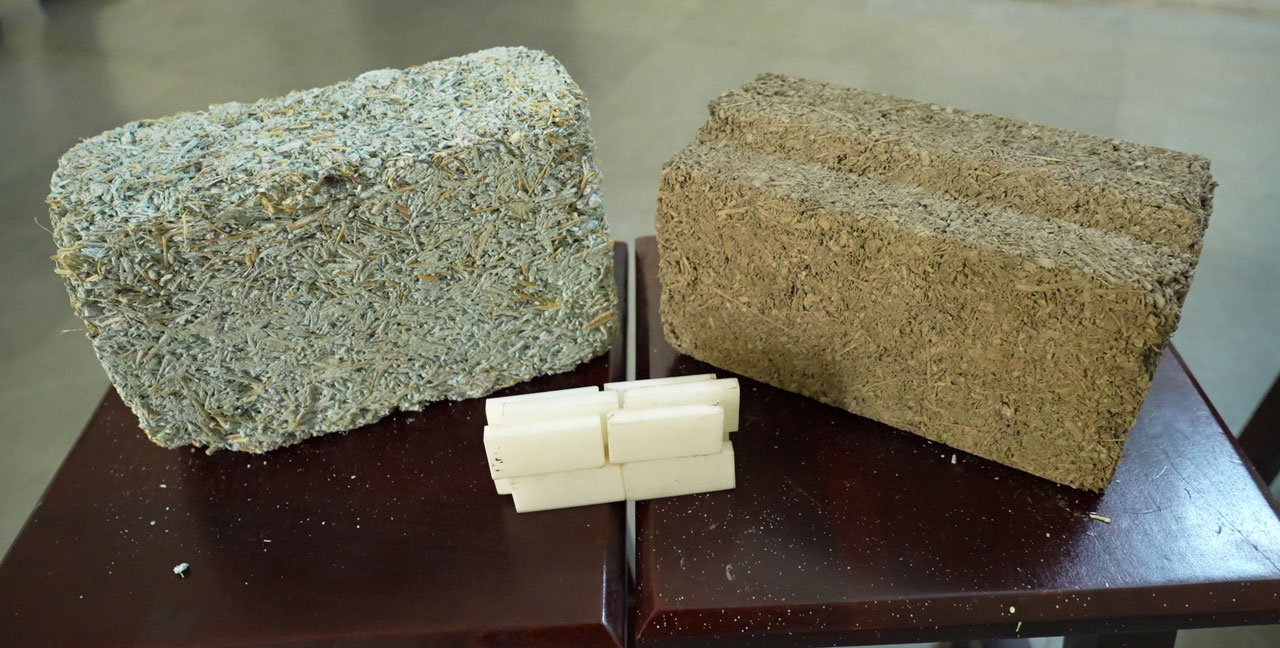
IIT Jodhpur unveils Bio-Bricks and Agro-Plastic Blocks from crop residue and plastic waste, offering carbon-negative, durable alternatives to fired bricks for sustainable construction.
IIT Jodhpur has launched a game-changing technology that repurposes agricultural residue and plastic waste into sturdy construction materials. Unveiled on Wednesday, Bio-Bricks and Agro-Plastic Blocks (APBs) promise a greener path for India’s booming building sector. Led by Assistant Professor Priyabrata Rautray from the School of Design, this innovation tackles twin crises: farm waste pollution and plastic overload. India generates 500 million tons of crop residue yearly, with stubble burning choking Delhi’s skies, while 26,000 tons of plastic waste pile up daily.
Bio-Bricks: Carbon-Negative Wonders from Crop Residue
Bio-Bricks harness paddy straw, wheat straw, sugarcane bagasse, and other farm leftovers. Unlike traditional clay bricks baked in polluting kilns at 1,000°C, these skip firing entirely. A low-energy compression process binds the fibers into robust blocks, slashing emissions by 90%. Rautray highlights their “carbon-negative” superpower: they absorb more CO2 during production and use than emitted, aiding net-zero goals.
Tests show Bio-Bricks match or exceed conventional bricks in compressive strength (up to 10 MPa), water resistance, and durability. They’re lighter too, easing transport for rural builds. In a country where construction guzzles 10% of global energy, this shift could cut sector emissions dramatically.
Agro-Plastic Blocks: Waste-to-Strength Fusion
APBs blend agri-waste with mixed plastics, including tough-to-recycle types like multi-layer packaging. Heated and compressed at moderate temperatures, the mix forms interlocking blocks ideal for walls and partitions. Superior insulation keeps interiors 5-7°C cooler, reducing AC reliance in scorching summers, and dampens noise for urban comfort.
This process diverts plastics from landfills and oceans, where they persist for centuries. Early prototypes boast fire resistance and termite-proofing, outperforming foam concretes. Rautray envisions APBs in low-cost housing, disaster-resilient shelters, and green infrastructure.
Vision: Waste as Resource, Not Burden
“Our aim is to treat waste as a resource rather than a problem,” Rautray asserts. “This technology converts agricultural and plastic waste into valuable building materials.” It directly combats stubble burning – blamed for 40% of North India’s winter smog – and plastic pollution, while fueling affordable housing demand for 20 million units yearly.
IIT Jodhpur proved viability by erecting India’s first Bio-Brick structure: a prototype pavilion on campus showcasing load-bearing walls. They’re now prototyping a full housing unit, monitoring performance under Rajasthan’s harsh climate.
Path to Scale and Impact
Scaling hinges on partnerships with panchayats, cement firms, and NGOs. Pilot plants could process 10 tons of waste daily, creating jobs in waste collection and manufacturing. Cost-wise, Bio-Bricks run 20-30% cheaper than fired ones, factoring saved fuel and carbon credits.
Government schemes like Swachh Bharat and Pradhan Mantri Awas Yojana align perfectly, offering subsidies for eco-materials. Collaborations with state pollution boards target farm hotspots like Punjab and Haryana.
Challenges include standardizing recipes for varied waste streams and BIS certification. Yet, early wins – like rural school builds – build momentum. Globally, similar efforts in the Netherlands and Singapore validate the model.
IIT Jodhpur’s push exemplifies how academia drives circular economies. By 2030, if adopted widely, it could neutralize 50 million tons of waste annually, cooling urban heat islands and slashing 100 million tons of CO2. Bio-Bricks and APBs aren’t just blocks – they’re blueprints for sustainable India.
Disclaimer
The information in this article is based on available public sources and official statements as of the time of publication. While we aim for accuracy, we do not guarantee completeness or correctness. Readers are advised to verify key details from official sources before making any decisions. The website (iitiimsamvaad.com) and its authors are not liable for any loss or damage arising from the use of this content.