

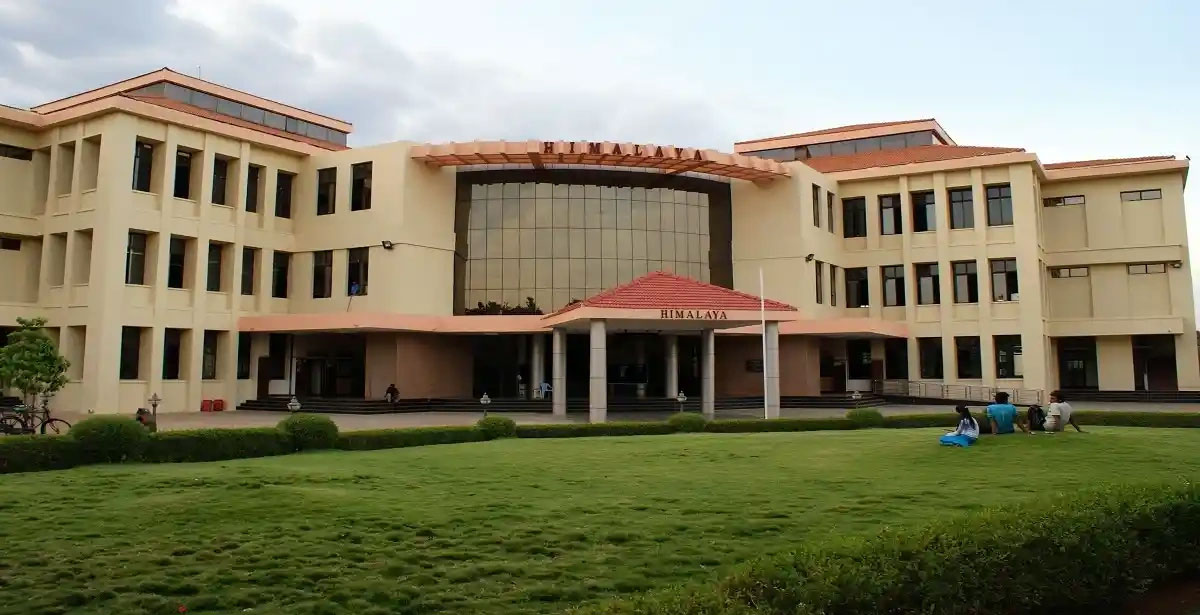
IIT Madras engineers noise-reduction tech – acoustic resonators and barriers – to cut traffic noise by 30-40 dB at Chennai junctions like Cancer Institute.
IIT Madras researchers are engineering a targeted noise-reduction technology to dramatically reduce urban noise pollution at Chennai’s busiest junctions by controlling how sound waves travel. The system centers on acoustic resonators and barrier mechanisms designed to absorb and redirect sound in high-exposure areas, promising to transform chaotic intersections into noticeably quieter zones.
Engineering Sound Wave Control
Professor S M Shiva Nagendra from IIT Madras’s Civil Engineering Department leads the effort. “We’re aiming for 30-40 decibel reductions,” he explained. “Even 30 dB would make high-noise areas feel significantly calmer – perceptible improvement for residents and commuters.” Normal conversation registers 60 dB; traffic horns hit 90+ dB. A 30 dB drop halves perceived loudness.
The system combines locally sourced and engineered materials: porous media that trap sound energy, PVC-based Helmholtz resonators tuned to traffic frequencies (500-2000 Hz), and vegetative buffers enhancing absorption. Modular designs allow rapid deployment at signalized junctions without obstructing traffic flow.
Real-World Deployment Plan
Initial validation targets Chennai’s Cancer Institute junction – a designated “silence zone” ironically plagued by hospital traffic. Post-testing, successful prototypes roll out citywide. IITM plans sensor networks for continuous performance monitoring, creating adaptive systems that adjust to traffic patterns.
Building on Comprehensive Noise Mapping
This intervention leverages IIT Madras’s recent Chennai-wide noise mapping study, released at Tamil Nadu Climate Summit 4.0. Deploying low-cost sensors across 60 locations, researchers confirmed road traffic as the dominant culprit – horns, engine braking, tire noise peaking during rush hours. Residential areas averaged 70-75 dB (WHO guideline: 55 dB daytime); hospitals exceeded 80 dB.
The study identified “noise hotspots” where multiple sources compound: junctions with elevated flyovers, poorly surfaced approach roads, and high bus/truck volumes. Findings guide precise intervention sites while establishing baseline data for long-term impact assessment.
Technical Innovation Meets Urban Need
Traditional noise barriers – concrete walls – prove ineffective in India’s dense junctions, blocking sightlines and collecting dust/graffiti. IIT Madras innovates with targeted technology: acoustic resonators tuned to traffic horns and engine rumble, porous concrete capturing shrill sounds, and green vegetative screens for natural absorption and beauty. CFD simulations optimize designs specifically for Chennai’s coastal wind patterns.
Public Health and Policy Impact
Chronic noise exposure elevates stress hormones, blood pressure, sleep disruption – linked to cardiovascular risks. Children near highways show reading delays; workers face hearing loss. Chennai’s 12 million residents desperately need relief.
The project aligns with National Clean Air Programme goals while creating deployable IP for other metros (Delhi 85 dB peaks, Mumbai hospital zones). Success could spawn IITM startup commercializing modular kits for state PWDs.
Professor Nagendra’s team targets Phase 1 prototype deployment by Q3 2026, establishing IIT Madras as India’s leader in urban acoustics solutions that balance livability with transportation needs.
Disclaimer
The information in this article is based on available public sources and official statements as of the time of publication. While we aim for accuracy, we do not guarantee completeness or correctness. We advise readers to verify key details from official sources before making any decisions. The website (iitiimsamvaad.com) is not liable for any loss or damage arising from the use of this content. The authors are also not responsible for any such loss or damage.