


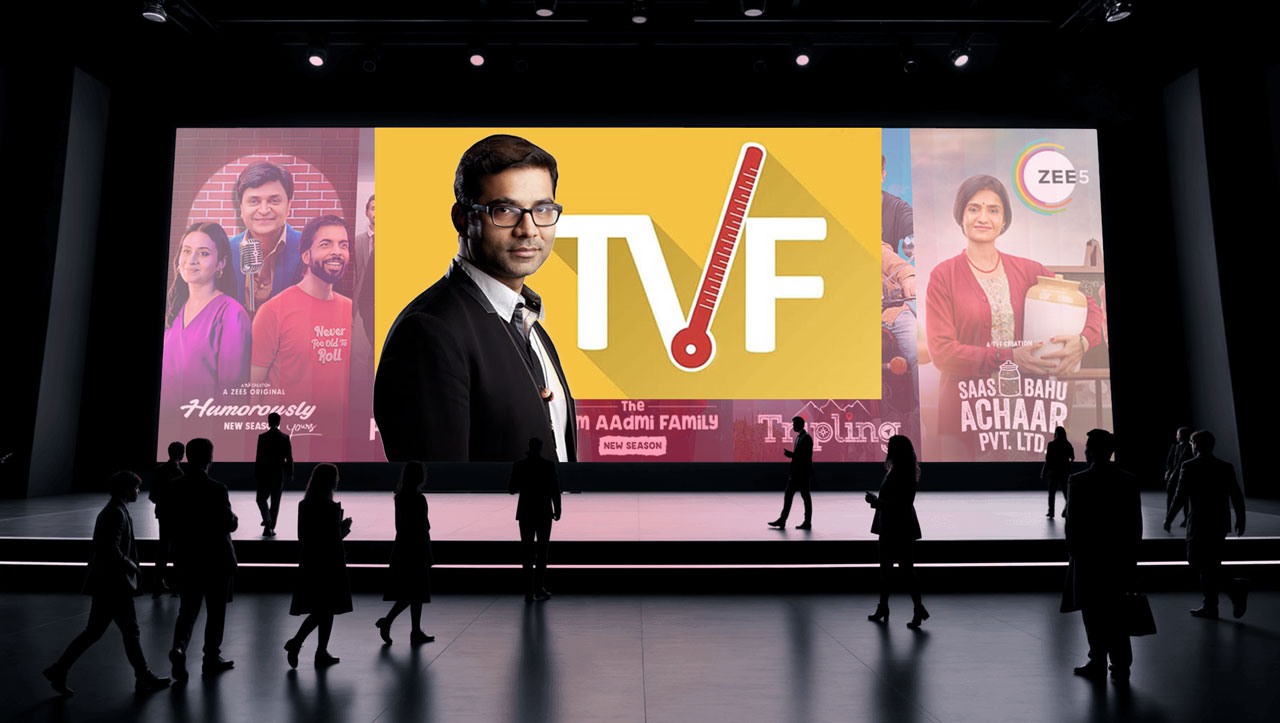
The Viral Fever (TVF), the digital media powerhouse founded by IIT Kharagpur alumnus Arunabh Kumar, clocked Rs 182.5 crore in revenue for FY25, a solid 13% jump, though profits slipped to Rs 13 crore due to surging production costs.
The Viral Fever (TVF), is one of India’s pioneering digital content creators. It has once again demonstrated its resilience in a competitive streaming landscape. In FY25, the company – operating under Contagious Online Media Network Private Limited – posted a robust revenue growth of 13%. It reached Rs 182.5 crore from Rs 161 crore in the previous fiscal year. This performance, detailed in financial statements filed with the Registrar of Companies (RoC), underscores TVF’s ability to capitalize on India’s booming digital entertainment market despite rising operational pressures.
Revenue Breakdown: Licensing Leads the Charge
At the heart of TVF’s financial success lies its core operations. It generated Rs 175.5 crore in FY25, up from Rs 154.8 crore in FY24. Licensing income dominated, accounting for a whopping 81% of this figure at Rs 142 crore. This stream reflects TVF’s strategic partnerships with major over-the-top (OTT) platforms like Netflix, Amazon Prime Video, and SonyLIV, where its popular series find wide distribution.
Diversification has also played a key role. Brand integrations brought in Rs 26.6 crore, tapping into advertisers eager to align with TVF’s youth-focused, relatable narratives. Online advertising contributed Rs 5.2 crore, while niche areas like production services (Rs 86 lakh) and talent management (Rs 82 lakh) added further depth. Beyond operations, other income sources chipped in Rs 7 crore, bolstering the top line.
This revenue trajectory highlights TVF’s evolution from a scrappy YouTube channel launched in 2010 to a full-fledged production house. Founded by Arunabh Kumar, an IIT Kharagpur mechanical engineering graduate, TVF disrupted traditional media. It did so by prioritizing authentic, youth-centric stories that resonated deeply with India’s Gen Z and millennial audiences. The struggles of engineering students, startup hustles, and everyday family quirks are few of the storylines.

Expense Pressures: Production Costs Surge
However, the growth story isn’t without challenges. Total expenses climbed 16% to Rs 169.3 crore in FY25 from Rs 145.8 crore a year earlier, eroding profitability. Production costs, the single largest outlay at Rs 120.5 crore, surged 26% from Rs 95.2 crore in FY24. This spike likely stems from investments in high-quality original content, ambitious shoots, and talent acquisition amid intensifying competition from global giants entering India.
On a brighter note, some costs moderated. Employee benefits dipped 5% to Rs 23 crore, possibly due to optimized staffing or remote work efficiencies. Finance costs held at Rs 5.5 crore, while advertising, marketing, and distribution expenses fell 17% to Rs 2.5 crore from Rs 3 crore. This signals tighter control over promotional spends.
The net result? Profit after tax declined 12% to Rs 13 crore from Rs 14.8 crore in FY24. Efficiency metrics reveal a slight strain: TVF spent Rs 0.96 to earn every rupee in FY25, up marginally from Rs 0.94 the prior year. Despite the dip, these figures paint a picture of a scaling enterprise investing for the future rather than short-term gains.
Solid Balance Sheet Supports Growth
A strong balance sheet offers reassurance. As of March 31, 2025, current assets stood at Rs 206.3 crore, including a healthy Rs 66 crore in cash and equivalents. This provides ample liquidity for upcoming projects.
TVF’s Rise: From YouTube to OTT Powerhouse
TVF’s journey is a masterclass in digital disruption. Arunabh Kumar, fresh from IIT Kharagpur, spotted a gap in Indian media: television’s formulaic soaps failed to capture the aspirations and anxieties of young India. In 2010, he launched TVF as a YouTube channel with low-budget sketches and web series like Rowdies and TVF Pitchers (2015). It chronicled startup dreams and went viral, amassing millions of views.
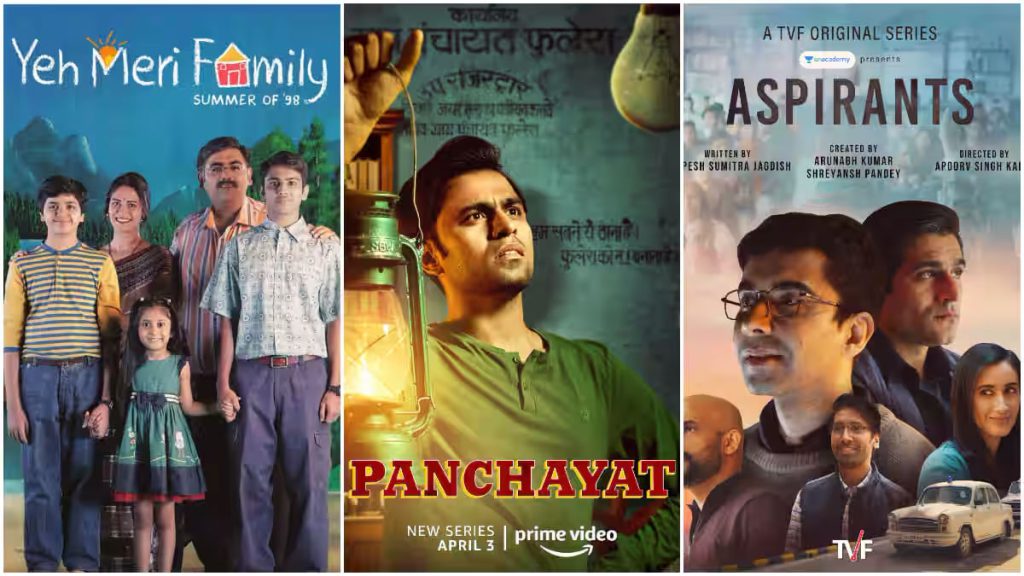
By 2012, TVF had formalized as Contagious Online Media Network Pvt Ltd, expanding into a multi-channel network. It now runs TVFPlay, its own streaming app, alongside specialized verticals like The Timeliners (dramas), Girliyappa (women-centric stories), and The Screen Patti (TSP, comedy sketches). Iconic series such as Panchayat, Kota Factory, Aspirants, and Gullak have not only dominated Indian charts but also earned international nods.
Awards and Global Recognition
The accolades speak volumes: TVF’s originals have clinched Filmfare Awards, International Emmy nominations, and Asian Academy Creative Awards. Panchayat, for instance, blends rural humor with social commentary, ranking among Netflix’s top global non-English shows. This content prowess directly fuels licensing revenues, as platforms vie for exclusive rights.
Future Outlook in India’s OTT Surge
India’s digital media sector is exploding, with over 500 million OTT users projected by 2025 and ad spends hitting $2 billion annually. TVF is well-placed to ride this wave. Its focus on “masala” storytelling – relatable characters, sharp writing, and binge-worthy formats – sets it apart from big-studio gloss. Collaborations with OTT heavyweights ensure wide reach, while in-house channels build direct audience loyalty.
Challenges persist: heightened production costs reflect talent wars and tech upgrades like 4K filming and VFX. Regulatory shifts, such as data localization and content quotas, add layers. Yet, TVF’s alumni-driven ethos—rooted in IIT rigor and entrepreneurial spirit – positions it for sustained growth.
Looking ahead, FY26 could see revenue crossing Rs 200 crore if new seasons of flagships like Aspirants S3 or fresh IPs deliver. With Rs 66 crore in cash reserves, TVF has firepower for acquisitions or international expansion.
In summary, FY25 marks TVF as a revenue powerhouse navigating profit pressures with strategic investments. Arunabh Kumar’s vision continues to viralize Indian stories worldwide.
Disclaimer
The information in this article is based on available public sources and official statements as of the time of publication. While we aim for accuracy, we do not guarantee completeness or correctness. Readers are advised to verify key details from official sources before making any decisions. The website (iitiimsamvaad.com) and its authors are not liable for any loss or damage arising from the use of this content.