

IInvenTiv 2026 Launches at IIT Dhanbad: Catalyzing India’s Deep-Tech Innovation Pipeline
IIT (ISM) Dhanbad hosts IInvenTiv 2026, national platform feeding Bharat Innovates 2026, uniting academia, industry, startups to scale Indian innovations globally.
Launching India’s Global Innovation Accelerator
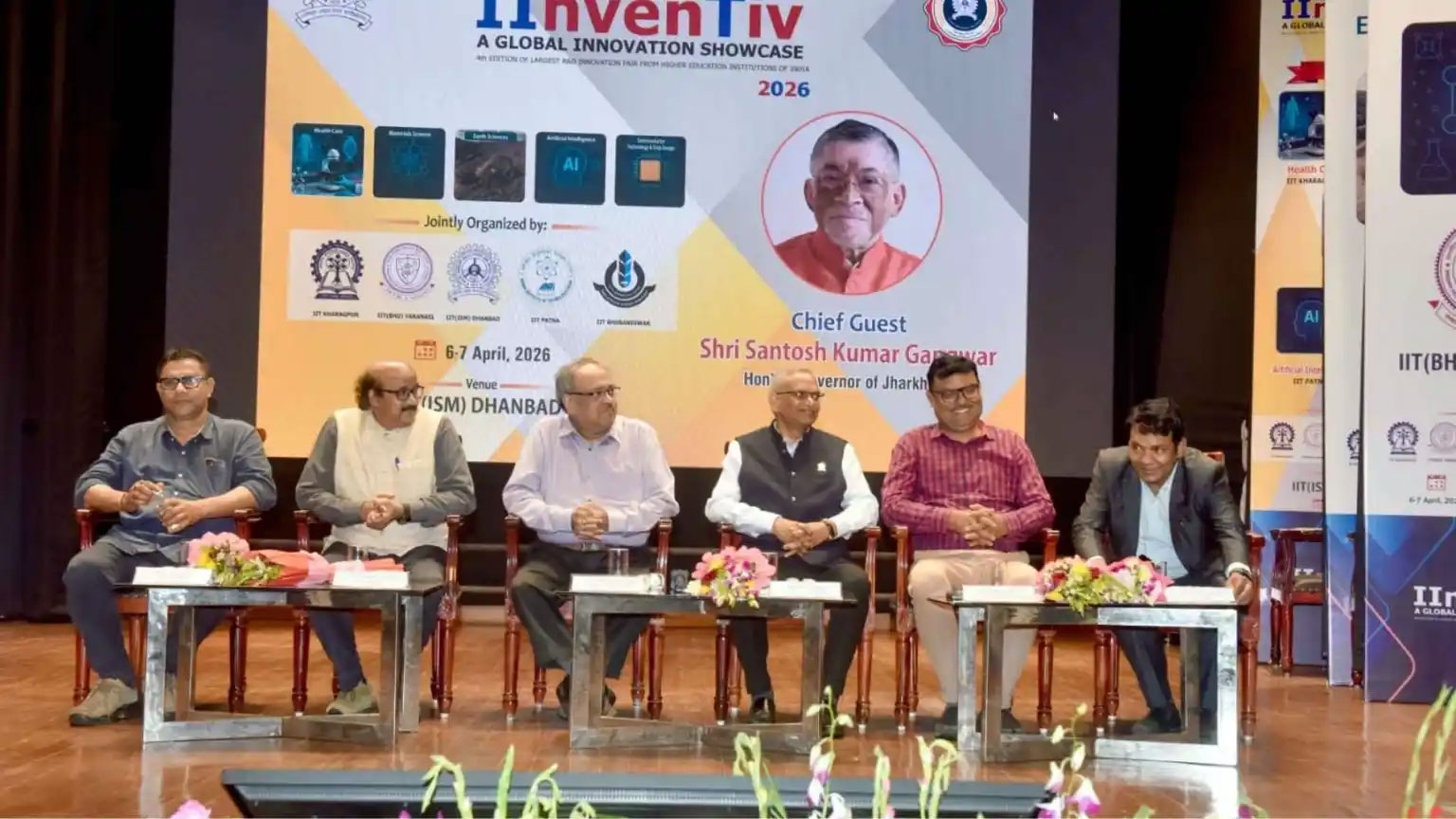
Indian Institute of Technology (ISM) Dhanbad has launched IInvenTiv 2026, positioning India as a deep‑tech innovation powerhouse and creating a structured national pathway from laboratory research to global commercialisation. The flagship R&D fair serves as the primary feeder platform for Bharat Innovates 2026, the country’s upcoming international innovation showcase. Officials from IIT (ISM) emphasise that IInvenTiv will function as a global innovation accelerator, connecting academia, industry, startups, and investors in one unified ecosystem.
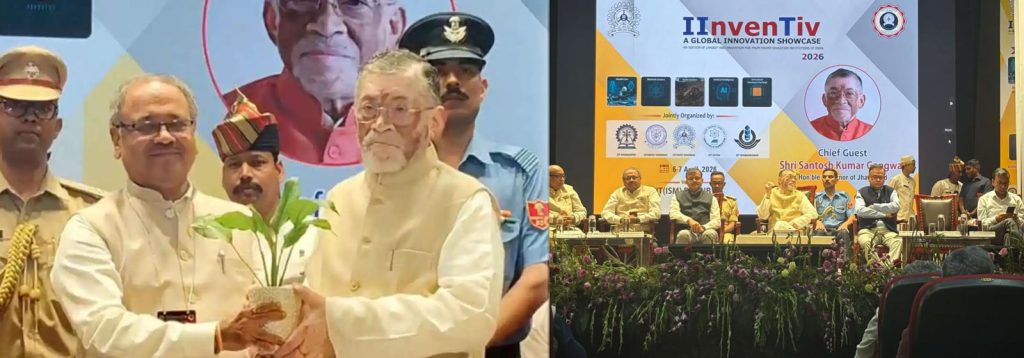
Distinguished guests, including Jharkhand Governor Shri Santosh Kumar Gangwar, industry leaders from Tata Steel, ReNew, Zuari Industries, and Dr. Sunil K. Barnwal, CEO of the National Health Authority, attended the inauguration. The event also drew academic leaders from IITs and NITs, startup founders, and venture capitalists. It depicts a shared commitment to turning India’s world‑class research into scalable, market‑ready technologies.
Governor’s vision for innovation‑led development
Chief Guest Shri Santosh Kumar Gangwar framed IInvenTiv as a strategic milestone in India’s journey toward Viksit Bharat 2047. He highlighted the country’s long knowledge lineage, from ancient universities to modern IITs. He also described innovation as a defining trait of Indian civilisation. “From Sir C.V. Raman to Dr. A.P.J. Abdul Kalam, innovation has always flowed through our veins,” he said.
The Governor linked the platform to national missions such as Atmanirbhar Bharat, Make in India, and the National Education Policy 2020, casting them as fertile ground for youth entrepreneurship. He spotlighted priority sectors – AI, healthcare, semiconductors, and critical minerals. He also urged research institutions to focus on solving real‑world problems while building scalable enterprises. For Jharkhand, he positioned IIT (ISM) Dhanbad as Eastern India’s innovation hub. A hub transforming the region from coal‑based legacy industries to a diversified, technology‑driven economy.
Industry leaders back the innovation push
The inauguration showcased strong corporate commitment to India’s innovation ecosystem. Ms. Vaishali Nigam Sinha, Co‑Founder of ReNew, called IInvenTiv “New India’s intellectual ambition”. She underlined the need for robust innovation ecosystems to drive the clean‑energy transition. She announced the launch of the ReNew Centre of Excellence, which will focus on skilling coal‑dependent communities for green‑energy jobs in solar, wind, battery storage, and green hydrogen.
Shri Sandeep Kumar, Vice President at Tata Steel, described IIT (ISM) Dhanbad as the “cradle of innovation”. He argued that sustained industry‑academia collaboration is essential for scalable R&D. “Curiosity drives progress, but collaboration delivers impact,” he said, citing Tata Steel’s long‑running research partnerships that have produced advanced, sustainable steel technologies.
Shri Athar Shahab, Managing Director of Zuari Industries, emphasised the need to reduce import dependence in critical industrial technologies. He said that indigenous innovation can build self‑reliant ecosystems and secure supply chains. Dr. Sunil K. Barnwal highlighted the role of the Ayushman Bharat Digital Mission. He also highlighted the potential of AI‑driven predictive healthcare built on India’s digital public infrastructure.
Shaping the innovation ecosystem through RDI dialogue
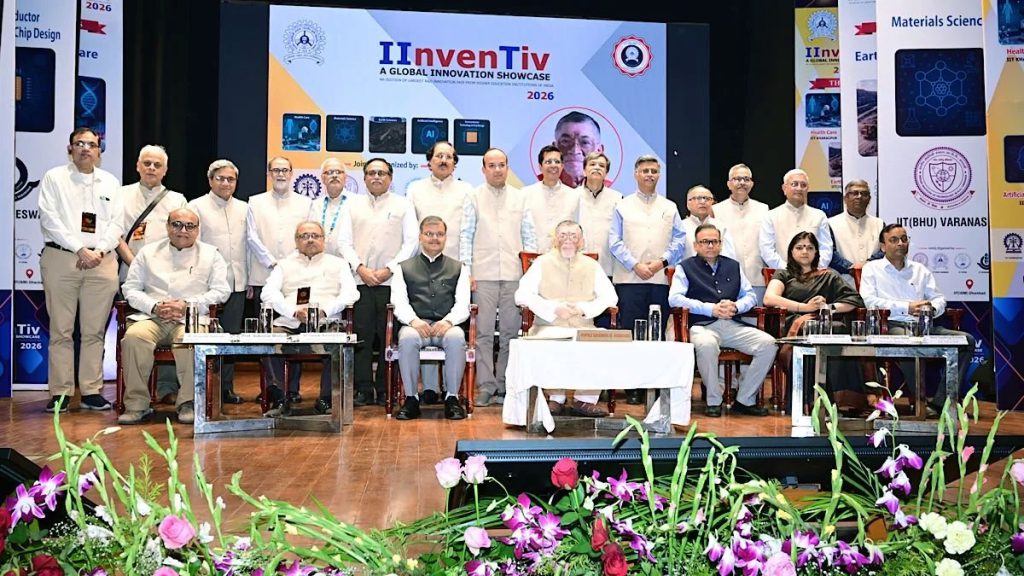
The first day of the event featured a high‑level RDI (Research, Development, and Innovation) Roundtable that brought together directors from major institutions, including Prof. Sukumar Mishra (IIT ISM Dhanbad), Prof. Devendra Jalihal (IIT Guwahati), Prof. T.N. Singh (IIT Patna), Prof. Amit Patra, and Prof. Suman Chakraborty. Alongside them, industry leaders explored commercialisation pipelines, strategic sector scaling, and global integration pathways.
Prof. Mishra outlined IInvenTiv’s core mission: “Transforming research into real‑world impact requires seamless linkages between academia, industry, and investors.” He traced IIT (ISM)’s evolution from a mining‑metallurgy institute to a deep‑tech leader. He pointed that the institute now channels its heritage into advanced materials, semiconductors, and earth‑sciences innovation.
Centres of Excellence for sustainability and critical minerals
Two new Centres of Excellence inaugurated at the event mark long‑term strategic bets. The ReNew Centre of Excellence targets the coal‑to‑green transition in Jharkhand’s coal belt, where over 10 million coal‑dependent workers will need reskilling. The centre will train workforces in solar installation, wind‑turbine maintenance, battery storage systems, and green‑hydrogen technologies. This will create alternative livelihoods and preventing economic distress during the energy shift.
The Wadhwani Centre of Excellence for Critical Minerals, supported by substantial funding, addresses India’s vulnerability in lithium, cobalt, and rare earths – materials essential for electric vehicles, renewables, and defence. The centre will drive research in exploration, mineral beneficiation, recycling, and value‑added processing. It is also aiming to skill around 50,000 workers by 2030.
Over 150 deep‑tech innovations on display
IInvenTiv 2026 featured more than 150 innovations across five thematic zones, demonstrating India’s maturity in deep‑tech domains. In the AI Zone, attendees saw predictive‑maintenance algorithms, smart‑city platforms, and agricultural AI tools that reduce crop losses by around 30%. Healthcare AI applications delivered disease detection from smartphone‑based images with approximately 95% accuracy, showcasing accessible diagnostics for rural India.
The Semiconductor Zone displayed chip‑design tools, fabless semiconductor startups, and gallium‑nitride (GaN) power electronics. It outperform silicon‑based systems by about 40% in efficiency. Early‑stage quantum‑computing prototypes pointed to potential breakthroughs in cryptography and complex simulations.
The Healthcare Zone announced portable diagnostics, telemedicine robots, and advanced biotech platforms, including 3D‑printed organ‑mimicking structures and CRISPR‑based therapies. These innovations aim to ease India’s severe 1:1,000 doctor‑to‑patient ratio and expand preventive, point‑of‑care medicine.
Materials, earth sciences, and sectoral leadership
The Materials Science Zone unveiled graphene composites up to 200 times stronger than steel, and perovskite solar cells with 28% efficiency. It also displayed self‑healing concrete that can extend infrastructure life by around 50 years. These technologies have direct applications in construction, defence, and renewable‑energy infrastructure.
In the Earth Sciences Zone, researchers demonstrated AI‑driven seismic analysis tools that reduce mining accidents by up to 70%, sustainable extraction methods, and carbon‑capture materials that permanently bind CO₂. These innovations support safer mining, efficient resource use, and aggressive climate‑action targets.
Plenary sessions and venture‑capital insights
Five plenary sessions deep‑dived into sectoral roadmaps.
Semiconductor Technology discussions, moderated by Prof. Devendra Jalihal, covered India’s $10‑billion incentive scheme, the need to produce 1 million chip designers by 2030, and the push for indigenous EDA tools and 3‑nm‑class process technologies.
In the Artificial Intelligence plenary, chaired by Prof. T.N. Singh, speakers debated ethical AI frameworks, data governance, and sovereign‑AI capability as a national‑security imperative. The Materials Science plenary, was led by Prof. Amit Patra. The session explored graphene, 2D materials, and metamaterials with multi‑trillion‑dollar potential. It also explored the Healthcare Innovations plenary, moderated by Prof. Suman Chakraborty, focused on blending Ayushman Bharat’s digital infrastructure with private‑sector innovation.
A Venture‑Capital Fireside Chat showed that the investment community now views Indian deep‑tech startups as viable, with some Series A valuations crossing $100 million. Global funds are actively seeking Indian IP for Western markets, while government missions such as the National Quantum Mission and India Semiconductor Mission help de‑risk early‑stage bets.
Day 2: From research to commercialisation
The second day of IInvenTiv 2026 shifted focus to commercialisation. The A2B matchmaking session connected 200+ research projects with 100+ corporations, enabling direct industry‑academia partnerships. A startup‑pitching competition offered a ₹5‑crore prize pool and exposed early‑stage ventures to seasoned investors.
Expert panels addressed digital public infrastructure, IP monetisation, and regulatory sandboxes, while the closing session outlined a concrete roadmap to Bharat Innovates 2026. Selected IInvenTiv innovations will represent India at that global event, gaining access to US‑ARVIC, EU Horizon, and Singapore EDB innovation channels.
Strategic alignment and global integration
Aligned with Atmanirbhar Bharat and Make in India, IInvenTiv 2026 targets twelve strategic sectors, including AI, semiconductors, healthcare, materials, and earth sciences. IIT (ISM) Dhanbad leverages its mining and metallurgy heritage to lead critical‑minerals innovation, while Jharkhand’s evolving industrial base – from JSW Steel to green‑hydrogen clusters – creates an ideal backdrop for technology‑driven growth.
By boosting youth empowerment, regional development, and global integration, IInvenTiv 2026 positions India not just as a technology adopter but as a global innovation leader, turning disciplined research, entrepreneurial drive, and strategic policymaking into measurable economic and social impact.
Disclaimer
The information in this article is based on available public sources and official statements as of the time of publication. While we aim for accuracy, we do not guarantee completeness or correctness. We advise readers to verify key details from official sources before making any decisions. The website (iitiimsamvaad.com) is not liable for any loss or damage arising from the use of this content. The authors are also not responsible for any such loss or damage.