

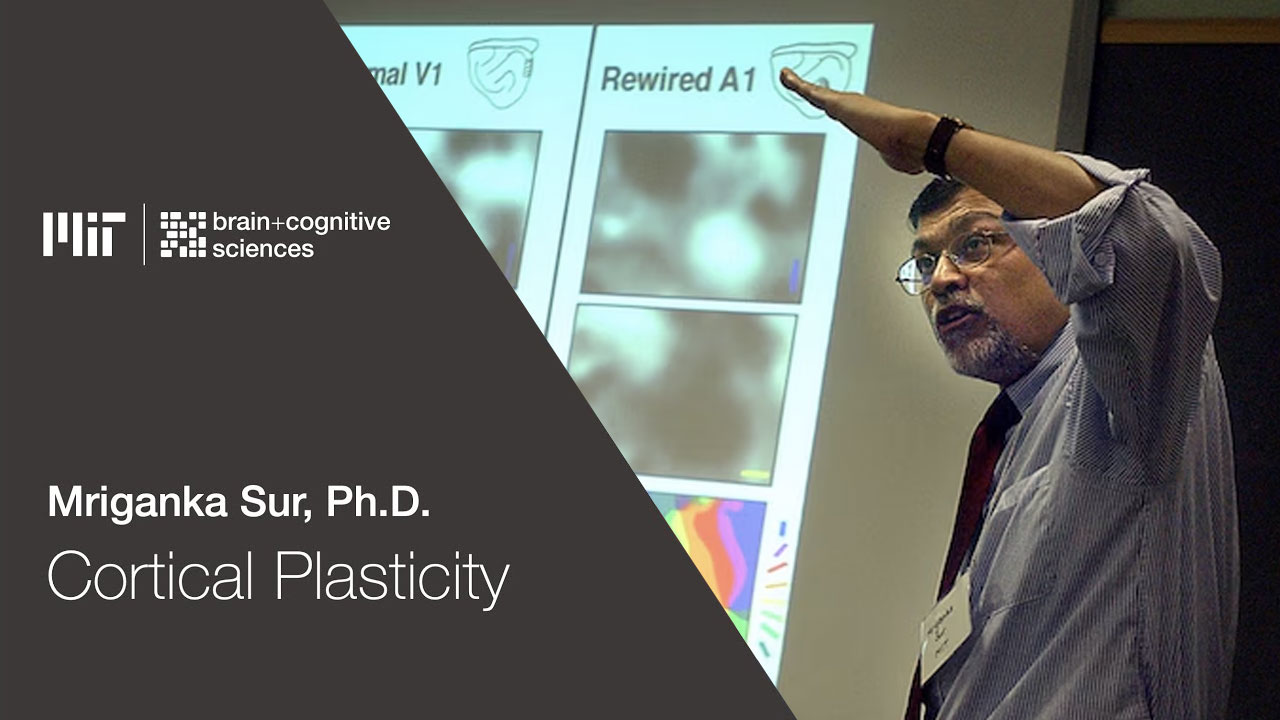
Mriganka Sur left IIT Kanpur engineering for MIT neuroscience, studying how brains learn and change, linking it to AI.
From circuits to the cerebral cortex
Professor Mriganka Sur’s journey begins in the laboratories and classrooms of IIT Kanpur, where, in 1974, a young electrical‑engineering graduate learned to design circuits, analyse signals, and build systems. Decades later, that same curiosity would drive him to study the most complex system known to humanity – the human brain. His path traversed continents and institutions, including IIT Kanpur, Vanderbilt University, Yale University, and the Massachusetts Institute of Technology (MIT), while crossing from silicon‑based hardware to biological neural networks.
Rather than follow a strictly linear career, Sur chose to weave engineering and neuroscience together. He came to view the brain not only as an organ, but as the ultimate computing machine – one that learns, adapts, and rewires itself in real time. This insight shaped his life’s work and placed him at the forefront of modern brain science and computational neuroscience.
Early academic foundations at IIT and Vanderbilt
Sur completed his BTech in Electrical Engineering from IIT Kanpur in 1974, a programme that emphasised rigorous systems thinking, mathematical modelling, and signal processing. His academic trajectory then led him to Vanderbilt University, where he earned both an MS and a PhD in Electrical Engineering. His early research focused on signal processing and systems design, aligning with conventional expectations of an engineering career.
Yet, during these years, a new question began to dominate his thinking: How does the brain build intelligence? He realised that many engineering principles – feedback, noise analysis, system optimisation, and adaptive control- could offer powerful tools to understand biological computation. Instead of leaving engineering behind, he applied its framework to the brain, turning neurons into circuits, the cortex into architecture, and learning into adaptive computation.
Shifting from machines to minds
Sur’s pivot from electrical engineering to neuroscience was driven by a deep fascination with brain plasticity – the brain’s ability to reorganise itself in response to experience. His research explored how genes and neural activity shape the developing cerebral cortex, how learning rewires neural networks, and how experiences alter brain structure and function. These insights have helped scientists understand how sensory input, education, and environment influence cognitive development.
His work laid important groundwork for studies on learning, memory, and neurodevelopmental disorders, including autism and related conditions. By combining experimental neurobiology with computational models, Sur demonstrated that the brain is not a fixed wiring diagram, but a dynamic, self‑tuning system capable of continuous adaptation.
Leadership roles at MIT and in India
Today, Professor Sur holds several prominent academic and research positions across leading institutions. He serves as the Newton Professor of Neuroscience at MIT and is the Director of the Simons Centre for the Social Brain, which investigates the neural underpinnings of social cognition and behaviour. He is also an Investigator at the Picower Institute for Learning and Memory, where his team studies the mechanisms of learning and neural plasticity.
In India, Sur maintains a strong academic presence through his association with IIT Madras, where he serves as Visiting Faculty in the Department of Computer Science and Engineering. He also holds the N.R. Narayana Murthy Distinguished Chair in Computational Brain Research, a role that enables him to integrate engineering, computer science, and neuroscience within an Indian‑institutional context. His work actively bridges neuroscience, artificial intelligence, and computational modelling, influencing both biological and machine‑learning research.
What his lab investigates
Professor Sur’s laboratory focuses on how the brain organises itself from infancy to adulthood, with particular emphasis on the development and function of the cerebral cortex. His team studies neural‑circuit plasticity, the formation of learning and memory, and the ways in which the brain rewires itself in response to sensory input and experience.
The lab also investigates autism and other neurodevelopmental disorders, using brain‑imaging techniques, animal models, and computational simulations to understand how altered neural circuits give rise to differences in perception, behaviour, and social cognition. His research aims not only to deepen scientific understanding but also to inform the development of more effective therapies for brain injuries, learning disorders, and developmental differences.
Through computational models, Sur’s group seeks to translate biological data into testable hypotheses and predictive frameworks, enabling researchers and clinicians to anticipate how changes in genetics, environment, or experience might reshape brain architecture and function.
Building bridges between IIT and MIT
Professor Sur actively fosters collaboration between Indian institutions and global research centres, particularly between IIT Madras and MIT. His efforts bring together engineers, neuroscientists, and AI researchers to tackle questions that no single discipline can answer alone.
These collaborations reflect an emerging pattern in contemporary science: that interdisciplinary intersections often produce the most transformative insights. By integrating electrical‑engineering thinking, artificial intelligence, and biological experiment, Sur’s initiatives create a unique environment where engineers learn to speak the language of neuroscience and neuroscientists gain access to advanced computational tools.
Such collaborations also help build research capacity and mentorship pipelines for students and early‑career scientists in India. Sur’s involvement with IIT Madras enables Indian students to participate in cutting‑edge brain‑science projects, often without having to leave the country initially, while still accessing global standards of training and infrastructure.
Recognition and global impact
Over decades, Sur’s contributions have earned him wide recognition. He has received the Distinguished Alumnus Award from IIT Kanpur, a distinction that underscores his impact as one of the institute’s most influential graduates. He is a Fellow of the Royal Society, a Member of the US National Academy of Medicine, and a Fellow of both the American Academy of Arts and Sciences and the World Academy of Sciences.
These honours recognise his pioneering work in brain plasticity, cortical development, and the computational foundations of neural function. Beyond formal accolades, his research has helped shape how scientists and clinicians think about learning, memory, and neurodevelopmental disorders, influencing both animal and human‑based studies.
Lessons from an interdisciplinary journey
Professor Mriganka Sur’s career illustrates that skills from one discipline can powerfully enrich another. An electrical engineer can become a leading neuroscientist; a circuits expert can study cognition; a systems‑oriented thinker can decode intelligence itself. His journey encourages students and professionals to explore interdisciplinary paths, test conventional career boundaries, and view technical expertise not as a box, but as a toolkit that can be adapted to different domains.
Sur’s story also highlights the value of intellectual curiosity, persistence, and openness to change. By refusing to confine himself to a single field, he has contributed to the emergence of computational neuroscience as a distinct and influential discipline. His work reminds the scientific community that the most profound discoveries often arise where engineering, biology, and artificial intelligence converge – and that the human brain, with its capacity to learn and adapt, remains the most fascinating system of all.
Disclaimer
The information in this article is based on available public sources and official statements as of the time of publication. While we aim for accuracy, we do not guarantee completeness or correctness. We advise readers to verify key details from official sources before making any decisions. The website (iitiimsamvaad.com) is not liable for any loss or damage arising from the use of this content. The authors are also not responsible for any such loss or damage.