
Building Bharat Sampaark Caps 3rd Edition at IIT Madras, Solidifies National Civil Engineering Innovation Platform
Over 800 students, 100 hackathon teams join IIT Madras finale of 3-IIT series, backed by NITI Aayog for startup incubation and infra innovation.
Building Bharat Sampaark completes its IIT trilogy
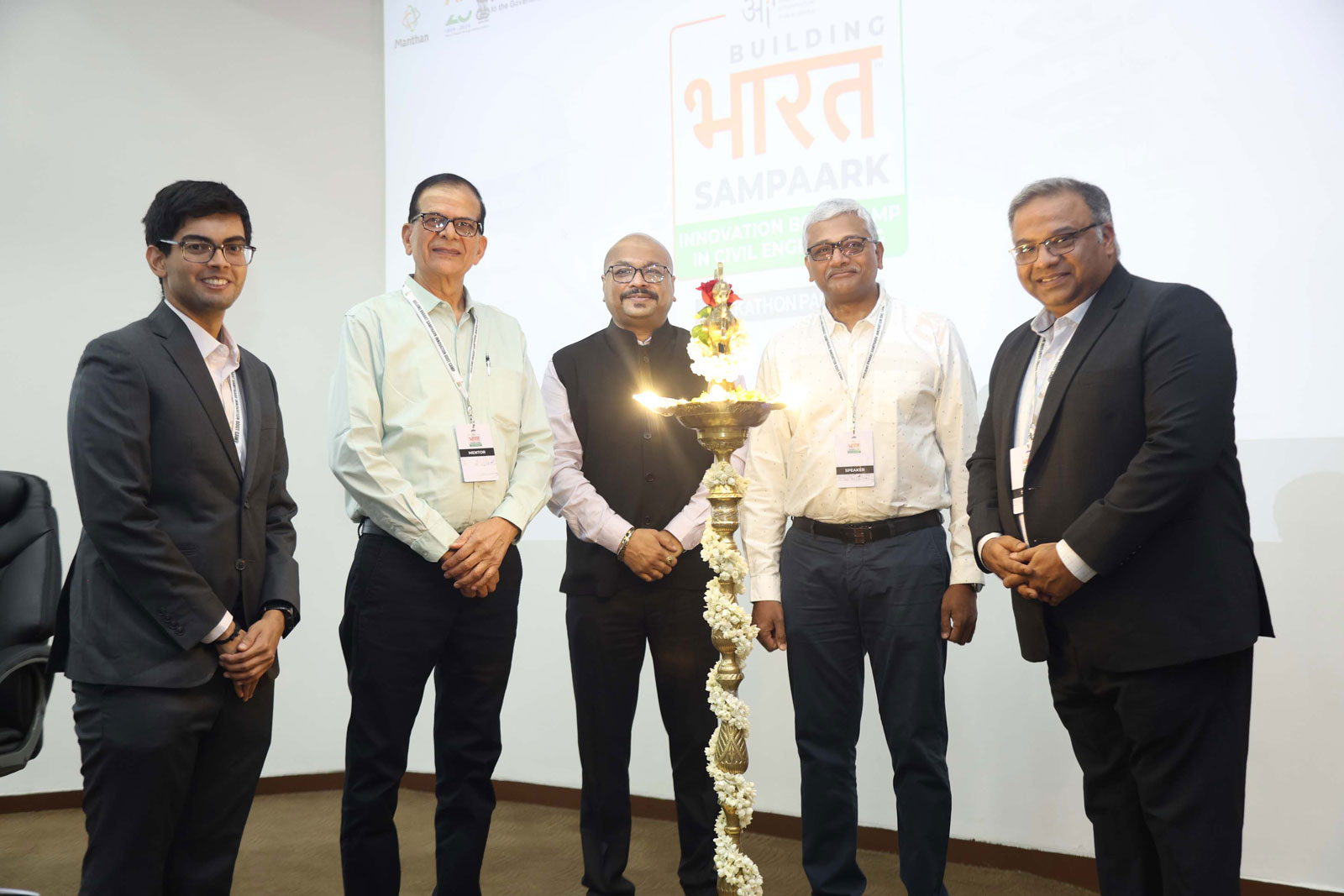
The third flagship edition of Building Bharat Sampaark has concluded at the Indian Institute of Technology Madras (IIT Madras), marking the culmination of a three‑IIT journey that has steadily grown into a national platform for civil engineering innovation. Having previously hosted editions at IIT Gandhinagar and IIT Kanpur, the initiative now positions itself as a structured bridge between civil engineering education, industry practice, and innovation.
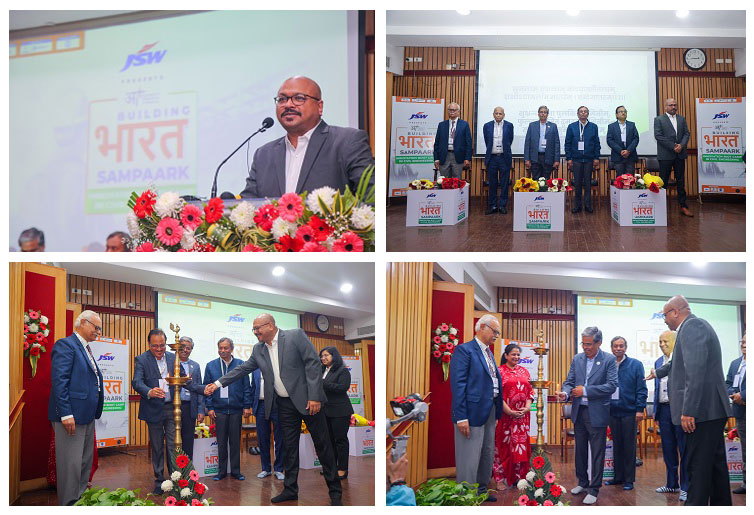
With IIT Madras as the Academic Partner, the April 2026 edition held from 3–5 April drew over 800+ students, close to 100 hackathon entries, and a series of masterclasses, townhalls, and problem‑solving sessions led by academic and industry experts. The three‑day format, themed around real‑world infrastructure challenges, reflects a clear shift from exposure‑led engagement to outcome‑driven learning and application.
Hackathon, masterclasses, and industry‑aligned learning
The IIT Madras edition focused on five core themes:
- Innovation in Construction Quality
- Innovation in Construction Safety
- Innovation in Construction Sustainability
- Innovation in Construction of Resilient Infrastructure
- Innovation in Infrastructure Asset Management
Student teams submitted solutions across these domains in a Hackathon–cum‑Startup Contest, with the top ideas progressing toward structured pathways that include mentorship, validation, and potential incubation support. The hackathon format encouraged participants to move beyond theoretical concepts and design implementable prototypes, often with input from domain experts who highlighted regulatory, technical, and economic constraints.
Masterclasses and townhalls featured senior professionals from infrastructure companies, construction firms, and policy bodies, who walked students through project‑level decision‑making, risk management, and lifecycle‑cost analysis. The students gained insights into real projects – from large‑scale highways and metro systems to water‑distribution networks and smart‑city infrastructure – helping them connect classroom learning with contemporary industry practice.
A national platform backed by multiple stakeholders
Building Bharat Sampaark is led by the Association of Infrastructure Industry (India) and presented by the JSW Group, with support from the Office of the Principal Scientific Adviser to the Government of India, operating via the Manthan Platform. The initiative partners with NIUA (National Institute of Urban Affairs) and AICTE (All India Council for Technical Education) to strengthen its academic and policy alignment.
In a significant step toward institutional integration, the Atal Innovation Mission (AIM) under NITI Aayog is now supporting the Hackathon–cum‑Startup Contest, helping convert student ideas into validated, scalable solutions. This backing enables ideas to move beyond proof‑of‑concept into prototypes, pilot deployments, and, where feasible, enterprise‑level ventures.
From three IITs to a national ecosystem
Across the three IIT editions – IIT Gandhinagar, IIT Kanpur, and IIT Madras – the initiative has recorded over 2,000+ registrations, with 1,300+ male and 700+ female participants, underscoring a growing and increasingly diverse talent pool. The Gender‑informed participation is a key highlight, as the platform actively promotes women civil engineers as core innovators rather than passive observers.
Dr. Rajaneesh Dasgupta, Trustee & Director General of the Association of Infrastructure Industry (India) and National Director of Building Bharat Sampaark, also highlighted the deliberate choice of IIT Madras as the capstone venue. “Bringing Building Bharat Sampaark to IIT Madras is both intentional and significant,” he said. “IIT Madras has consistently contributed to the evolution of construction and infrastructure practices in the country, and it provides the right ecosystem to showcase the true diversity and scale of civil engineering in India.”
Shifting from execution to innovation
Dr. Dasgupta also pointed out how the initiative is reshaping the culture of civil engineering. “For a long time, civil engineering has remained largely execution‑focused,” he noted. “Building Bharat Sampaark is bringing innovation into the mainstream – encouraging students not just to build, but to think, question, and solve real‑world infrastructure challenges at scale.”
He also emphasised the importance of gender‑inclusive participation. A growing cohort of women civil‑engineering students are stepping forward as equal contributors to the initiative. Through branding initiatives like “Desh Ko Banana Hai, Kuch Kar Ke Dikhana Hai” and “#SheBuildsSheSpeaks”, the platform seeks to convert representation into leadership, ensuring that the future of infrastructure is built collaboratively and inclusively.
With AIM’s support, the platform is evolving beyond a single‑year initiative. “It is becoming a structured national movement – one that is reshaping how young engineers learn, innovate, and contribute to building India,” Dr. Dasgupta said.
Role of IIT Madras as Academic Partner
The collaboration with IIT Madras reflects a strong alignment with the institute’s focus on applied research and industry‑integrated learning. Prof. Manu Santhanam, Dean (ICSR) at IIT Madras, stressed that the institute has long prioritised platforms that connect academia with real‑world applications in infrastructure.
“IIT Madras has consistently been at the forefront of supporting initiatives that bridge academia, industry, and real‑world application, particularly in areas critical to infrastructure development,” Prof. Santhanam said. “Platforms like Building Bharat Sampaark align strongly with this approach, creating opportunities for students to engage meaningfully with contemporary challenges.”
He also highlighted the need for civil engineering to move beyond traditional curricula and address emerging demands in sustainability, advanced materials, digital construction technologies, and climate‑resilient infrastructure. The masterclasses and mentorship sessions during the event help students build a systems‑level understanding of infrastructure, where they learn to think in terms of lifecycle costs, resilience, and social impact, rather than only project‑level deliverables.
Industry‑centric innovation pipeline
Industry collaboration has remained central to the design of Building Bharat Sampaark. Representatives from major infrastructure and construction companies engage directly with students, guiding them through feasibility reviews, economic viability checks, and design‑for‑construction principles. This hands‑on involvement ensures that student ideas are not developed in isolation but are shaped by the realities of implementation, regulation, and financing.
Mr. Rinkesh Roy, Joint Managing Director and CEO of JSW Infrastructure Ltd., described the cross‑institutional journey as a powerful demonstration of what can happen when academia and industry unite with clear intent. “The journey across three IITs demonstrates what is possible when academia and industry come together with clear intent,” he said. “What stands out is not just the scale of participation, but the depth of thinking and the seriousness with which students are approaching real infrastructure challenges.”
He added that national‑level alignment gives the initiative the potential to establish a sustained innovation pipeline for India’s infrastructure sector, one that connects ideas, talent, and execution across the entire development lifecycle – from concept to commissioning.
Launch of CIVILATHON: the next phase
With three IIT‑anchored editions successfully completed, Building Bharat Sampaark has moved beyond the format of a one‑off bootcamp into a structured, scalable national platform that links students, academia, industry, and policy institutions. The initiative now enters a more mature phase with the launch of CIVILATHON in June 2026, a national competition that will bring together the top‑performing teams from all three IIT editions.
CIVILATHON will focus on refining the most promising solutions, providing targeted mentorship, and facilitating pilot projects with industry partners. The platform aims to turn selected ideas into deployable products or services that can be piloted on actual infrastructure sites, thereby strengthening the connection between student innovation and real‑world impact.
By fostering cross‑institutional participation, industry integration, and government‑level support, Building Bharat Sampaark is positioning India’s civil engineering community to lead the next wave of innovation in infrastructure, where young engineers do not just execute projects but co‑design a smarter, safer, and more sustainable built environment for the nation
Disclaimer
The information in this article is based on available public sources and official statements as of the time of publication. While we aim for accuracy, we do not guarantee completeness or correctness. We advise readers to verify key details from official sources before making any decisions. The website (iitiimsamvaad.com) is not liable for any loss or damage arising from the use of this content. The authors are also not responsible for any such loss or damage.