
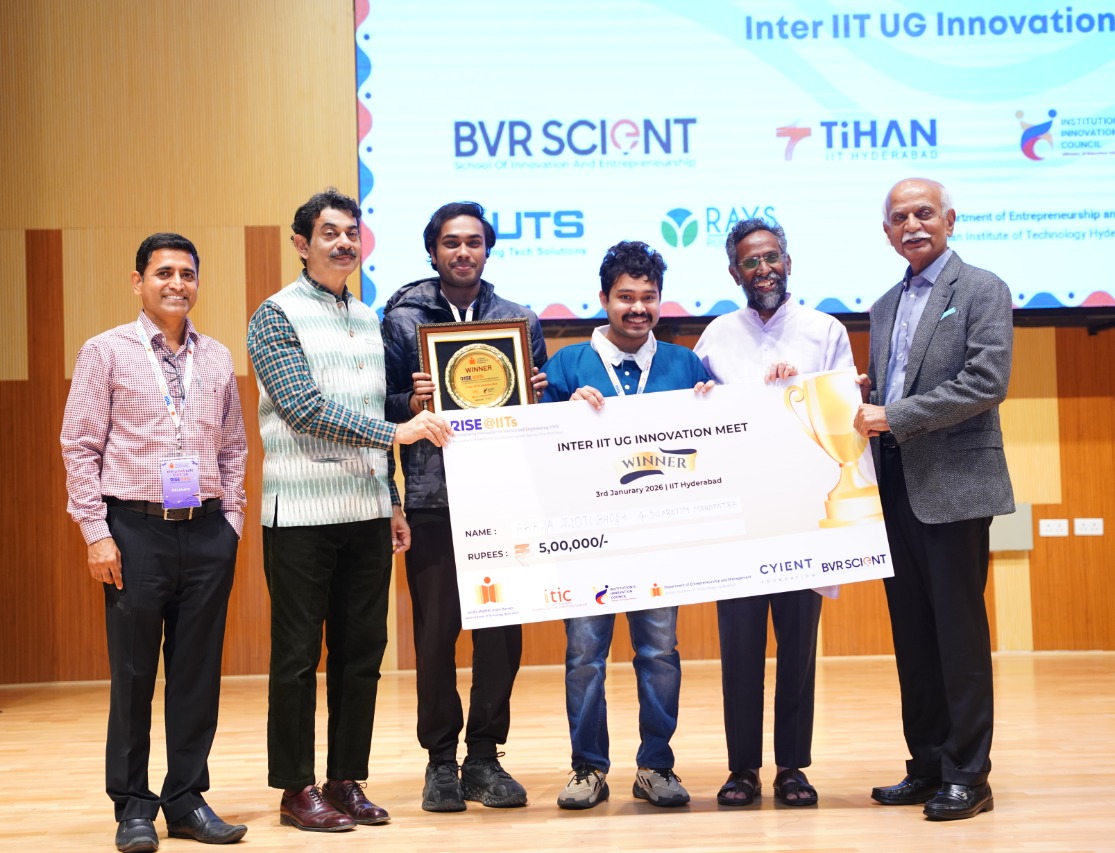
IIT-BHU Team Triumphs at RISE 2026 with Revolutionary Portable Microscope Design, Claiming Top Honor for Innovation. Arkya Jyoti Ghosh and Supratim Mahapatra, final-year students pursuing biochemical engineering at IIT (BHU) Varanasi secured the coveted top honor and a substantial cash award of ₹5 lakh.
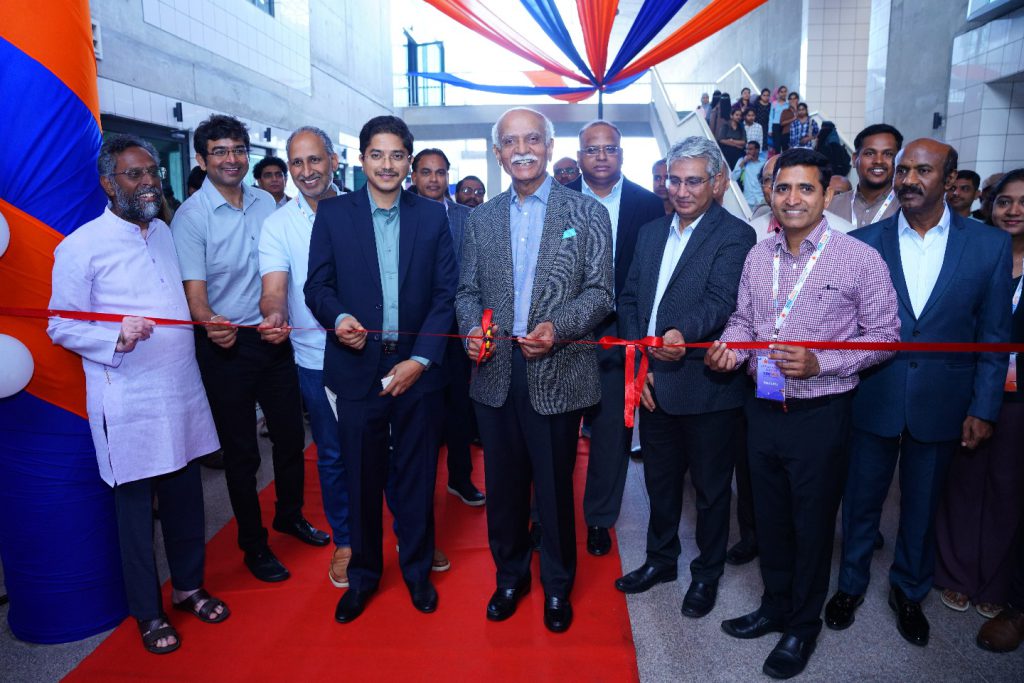
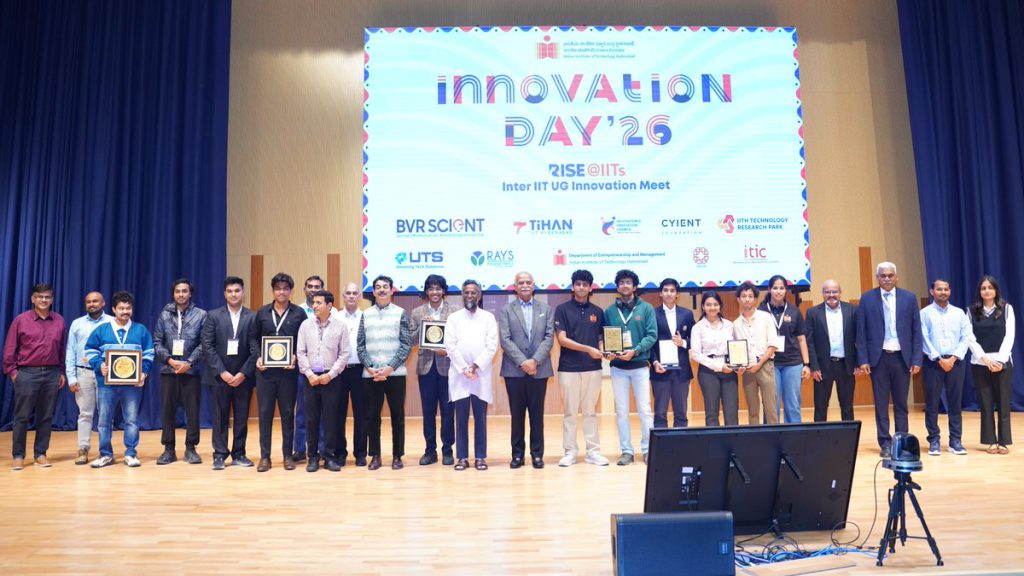
The inaugural Inter-IIT Undergraduate Innovation Meet, christened RISE 2026 and hosted by IIT Hyderabad as a flagship component of its third Innovation Day, celebrated groundbreaking student-led ingenuity with a staggering total prize purse of ₹15 lakh distributed among top performers. This prestigious gathering attracted more than 100 submissions from budding innovators across IIT campuses throughout India, from which a select group of 21 exceptional teams was meticulously shortlisted to deliver compelling live pitches directly on the IIT Hyderabad campus, spotlighting practical prototypes tailored to address pressing challenges in fields like healthcare diagnostics, physical rehabilitation, environmental sustainability, and beyond.
Top Honor – IIT (BHU) Varanasi
Securing the coveted top honor and a substantial cash award of ₹5 lakh were Arkya Jyoti Ghosh and Supratim Mahapatra, final-year students pursuing biochemical engineering at IIT (BHU) Varanasi. Their standout creation, a remarkably compact handheld micro-imaging device, revolutionizes accessibility to advanced microscopy by stripping away the barriers of exorbitant costs, cumbersome bulk, and lab-only confinement that plague conventional microscopes. As Ghosh elaborated, “We set out to engineer a truly portable, budget-friendly solution capable of delivering high-precision imaging right in everyday environments such as school classrooms, remote field expeditions, or resource-limited clinics.” Complementing this, Mahapatra highlighted the device’s user-centric innovations, including intuitive joystick-controlled focusing mechanisms and customizable lighting adjustments, empowering non-experts to achieve professional-grade results without relying on sophisticated, bulky ancillary equipment.
First Runner-Up – IIT Madras
Claiming the first runner-up position with a commendable ₹3 lakh prize was Shreyas Balakarthikeyan from IIT Madras, whose pioneering software tool automates the computation of SYNTAX scores directly from angiogram images—a critical metric in cardiology that enables physicians to make swifter, more standardized, and objective clinical judgments during complex coronary interventions, potentially transforming patient triage and procedural planning in high-stakes cardiac care settings.
Second Runner-Up – IIT Mandi
The second runner-up accolade, carrying a prize of ₹2 lakh apiece, was jointly shared by two outstanding teams. From IIT Mandi, Akshadeep Suryawanshi and Garv Jain unveiled FlexoGear, an ultra-lightweight wrist exosuit meticulously designed for physiotherapy applications, which ingeniously minimizes mechanical intricacy while drastically curbing power demands, thereby enhancing wearability, affordability, and prolonged usability for rehabilitation patients recovering from injuries or neurological conditions. In parallel, Sri Lekha O V from IIT Hyderabad introduced a sustainable, green chemistry-based methodology for reclaiming copper layers from end-of-life printed circuit boards, sidestepping hazardous chemical reagents and energy-intensive processes to promote circular economy principles in electronics recycling.
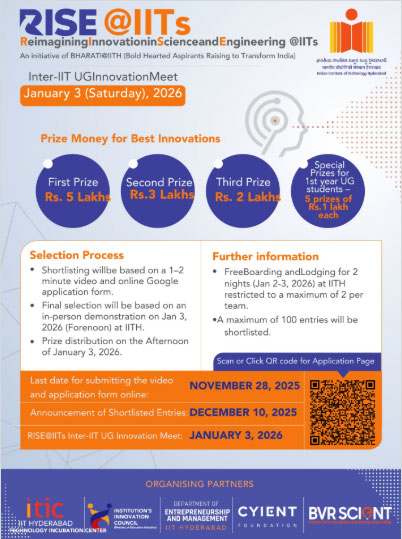
Rounding out the roster of distinguished awardees were several other trailblazing projects that captured judges’ attention. IIT Guwahati’s OPTMIST team debuted a novel mist-based eye-drop delivery apparatus that optimizes ocular drug absorption through fine aerosolization, promising superior efficacy for treatments targeting dry eye syndrome, glaucoma, and other ophthalmic disorders. IIT Hyderabad’s VAYU squad presented a bio-mimetic drone featuring adaptive morphing wings paired with an autonomous tail control system, mimicking avian flight dynamics to achieve unparalleled agility, energy thrift, and operational versatility in surveillance, disaster response, or agricultural monitoring scenarios. Additionally, a team from IIT Madras earned recognition for their diminutive, economical imaging apparatus optimized for pedagogical demonstrations and modest-scale research endeavors, democratizing visual scientific exploration in underfunded labs or educational outreach programs.