
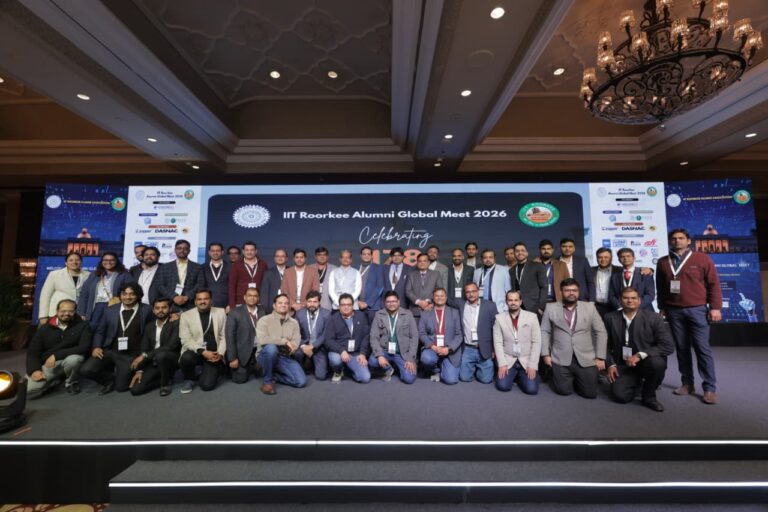
On January 3, 2026, the Indian Institute of Technology Roorkee Alumni Association (IITRAA) convened its annual Global Alumni Meet at the opulent Hotel Taj Palace in Chanakyapuri, New Delhi. As the world teetered on the brink of a profound technological revolution, over 1,000 eminent alumni, industry leaders, academicians, and policymakers converged from across the globe. Marking 178 years of illustrious legacy, the event zeroed in on a pivotal modern challenge through its flagship summit: “Reinventing Careers in the Age of AI.” This gathering transcended mere celebration, emerging as a vital platform for charting strategies amid AI’s transformative impact on the workforce.
The summit buzzed with high-stakes dialogues on how artificial intelligence is redefining professional landscapes. Keynote speakers Abhishek Singh, CEO of the India AI Mission, and Manish Bhardwaj, Secretary of the National Disaster Management Authority (NDMA), illuminated India’s AI trajectory. They stressed that scaling AI from experimental pilots to nationwide deployment demands robust data governance. At population scale, datasets evolve into national assets, necessitating unambiguous ownership, privacy-by-design protocols, stringent consent mechanisms, and perpetual audits for equity, security, and regulatory adherence. From a citizen’s lens, successful AI must prioritize simplicity, accessibility, and intuitive interfaces to foster widespread adoption and trust.
A standout session, “Infrastructure – The Growth Multipliers,” spotlighted sector-specific AI applications. Dr. Achal Mittal, Emeritus Scientist at the Central Building Research Institute (CBRI), joined Dr. L. P. Singh, Director General of the National Council for Cement and Building Materials (NCCBM); Manoj Garg, Vice Chairman of the Railway Land Development Authority (RLDA); Sanjay Vashney, CEO of Signature Global; and other luminaries. Discussions culminated in consensus on carbon capture’s escalating role in sustainable infrastructure. Panelists advocated a paradigm shift from cost-centric bidding to quality-assured models, bolstered by cutting-edge structural health monitoring systems leveraging AI and IoT for real-time oversight and predictive maintenance.
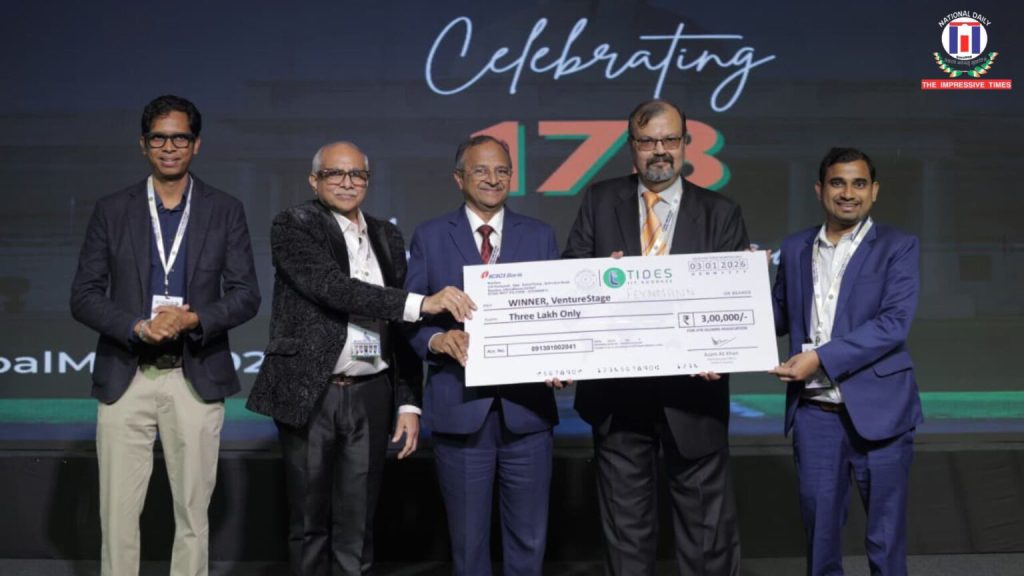
Beyond discourse, the event pulsed with innovation. An authors’ conclave fostered creative exchanges on AI’s societal narratives, while a startup pitching arena targeted AI-driven solutions for escalating energy needs and implementation hurdles. Five standout ventures clinched prizes totaling ₹7,00,000, rewarding ingenuity in addressing pressing challenges like renewable integration and efficient resource allocation. These segments not only ignited entrepreneurial spirit but also bridged academia, industry, and venture ecosystems.
Guided by IIT Roorkee Director K. K. Pant, IITRAA President Vinay Kumar Tripathi, and Secretary R. K. Singh, the meet enjoyed steadfast backing from Sanjay Tyagi, IPS, Joint Commissioner of Police, Delhi Police. This leadership infused the proceedings with the timeless “Thomasonian” ethos—rooted in the institute’s 1848 founding as Thomason College of Civil Engineering—emphasizing practical ingenuity and public service.
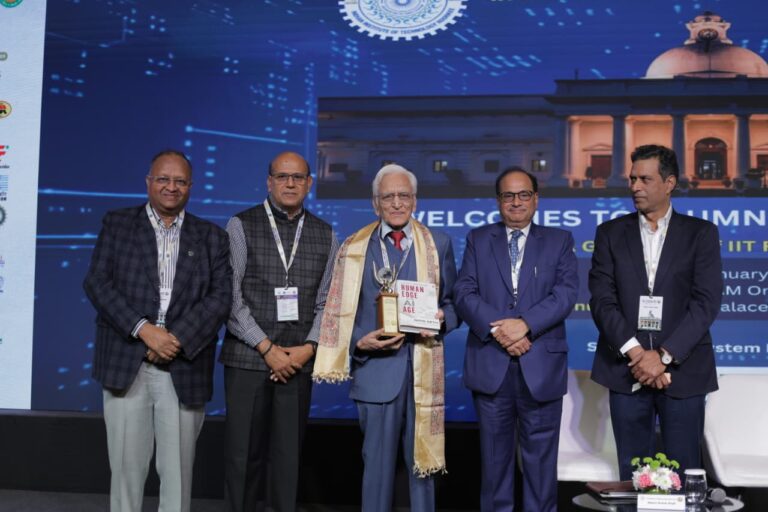
At its core, the Global Alumni Meet embodied a proactive vision: harnessing AI not as a disruptor but as an opportunity generator. Organizers underscored the imperative of workforce resilience, ethical tech deployment, and inclusive progress. Insights from panels offered actionable blueprints for leadership in an automated era, empowering attendees to cultivate skills blending human ingenuity with machine intelligence. Partner organizations gained unparalleled visibility, aligning with India’s vanguard thinkers steering technological and economic momentum.
In honoring nearly two centuries of excellence, IIT Roorkee reaffirmed its stature as an innovation bedrock. The event galvanized a global network committed to an AI-infused future that is equitable, forward-thinking, and societally enriching. By fostering cross-sector collaboration, it positioned the IITR community as architects of a resilient tomorrow, where technological leaps amplify human potential rather than supplant it.