


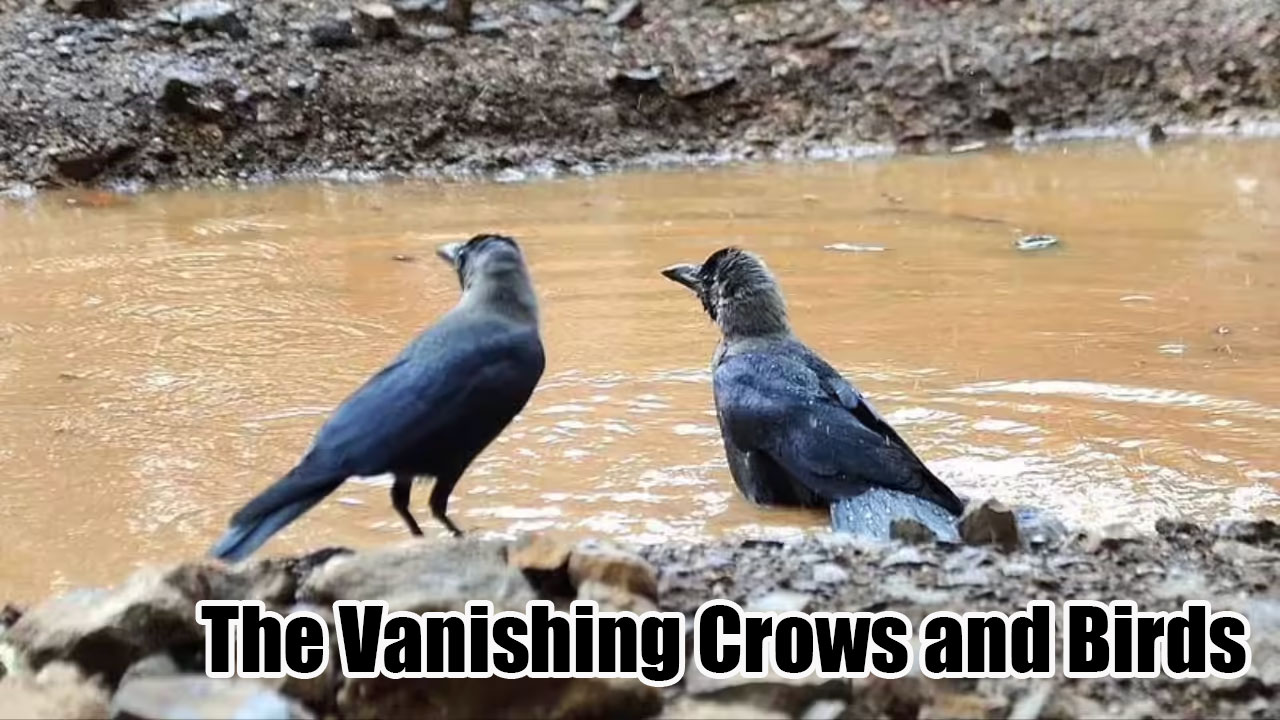
Native birds such as crows, house sparrows, mynas, and parakeets are rapidly disappearing from Bhubaneswar’s streets and rooftops, replaced by the noise of traffic and alarms. Experts blame rapid urbanization, loss of feeding grounds, and the growing use of chemical fertilizers and pesticides, which have reduced both food and safe habitat for urban birds.
Once a common sight in Bhubaneswar, crows, house sparrows, mynas, parakeets, and other native birds are vanishing from city streets and rooftops, conservationists and residents say. People recall mornings filled with the cawing of crows and the chirping of sparrows, a soundscape now largely replaced by car horns and electronic alarms.
Rapid urbanization is identified as a primary driver of the decline. Trees are being cut to make way for roads and buildings, while concrete and paving cover natural soil, eliminating insects and worms that many birds rely on for food. The widespread use of chemical fertilizers and pesticides has further reduced available prey and poisoned surviving insects. Covered drains and altered landscapes also make it harder for birds to forage openly.
Dr. Bibhuprasad Panda, assistant professor of environmental science at IIT Bhubaneswar, noted that although species like crows and kites still exist in the region, their numbers have dropped sharply due to habitat loss and reduced food availability. Many have shifted to areas where resources are still relatively abundant. Local residents echo this observation. Sharata Mallia of Kapilprasad village recalled watching flocks of sparrows, crows, and mynas on rooftops as a child, adding that today these birds are barely visible.
Wildlife experts also highlight that recent amendments to the Wildlife Protection Act of 1972 have removed protection for some common species, including crows and parakeets, leaving them more vulnerable. In some places, hunting and trapping add to the pressure.
Nonetheless, conservation efforts are gaining ground. Schools are running awareness programmes on urban birds, and civic initiatives are working to restore populations by making spaces more bird‑friendly – planting trees, providing water, and ensuring food sources. Ornithologist Pramod Dhala stressed that if cities are designed to be more hospitable for birds, many of these species can return. “Awareness and action are crucial to prevent further decline,” he said.