

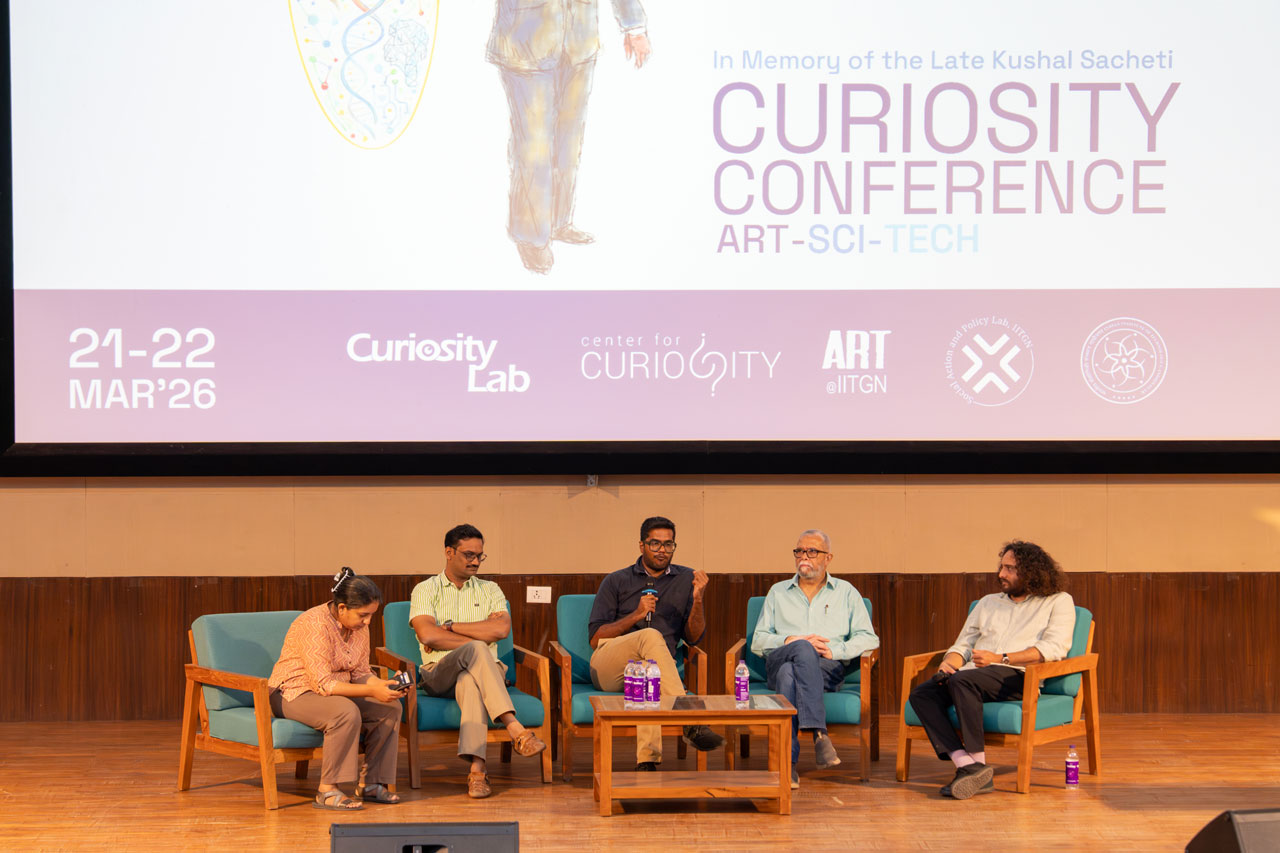
The Indian Institute of Technology Gandhinagar (IIT‑Gn) hosted the Curiosity Conference 2026 on March 21 and 22, exploring the intersection of art, science, and technology through the lens of curiosity. The two‑day event aimed to reimagine learning by highlighting how curiosity drives flexible thinking, creativity, and problem‑solving across disciplines.
The Indian Institute of Technology Gandhinagar (IIT‑Gn) organised the Curiosity Conference 2026 on March 21 and 22, bringing together art, science, and technology under the theme “Intersection of art–sci–tech.” The conference urged participants to reflect on how curiosity shapes flexible thinking, creativity, and problem‑solving in education and research. Organisers said curiosity lies at the heart of any knowledge system and is essential for meaningful, interdisciplinary learning.
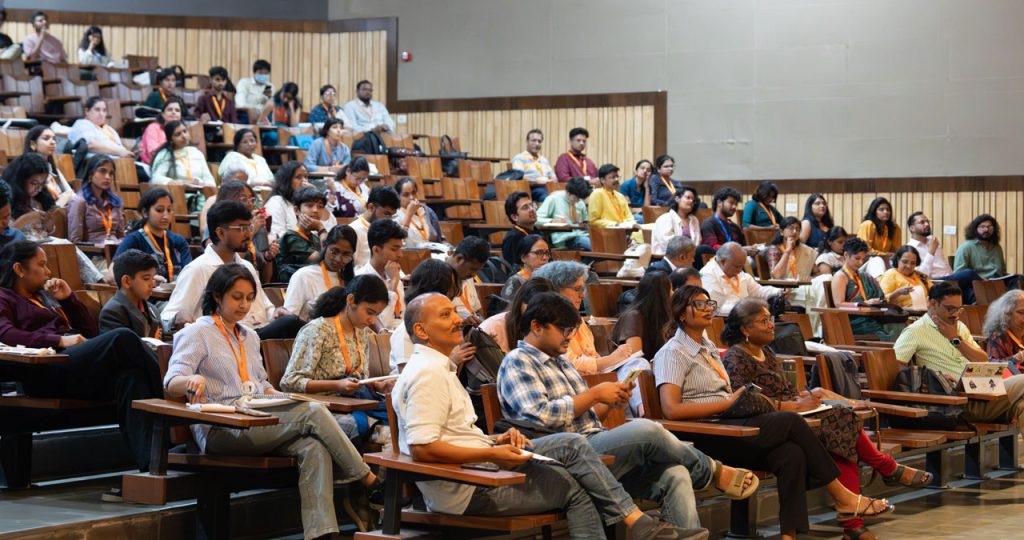
Conference coordinators Dr. Jaison Manjaly and Argha Manna emphasised that curiosity, while deeply personal, is universally vital across fields. Speakers argued that cultivating curiosity can help learners move beyond rote knowledge and embrace open‑ended exploration and inquiry.
In the keynote session, physicist‑turned‑artist Sukant Saran explored the relationship between science and art as complementary ways of representing reality. Currently associated with the Tata Institute of Fundamental Research (TIFR), Mumbai, Saran demonstrated how complex scientific ideas – such as atomic structures and space‑time theories – can be conveyed through artistic forms, making abstract concepts more tangible and engaging.
Another keynote speaker, artist Arvind Sundar, examined the links between mathematics and art. His talk showcased how ideas like geometry, infinity, the golden ratio, fractals, impossible structures, and origami can inspire compelling visual forms. Through these examples, the conference highlighted how art, science, and technology can merge to stimulate curiosity and transform the way people understand and interact with the world.