
IIT Mandi’s new MI-RA lab drives indigenous multimodal AI through TIHs, fostering datasets and deep-tech for healthcare, agriculture, and governance.
HIVE 3.0 unites India’s AI ecosystem
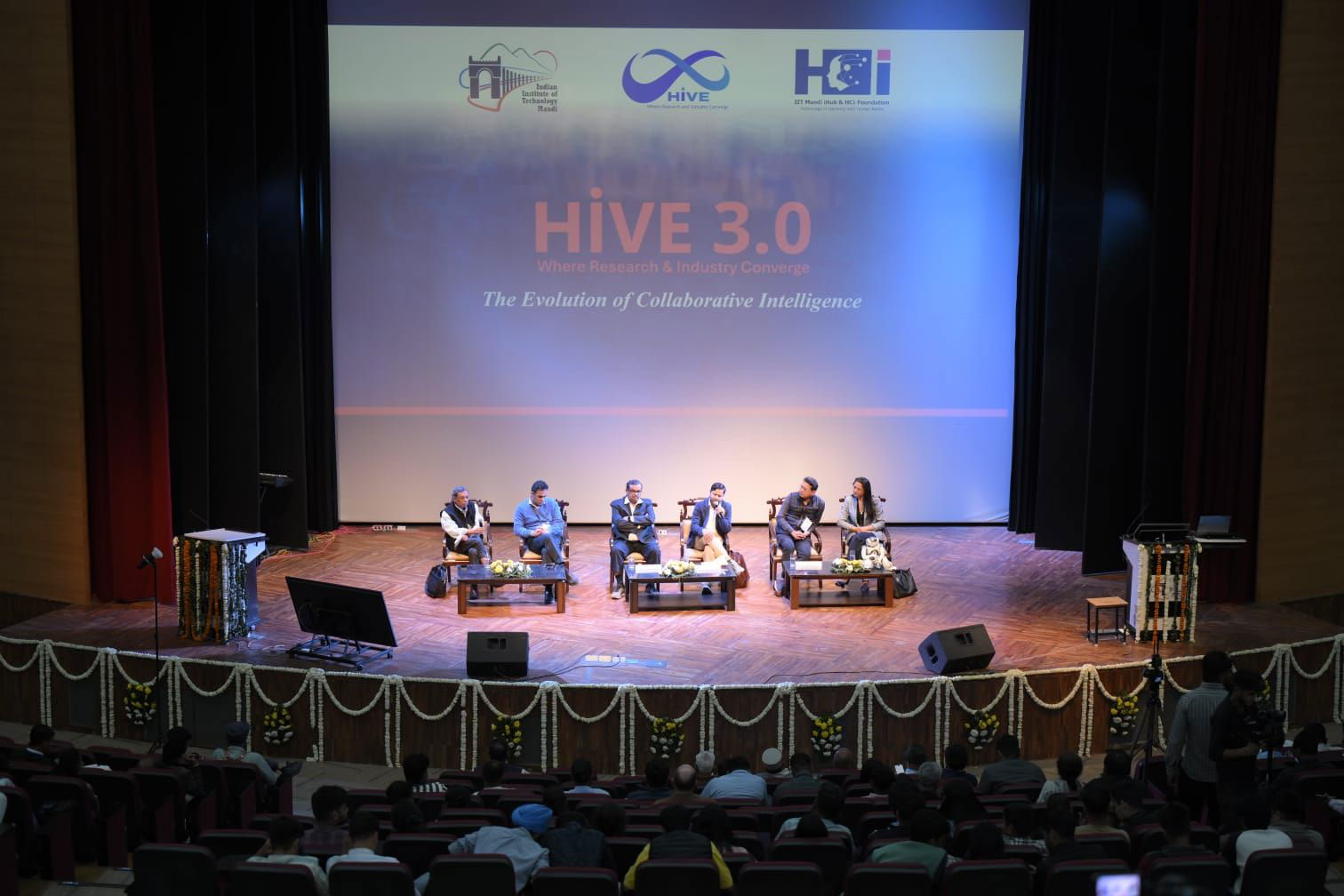
The Technology Innovation Hub (TIH) at the Indian Institute of Technology Mandi has successfully concluded HIVE 3.0. HIVE 3.0 is a three‑day national conclave on Collaborative Intelligence centred around the theme of Multimodal AI. The event brought together technology leaders, industry practitioners, policymakers, and academic researchers from across India and abroad. And it positioned itself as a key platform for shaping the country’s strategy in one of the most transformative areas of artificial intelligence.
HIVE 3.0 created a dynamic meeting point where cutting‑edge research intersected with real‑world industry challenges. The conclave offered a collaborative forum for India’s deep‑technology talent to build, question, and co‑create solutions in the domain of Multimodal AI. It integrates text, vision, audio, and structured data into unified intelligent systems.
From isolated AI to collaborative intelligence
Mr. Padma Bhushan Kris Gopalakrishnan, Co‑Founder of Infosys, Chairman of Axilor Ventures, and Chairman of the Mission Governing Board of the National Mission on Interdisciplinary Cyber-Physical Systems (NM‑ICPS), highlighted the shift HIVE 3.0 represents. “HIVE 3.0 marks a definitive shift from isolated AI to Collaborative Intelligence,” he said.
He emphasised that this initiative goes beyond training individual models. “By bridging the gap between visionary academic research and industrial pragmatism, we are not just building models; we are building a multimodal ecosystem where sight, sound, and context converge.”
Gopalakrishnan traced how IIT Mandi’s investment in Multimodal AI aligns with India’s need to move from being a consumer of global AI tools to a global leader in human‑centric, India‑specific technology solutions. The TIH’s work, he argued, creates a foundation for India to participate in and influence global AI standards and innovation trajectories.
Three days of AI strategy and dialogue
Over the course of three intensive days, HIVE 3.0 featured keynote addresses, panel discussions, research presentations, and working sessions. It collectively explored the opportunities and challenges of Multimodal AI. Participants examined technical architectures, deployment frameworks, ethical considerations, and India‑specific use cases. The use cases ranged from healthcare and agriculture to smart governance and education.
Panels brought together academic researchers, startup founders, corporate AI teams, and government representatives to discuss how India can build indigenous AI capability and research infrastructure. A recurring theme was the need for the country to emerge not only as an AI user but as a creator, contributor, and standards‑setter in the global AI landscape. Speakers called for coordinated investments in data, talent, and test‑bed environments that support India‑centric AI development.
Launch of the MI‑RA Multimodal AI lab
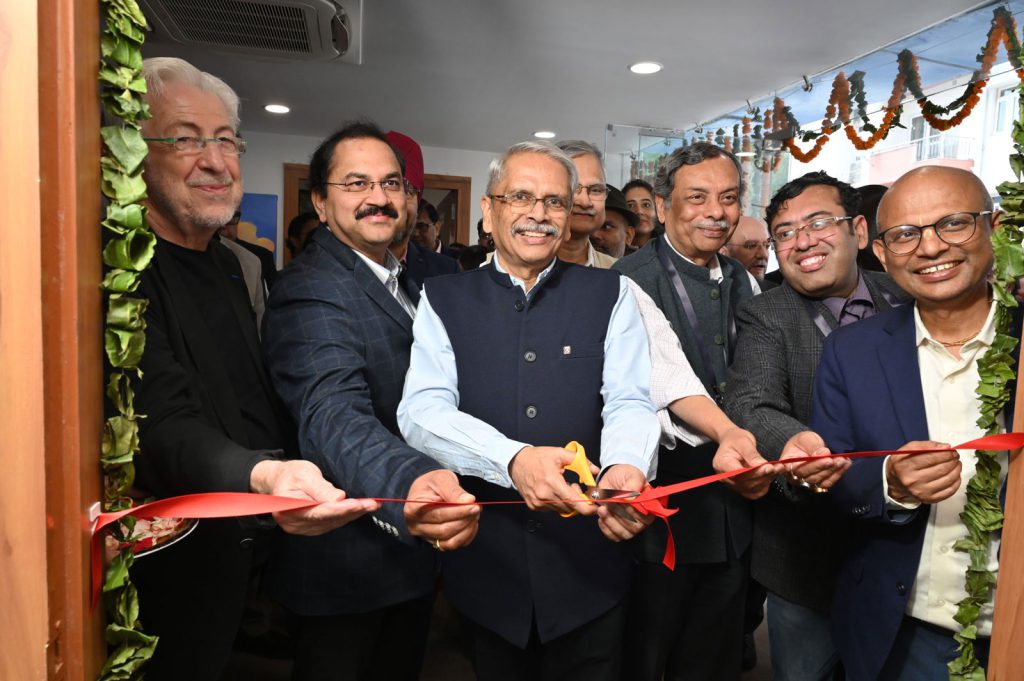
A defining highlight of HIVE 3.0 was the formal inauguration of MI‑RA (Multimodal Intelligence for Real‑World Applications). MI‑RA is IIT Mandi TIH’s state‑of‑the‑art Multimodal AI laboratory. The lab was unveiled by Chief Guest Kris Gopalakrishnan. It marks a significant leap in India’s research infrastructure for advanced AI.
MI‑RA is purpose‑built to accelerate cutting‑edge work at the intersection of vision, language, audio, and structured data. This will also enable researchers to develop systems that process and reason across multiple sensory modalities. The lab is designed as a living test‑bed, where academic researchers and industry technologists co‑develop solutions to real‑world challenges using multimodal intelligence.
A living lab for India‑centric AI
The MI‑RA lab emerged from close collaboration between IIT Mandi TIH and several industry partners, ensuring that research aligns with practical deployment needs. The facility includes high‑performance computing infrastructure, advanced data‑capture tools, and data‑aggregation systems tailored to build curated, India‑centric multimodal datasets. These datasets are critical for training models that reflect India’s linguistic, cultural, and infrastructural diversity.
The lab also features collaborative workspaces and rapid‑prototyping zones, which support the full cycle from foundational research to pilot deployments. Researchers can test prototypes on real‑world data streams, iterate quickly, and refine models in consultation with domain experts and end users.
Organisers emphasise that MI‑RA’s mission extends beyond technology demonstration. The lab aims to accelerate the development of AI solutions that address local problems. The problem may include regional‑language voice interfaces, multimodal medical diagnostics, and context‑aware smart‑city systems. It will also also contribute datasets, benchmarks, and open frameworks to the global AI community.
Building an indigenous AI future for India
HIVE 3.0 and the launch of MI‑RA collectively reinforce a broader national vision. India must build indigenous AI capability across infrastructure, talent, and policy. By fostering close collaboration between academia, industry, and government, initiatives like HIVE 3.0 and MI‑RA help the country move beyond imitation and adaptation to genuine innovation in the age of Multimodal AI.
For IIT Mandi, the conclave affirms the institute’s role as a hub for collaborative intelligence. Here machines and humans, researchers and industries, and local needs and global standards converge to shape a more inclusive, responsive, and inventive AI ecosystem.
Disclaimer
The information in this article is based on available public sources and official statements as of the time of publication. While we aim for accuracy, we do not guarantee completeness or correctness. We advise readers to verify key details from official sources before making any decisions. The website (iitiimsamvaad.com) is not liable for any loss or damage arising from the use of this content. The authors are also not responsible for any such loss or damage.