


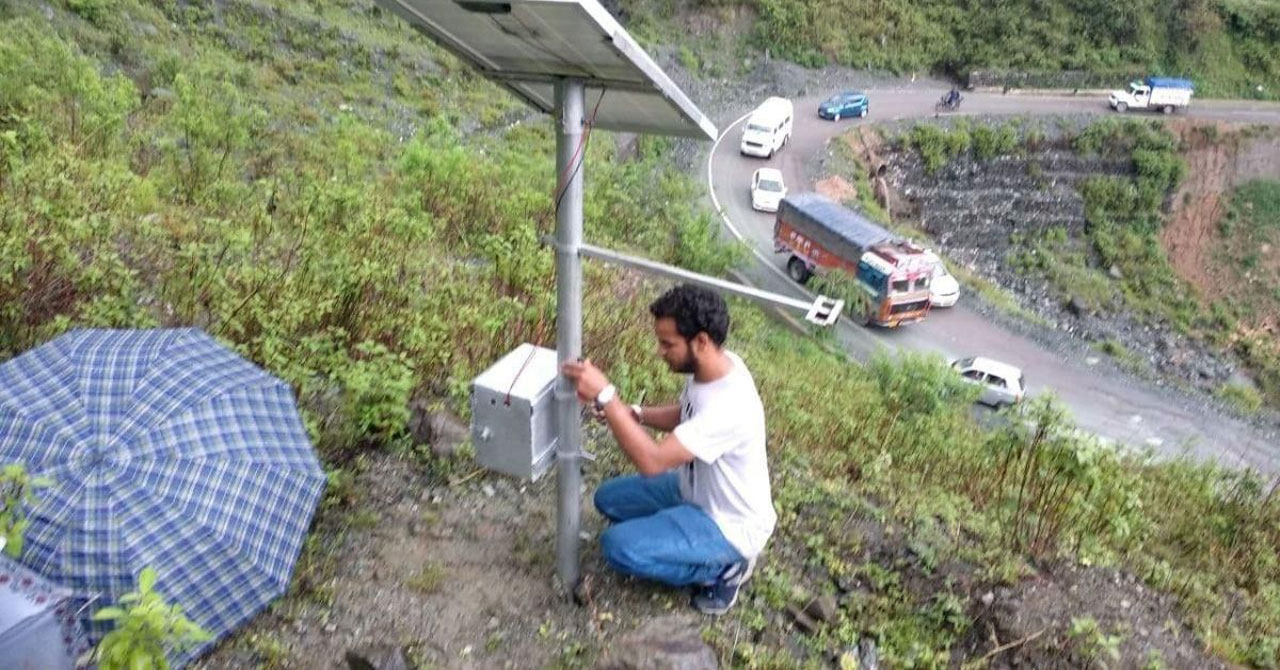
A low‑cost early warning system developed by IIT Mandi’s Professor Kala Venkata Uday can predict landslides up to three hours in advance with over 90% accuracy. Installed across 60 sites in Himachal Pradesh, the AI‑powered device uses sensors and machine learning to detect subtle slope movements and trigger timely alerts for at‑risk communities.
When torrential rains lash the Himalayan states, entire hillsides can give way in minutes, burying homes, wiping out roads, and snuffing out lives. Every monsoon, deforestation, erratic weather, and unplanned construction make India’s mountains more vulnerable to landslides. Faced with this recurring threat, Professor Kala Venkata Uday and his team at IIT Mandi set out to build a system that could buy people precious time – three critical hours of warning before a slide strikes.
Their answer is a compact, AI‑driven early warning device that monitors key environmental indicators and sounds the alarm when conditions reach a dangerous threshold. Installed at more than 60 locations across Himachal Pradesh, the system combines ultra‑sensitive sensors with machine‑learning algorithms to track soil moisture, rainfall, temperature, humidity, and ground displacement. Even millimetre‑scale shifts in a slope are detected and processed in real time, allowing the device to model rising risk long before a mass movement becomes visible.
When the system detects a high‑risk scenario, it automatically triggers visual and audio signals such as blinkers and sirens at the site, while simultaneously sending instant SMS alerts to local residents and authorities. Because communication often falters during heavy rains and landslides, having fast, localised warnings at the village level is crucial. The device is designed to be robust and low‑maintenance, significantly reducing the risk of downtime or vandalism that plagues many imported systems.
What makes the innovation especially powerful is its affordability. Overseas landslide‑warning solutions are often costly, complex, and reliant on imported components, limiting their reach in remote mountain regions. In contrast, Professor Uday’s model is built from the ground up using locally sourced parts, keeping the price low and the technology accessible. This indigenous design allows the system to be scaled more easily across India’s 12% landslide‑prone landmass, turning pilot deployments into a broader national safety net.
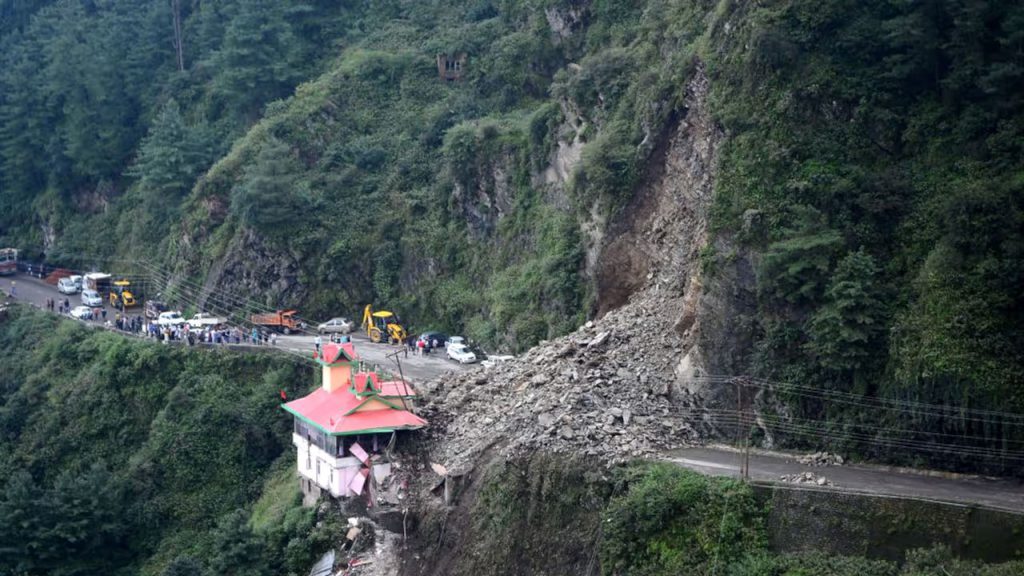
Beyond the hardware, Uday’s team places strong emphasis on community engagement and awareness. They work closely with local administrations and villagers to explain how the system works, build trust, and ensure that people know how to respond when alerts sound. The idea is that a warning is only as effective as the population’s readiness to act on it.
Professor Uday’s work has earned national recognition: he received the Disaster Preparedness Award at the WCDM‑DRR Awards 2024, held at the Constitution Club of India, for his contributions to disaster‑risk reduction and resilience. With over 15 years of research in biogeotechnics, landslide monitoring, and nature‑based mitigation, he aims to create a scalable, low‑cost model that can be deployed across India’s vulnerable mountain belts.
“Technology should empower communities, not replace them,” he says. “If a simple alert can save even one life, it’s worth it.” In a region where seconds can mean the difference between life and death, his device offers something invaluable – time. Time to evacuate, to protect loved ones, and to replace helplessness with preparedness.