

IIT Bombay researchers Prof Ruchi Anand and Prof P I Pradeepkumar developed DNA aptamers – short synthetic nucleic acid strands – to block bacterial resistance enzymes, resensitizing drug-resistant pathogens to existing antibiotics. Unlike developing new drugs, this practical approach leverages known antibiotic safety profiles while addressing the global antimicrobial resistance crisis through stable, modifiable aptamers.
Researchers at the Indian Institute of Technology Bombay (IIT Bombay) have developed an innovative DNA-based strategy to combat the growing crisis of antimicrobial resistance by making drug-resistant bacteria responsive to existing antibiotics again. Led by Prof Ruchi Anand and Prof P I Pradeepkumar from the Department of Chemistry, the approach bypasses the lengthy, costly process of new drug discovery by protecting and reviving proven antibiotics.
Aptamer Technology
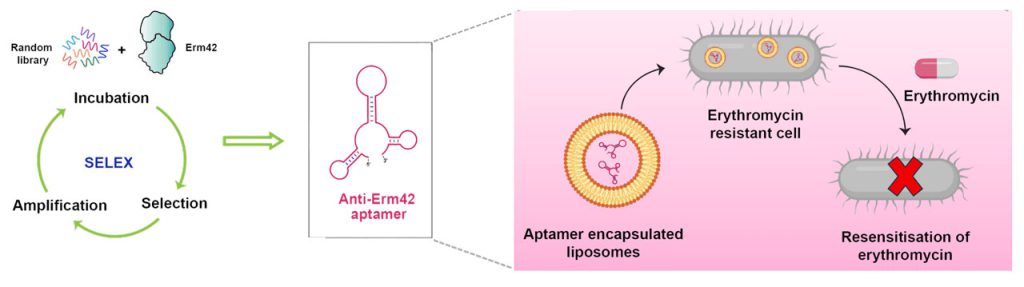
The breakthrough centers on DNA aptamers – short, single-stranded nucleic acid sequences synthetically engineered to bind specific bacterial targets. Unlike conventional small-molecule drugs, aptamers offer superior stability, ease of chemical modification, and high specificity. In laboratory assays, these aptamers effectively blocked key resistance enzymes that bacteria deploy to neutralize antibiotics, restoring their therapeutic efficacy.
Addressing Delivery Challenges
While aptamers excel in vitro, delivering them inside bacteria poses hurdles: DNA degrades via nucleases and struggles to cross bacterial membranes. IIT Bombay’s team engineered liposome-based delivery systems – protective lipid nanoparticles – that achieved over 90% bacterial uptake, enabling aptamers to reach and inhibit resistance mechanisms internally.
Practical Advantages
“Given the long, expensive path from drug discovery to clinic, improving existing drugs may be a more practical route. We know their safety and effects over years and can use existing resources,” explained Prof Anand. This strategy could pair aptamers with standard antibiotics for combination therapy, resensitizing “superbugs” responsible for pneumonia, tuberculosis, surgical infections, and bloodstream conditions.
Two Complementary Studies
The research comprises dual publications: one demonstrating aptamer-enzyme inhibition, the other validating liposomal delivery. Both target Erm-class resistance enzymes prevalent in multidrug-resistant strains. While promising, clinical translation requires animal studies and pharmacokinetic optimization.
Global AMR Crisis Context
Antimicrobial resistance claims millions of lives annually, threatening routine medical procedures. IIT Bombay’s approach offers a sustainable alternative to antibiotic arms races, potentially extending the lifespan of existing drug arsenals through precision resistance blockade.
This indigenous innovation positions India at the forefront of next-generation anti-resistance therapies, demonstrating how molecular engineering can revive decades-old medicines against evolving pathogens.