
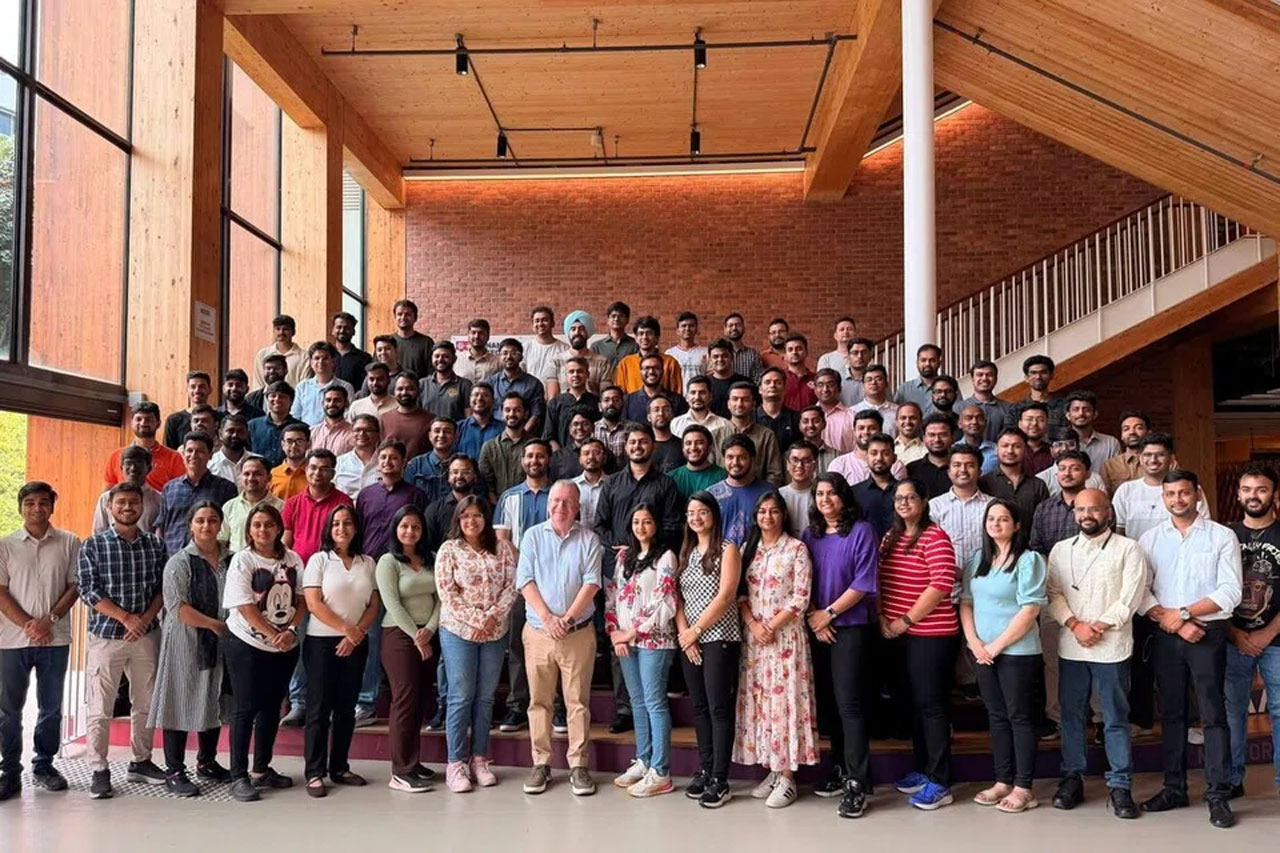
In a swift adaptation to geopolitical challenges, IIM Calcutta shifted its flagship MBA international immersion programme to Nanyang Technological University (NTU) in Singapore, delivering a high-impact week for mid-career professionals.
A Strategic Pivot from Europe
Indian Institute of Management Calcutta (IIM Calcutta), one of India’s most prestigious business schools, has long emphasized global exposure as a cornerstone of its Master of Business Administration (MBA) programme. Designed specifically for mid-career professionals aspiring to leadership roles, the international immersion component offers students a unique blend of academic rigor, cultural immersion, and networking opportunities. For the past two to three years, this flagship initiative had taken participants to Europe – splitting the batch roughly evenly between Italy and Spain. These trips provided immersive experiences in diverse business environments, fostering cross-cultural competencies essential for global leaders.
However, this year’s plans faced an abrupt halt due to escalating global uncertainties, particularly in Europe. In a strategic pivot, IIM Calcutta redirected the programme to Nanyang Technological University (NTU) in Singapore, a move championed by Director Professor Alok Kumar Rai. “As one of India’s premier institutions, IIM Calcutta must partner with the very best globally,” Prof Rai stated. “In Singapore, NTU was a no-brainer.” Singapore’s reputation as a stable, innovation-driven hub in Asia made it an ideal alternative, especially amid volatile geopolitical situations affecting travel to Europe.
Intensive Curriculum and Logistics Triumph
The one-week programme, held from March 23 to 27 at NTU’s Nanyang Business School, was meticulously structured to maximize impact despite the short timeline. After previous European arrangements fell through, IIM Calcutta collaborated intensively with NTU to craft a holistic curriculum in just 10 days. The agenda featured four days of intensive classroom sessions covering cutting-edge topics: future customer experience, digital transformation, artificial intelligence and the future of work, sustainable finance, and neuromarketing, among others. These subjects were chosen for their relevance to today’s rapidly evolving business landscape, equipping participants with forward-thinking tools to navigate industry disruptions.
Logistical challenges were significant, but the teams overcame them with remarkable efficiency. “The only major hurdle was trying to procure visas for 92 people,” noted Professor Saravana Jaikumar, who played a key role in orchestrating the event. “But we got tremendous support and were able to pull this off at the last minute.” This agility underscored the strong institutional partnerships and the commitment of both IIM Calcutta and NTU to student success.
Student Voices: Real-World Relevance
Participants raved about the programme’s transformative value. Atul Kotagal, a 34-year-old student, emphasized its strategic importance in an interconnected world. “Given the level of interconnections across the world today, having an international immersion gives us an edge,” he said. Kotagal highlighted not just the academic gains but also the geographical immersion. “Alongside academic learning, it was also about immersion in the geographical location, which is equally important,” he explained. “As business professionals, we’ll be interacting with so many people from across the world, and developing that sensitivity lends an understanding of how businesses and professionals function in different contexts.”
Sumit Yadav, 30, echoed this enthusiasm, praising the curriculum’s broad applicability. “The content was very relevant, irrespective of which industry you come from,” he noted. He was particularly struck by the neuromarketing sessions, a topic rarely covered in standard MBA courses. “Neuromarketing is something you don’t get to see very often – the whole programme was very research-oriented and gave us a completely new perspective.” Yadav’s feedback illustrates how the programme bridged theoretical knowledge with practical insights, empowering students from diverse sectors like finance, tech, and manufacturing.
Interactive Teaching and Ecosystem Insights
What set this immersion apart from prior European editions was its pedagogical approach. Previous trips relied heavily on case-based learning, a hallmark of IIM Calcutta’s teaching style. In contrast, the NTU programme emphasized interactivity, discussion, and real-world application. “Here, it was more interactive, with real-life examples and immersive scenarios,” observed Prof Jaikumar. Faculty from NTU brought fresh perspectives, drawing on Singapore’s status as a global tech and finance powerhouse to illustrate concepts like AI-driven transformations and sustainable practices.
The programme also extended beyond the classroom, integrating sessions with Singapore’s vibrant ecosystem. A highlight was a presentation by a representative from the Singapore Economic Development Board (EDB), which offered deep insights into Singapore’s economic evolution. “It provided a very good understanding of how Singapore has developed and what its future plans are,” Prof Jaikumar shared. Attendees learned about the city-state’s strategies for attracting talent, fostering innovation, and maintaining resilience in global supply chains – lessons directly applicable to Indian businesses eyeing Southeast Asian expansion.
Alumni Networking and Cultural Immersion
Networking opportunities further enriched the experience. Students participated in an alumni interaction session moderated by Mr. Sanjiv Aiyar, a member of IIM Calcutta’s Board of Governors. This gathering connected participants with IIM Calcutta alumni in senior leadership and entrepreneurial roles across Singapore. Discussions delved into AI’s disruptive potential, shifting expectations for business leaders, and proactive strategies for staying competitive. “The alumni engaged students in candid conversation,” Prof Jaikumar recounted, noting the session’s role in demystifying career paths in a dynamic region.
Evenings and a free day allowed for cultural exploration, from hawker centres to modern landmarks, adding a personal dimension to the professional journey. Students returned not just with new knowledge but with heightened cultural sensitivity and global networks.
Pathways for Deeper Collaboration
The success of this pivot has ignited plans for deeper ties between IIM Calcutta and NTU. “We’ve had very productive discussions across multiple fronts,” Prof Jaikumar revealed. Potential initiatives include annual immersions, joint research conferences, sustainability-focused programmes, and even doctoral exchange pathways. This partnership aligns with IIM Calcutta’s vision of blending Indian managerial expertise with Asian innovation hubs, positioning its graduates as versatile leaders in a multipolar world.
In an era of unpredictability, IIM Calcutta’s adaptability exemplifies institutional excellence. By seamlessly shifting to NTU, the school ensured its students gained unparalleled exposure, reinforcing the MBA programme’s reputation for preparing professionals who thrive amid change.
Disclaimer
The information in this article is based on available public sources and official statements as of the time of publication. While we aim for accuracy, we do not guarantee completeness or correctness. We advise readers to verify key details from official sources before making any decisions. The website (iitiimsamvaad.com) is not liable for any loss or damage arising from the use of this content. The authors are also not responsible for any such loss or damage.