
Netradyne’s IIT Hyderabad session underscores edge AI challenges, positioning the firm as a talent magnet in India’s competitive automotive tech landscape.
Campus engagement highlights applied edge AI challenges
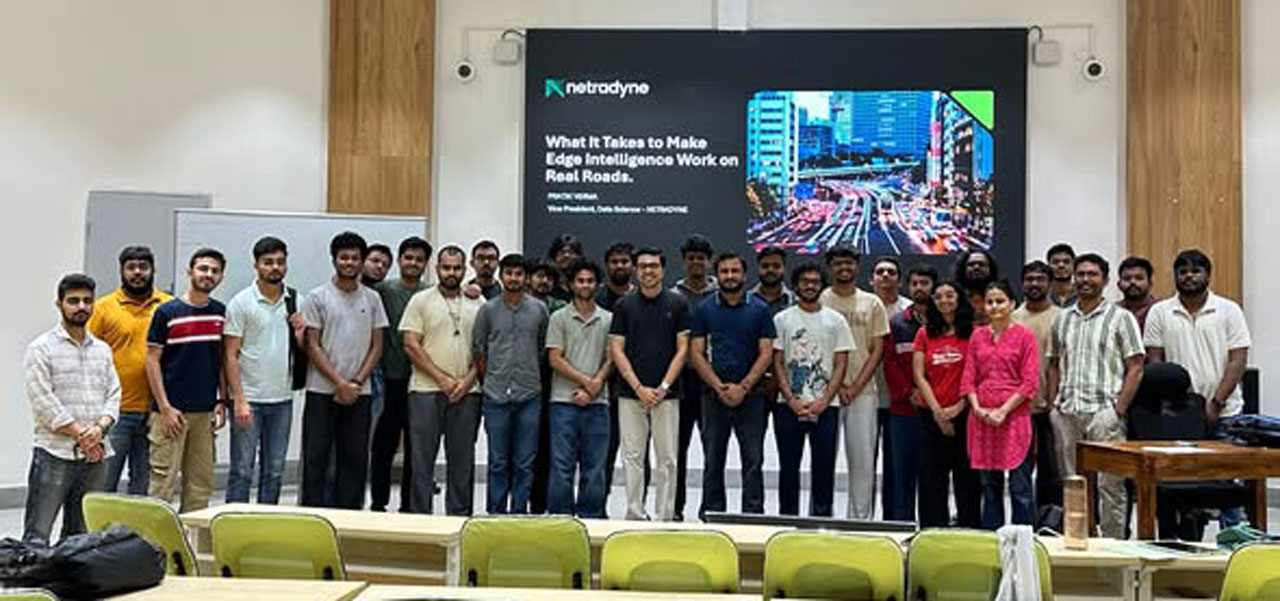
According to a recent LinkedIn post from Netradyne, the company recently participated in an academic session at IIT Hyderabad focused on the practical challenges of deploying edge AI in real‑world road environments. The event centred on how AI systems move from controlled models and simulations to large‑scale, constrained driving scenarios, where real‑time decision‑making must occur under limited compute, variable weather, and diverse traffic conditions.
The session drew strong engagement from students and faculty, who asked questions about sensor fusion, real‑time inference, data‑starved environments, and model robustness in on‑road applications. By highlighting the gap between idealised lab settings and noisy, high‑speed driving environments, Netradyne positioned itself as a practitioner of applied edge AI rather than a theoretical AI‑cloud player.
Positioning as a thought leader in applied AI
The post suggests that Netradyne is actively positioning itself as a thought leader in applied edge AI, particularly within the automotive and commercial‑vehicle space. The company’s involvement in campus discussions, live demonstrations, and technical Q&As lets it showcase how its computer‑vision and deep‑learning models run efficiently on on‑board hardware, processing video and sensor data at the edge with minimal latency.
This approach also strengthens its brand image among students and early‑career engineers who see Netradyne as a firm tackling “hard engineering problems” rather than abstract algorithmic research. In a crowded AI ecosystem, such visibility can make the company a high‑preference destination for top talent in AI, computer vision, robotics, and embedded systems.
Strategic talent acquisition and capability building
For investors, Netradyne’s emphasis on campus engagement and exposure to real‑world engineering challenges may signal a strategic focus on talent acquisition and capability building. The company appears to be investing in long‑term human capital that can support both product innovation and the scalability of its edge‑AI solutions.
By engaging with IIT Hyderabad – a leading Indian institute in computer science, AI, and embedded systems – Netradyne gains access to a pipeline of future‑ready engineers who are already familiar with edge‑computing constraints, real‑time video processing, and safety‑critical software development. If the company successfully converts campus interest into internships, pre‑placement offers, and full‑time hires, it can accelerate development cycles and reduce on‑boarding friction for new engineers joining its teams.
Growing relevance in autonomous and safety technologies
The academic session also aligns with Netradyne’s broader role in commercial‑vehicle safety, telematics, and autonomous‑driving‑adjacent technologies. The company’s edge‑AI systems typically run on dash‑mounted cameras and edge devices that continuously monitor driver behaviour, road conditions, and surrounding vehicles. Translating this into real‑world, large‑scale deployments requires robust deployment architectures, over‑the‑air (OTA) updates, and continuous model re‑training based on field data.
By engaging with future engineers and researchers at IIT Hyderabad, Netradyne appears to be building a deeper technical ecosystem around these challenges. This can lead to joint research projects, case‑study‑driven learning, and faculty‑industry collaborations, all of which can feed back into the company’s product roadmaps and R&D priorities.
Cost, scalability, and margin implications in India
The company’s focus on India‑based tech talent and partnerships with institutions like IIT Hyderabad may also have cost and scalability benefits. Access to a deep engineering talent base at relatively attractive cost structures can support margin resilience while enabling faster iterations in an asset‑intensive, compute‑heavy field like edge AI.
As edge‑AI adoption grows globally – across autonomous‑adjacent vehicles, smart cities, and industrial‑monitoring systems – having a strong India‑centric engineering team can help Netradyne scale more efficiently than players reliant solely on expensive, high‑cost‑region talent pools.
Long‑term advantages from human‑capital investment
By underscoring its commitment to “future‑ready talent”, Netradyne is investing in a sustainable competitive advantage: engineers who understand not only AI models, but also hardware constraints, fleet operations, and safety‑critical deployments. If successful, such initiatives could enhance the company’s ability to execute complex real‑world deployments, scale edge‑AI solutions across larger fleets, and deepen its position in commercial‑vehicle safety, telematics, and autonomous‑driving‑adjacent segments.
For the Indian ecosystem, the collaboration signals how global AI‑hardware companies are increasingly viewing India’s technical institutes and engineering talent as central to the next wave of applied AI and automotive‑technology innovation.
Disclaimer
The information in this article is based on available public sources and official statements as of the time of publication. While we aim for accuracy, we do not guarantee completeness or correctness. We advise readers to verify key details from official sources before making any decisions. The website (iitiimsamvaad.com) is not liable for any loss or damage arising from the use of this content. The authors are also not responsible for any such loss or damage.