
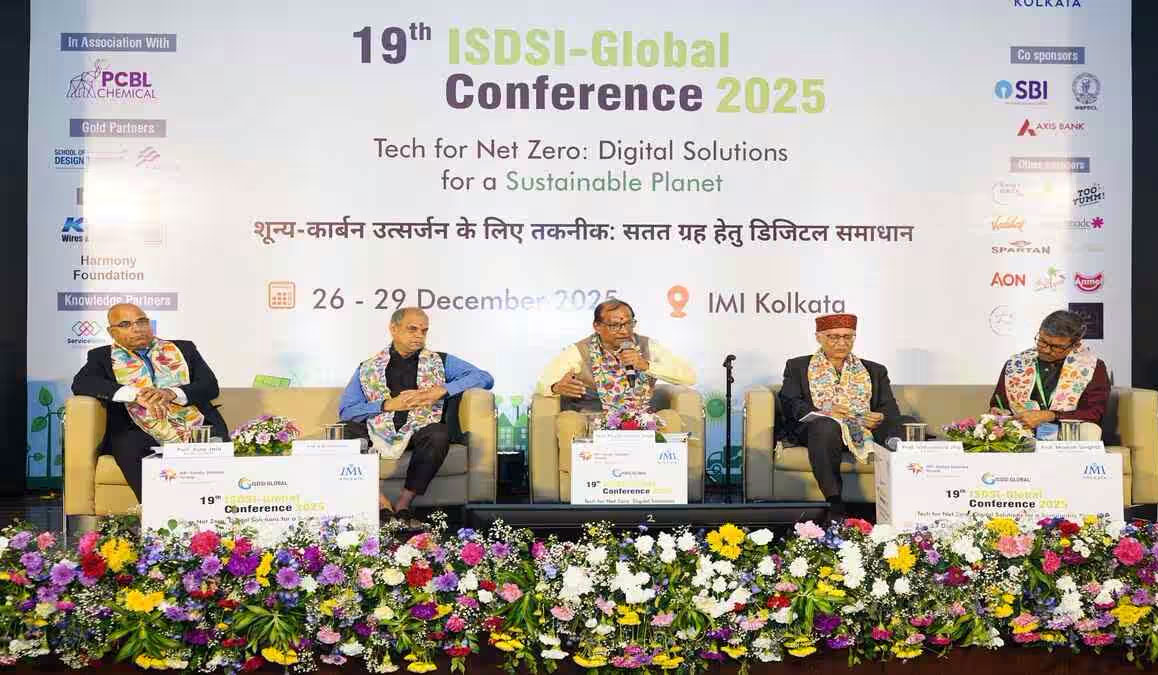
The 19th ISDSI Global Conference, hosted by IMI Kolkata, brought together India’s top B-school directors, international scholars, accreditation bodies, policymakers, CEOs, investors, and startup founders for four days of intensive dialogue. It reframed innovation, entrepreneurship, and sustainability as immediate priorities, spotlighting technology-enabled sustainability, management education’s future, and India’s path to Viksit Bharat 2047.
Unprecedented Global Participation
Drawing from 26 countries, the conference received 1,218 research papers and 220 business/startup ideas from all 21 IIMs, leading IITs, universities, business schools, and incubators. This scale cemented ISDSI’s role as one of the world’s premier management research platforms hosted in India.
High-Profile Panels and Leadership
Keynote panels featured leaders from IIM Ahmedabad, IIM Calcutta, IIM Lucknow, IIM Tiruchirappalli, IIM Ranchi, IIM Sambalpur, SPJIMR, FORE School of Management, IMT Ghaziabad, IMT Hyderabad, IIT Kharagpur (VG-SOM), and Gokhale Institute. Global scholars included Prof Angappa Gunasekaran (Penn State Harrisburg), Prof Mahesh Gupta (University of Louisville), Prof Ramachandran Natarajan (Tennessee Tech), and Prof Arun Elias (Victoria University, New Zealand). Accreditation bodies EFMD, AACSB, and AMBA-BGA added credibility. Industry voices from Damodar Valley Corporation and MP Birla Group grounded discussions in practice.
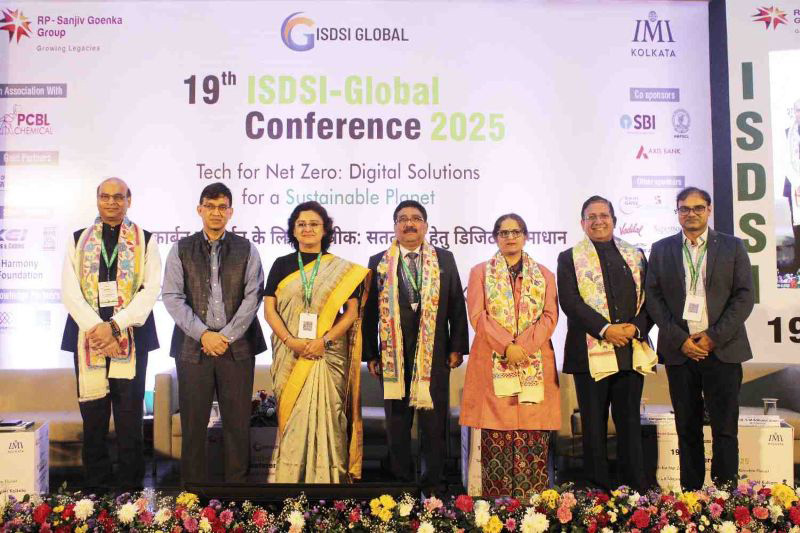
Inaugural Address Set Strategic Tone
Prof Bharat Bhasker, Director IIM Ahmedabad, opened with “Tech for Net Zero: Digital Solutions for a Sustainable Planet.” He urged India to harness technology for societal good, aligning with Viksit Bharat. Prof Bhimaraya Metri (IIM Nagpur) and Prof Mohua Banerjee (IMI Kolkata) outlined milestones alongside Conference Chair Rohit Singh and Secretary General Prof Ravi Jain.
Directors’ Panels Anchored Discussions
Two pivotal Directors’ Panels shaped the agenda. The first, on “Technology, Digitalization, and the Future of Indian MBA Education” (moderated by Amit Agnihotri, MBAUniverse.com), included IIM Calcutta, IIM Lucknow, IIM Sambalpur, IILM, IMT Ghaziabad, and LM Thapar SOM leaders. Panelists stressed learning agility and judgment amid AI disruption.
The second, “B-Schools as Engines of India’s Net-Zero Transition” (moderated by Prof Mohua Banerjee), featured IIM Ranchi, SPJIMR, FORE, IIT Kharagpur (VG-SOM), IMT Hyderabad, and Gokhale Institute. Consensus emerged on embedding sustainability across curriculum, operations, research, and industry ties.
Indian Knowledge Systems Panel
A landmark session, “Management Through Wisdom,” brought together Prof B Mahadevan, Prof Vidyanand Jha, Prof Manish Singhal, and Prof Ajay Jain (moderated by Prof Pawan Kumar Singh). They positioned ancient Indian frameworks as vital for modern leadership and organizational well-being.
Investment and Impact Outcomes
The conference launched IMI Kolkata’s Global Investment Summit, where 57 startups pitched, securing ₹5.1 crore in commitments for nine ventures after mentorship on product-market fit, fundraising, and AI strategy. Grameen NEEV, a sustainability accelerator by IKN Innovation Foundation and Grameen Foundation, was also unveiled to empower underserved communities.
Industry Keynotes and Masterclasses
Rajendran Dandapani (Zoho founding team) called for net-positive organizations. An ESG Masterclass by Rajendra Shende and Saket Sah outlined net-zero campus pathways and experiential sustainability learning.
Research Capacity Building
A Doctoral Colloquium and workshops provided structured mentoring for early-career researchers globally, reinforcing ISDSI’s research mission.
Leadership Closing Remarks
Prof Mohua Banerjee noted strengthened global ties through research and dialogue. Prof Bhimaraya Metri praised ISDSI’s research culture and thanked organizers for delivering a conference of international stature.