
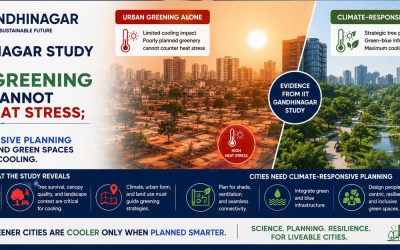
IIT Gandhinagar Study Calls for Climate‑Responsive Urban Planning
An IIT Gandhinagar study finds that urban greening alone cannot reduce heat stress; cities need climate‑responsive planning to ensure trees and green spaces deliver maximum cooling.

An IIT Gandhinagar study finds that urban greening alone cannot reduce heat stress; cities need climate‑responsive planning to ensure trees and green spaces deliver maximum cooling.

IIT Patna’s Centre of Indian Language Data (COIL‑D) initiative invites startups and corporates to help build large‑scale text and speech datasets for Hindi, Tamil, and 17 other Indian languages.
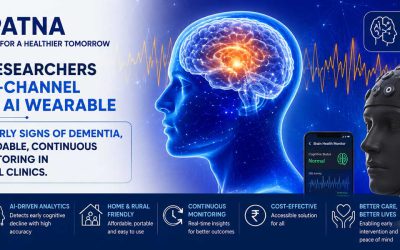
IIT Patna researchers have developed a 19‑channel EEG‑based AI wearable that detects early signs of dementia, enabling affordable, continuous cognitive monitoring in homes and rural clinics.

IIT Bombay launches an end‑to‑end CCUS pilot facility that captures CO₂, stores it geologically, and turns it into industrial raw materials, advancing India’s climate‑action ambitions.

IIT Ropar’s Defence Research and Innovation Foundation signs MoU with Dhash Defense to jointly develop indigenous all‑terrain vehicles, UGVs, and robotic combat platforms for Indian forces.
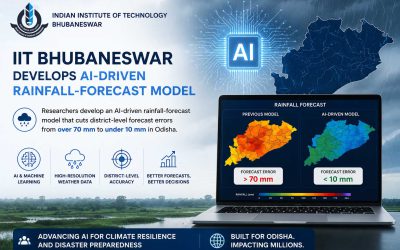
Researchers at IIT Bhubaneswar develop an AI‑driven rainfall‑forecast model that cuts district‑level forecast errors from over 70 mm to under 10 mm in Odisha.

IIIT‑Delhi researchers use AI to analyse over 118,000 recipes and identify four statistical laws that structure cooking across 26 global cuisines.
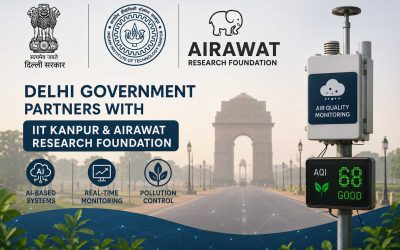
The Delhi government teams up with IIT Kanpur’s AIRAWAT Research Foundation to deploy AI‑powered tools for real‑time, hyper‑local air‑quality analysis and decision‑making.
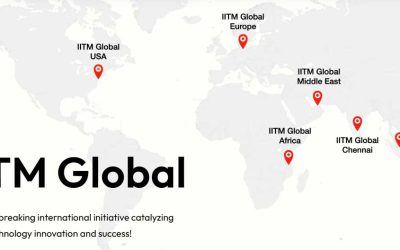
IIT Madras Global Research Foundation opens its first US centre in Menlo Park, California, to help Indian deep‑tech startups scale globally and attract global innovation into India.
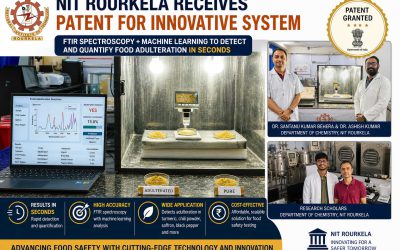
NIT Rourkela receives a patent for a system that uses FTIR spectroscopy and machine learning to detect and quantify food adulteration in seconds.