
IIIT-Bangalore joins NITI Aayog’s State Support Mission as Lead Knowledge Institution, driving AI-data science for state governance.
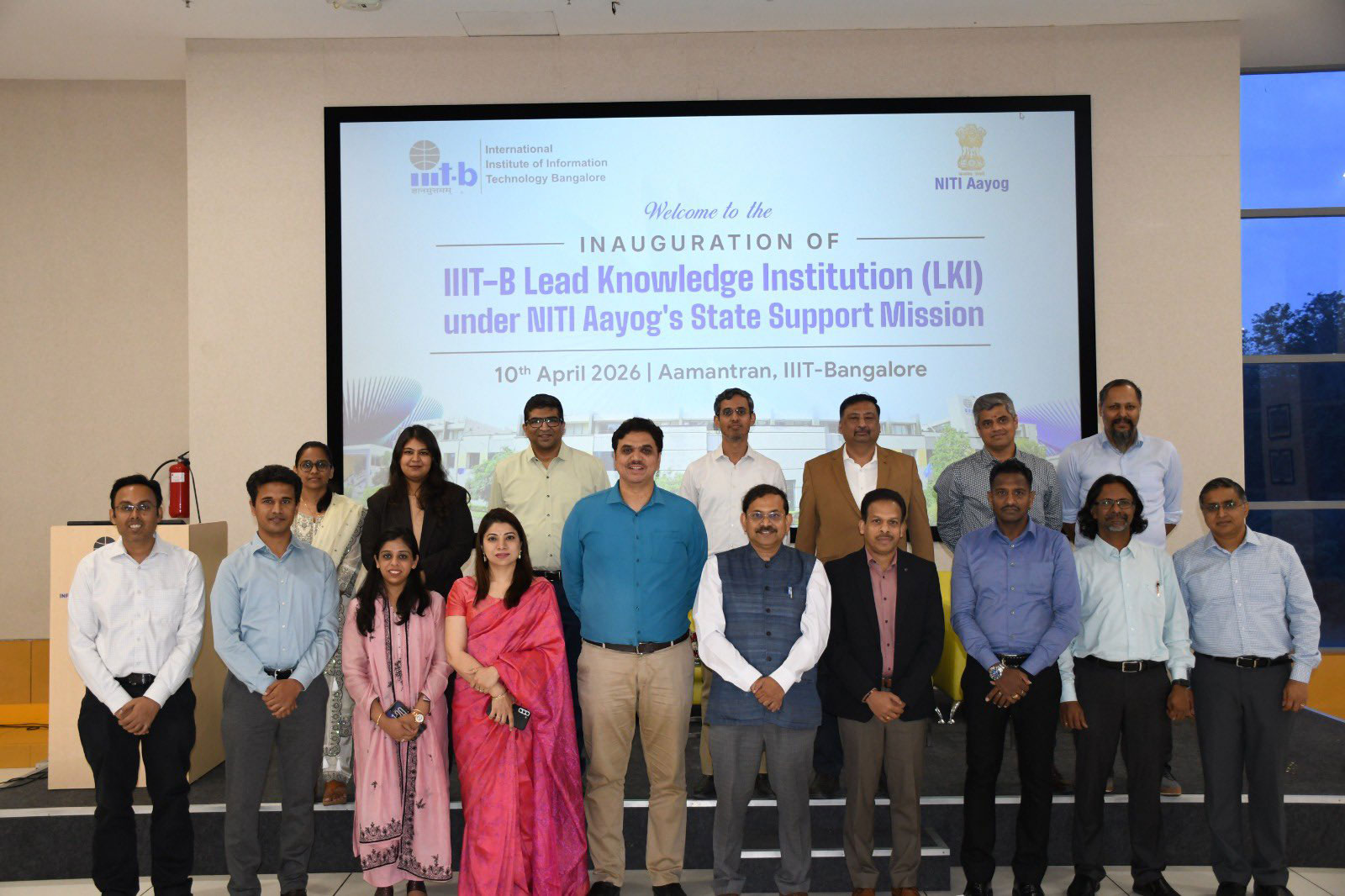
The International Institute of Information Technology Bangalore (IIIT-Bangalore) achieved a major milestone on April 10, 2026, with its formal inauguration as one of NITI Aayog’s Lead Knowledge Institutions (LKIs) under the State Support Mission (SSM). Held at the institute’s Electronic City campus, the ceremony underscores India’s shift toward data-driven governance, positioning IIIT-Bangalore’s AI and data science expertise at the heart of national development strategies.
State Support Mission: Transforming Governance
NITI Aayog’s SSM serves as an umbrella initiative fostering institutionalized partnerships between central policy frameworks and state-level execution. Launched to help States and Union Territories craft data-backed roadmaps for Viksit Bharat 2047, the mission aligns local strengths with national priorities like inclusive growth, sustainability, and digital transformation.
LKIs like IIIT-Bangalore provide specialized support in evidence-based policymaking, governance reforms, sectoral strategies, innovation ecosystems, and capacity building. Joint Secretary and Mission Director K.S. Rejimon emphasized collaborative impact: “LKIs mobilize domain expertise alongside states and NITI Aayog to achieve socioeconomic objectives.”
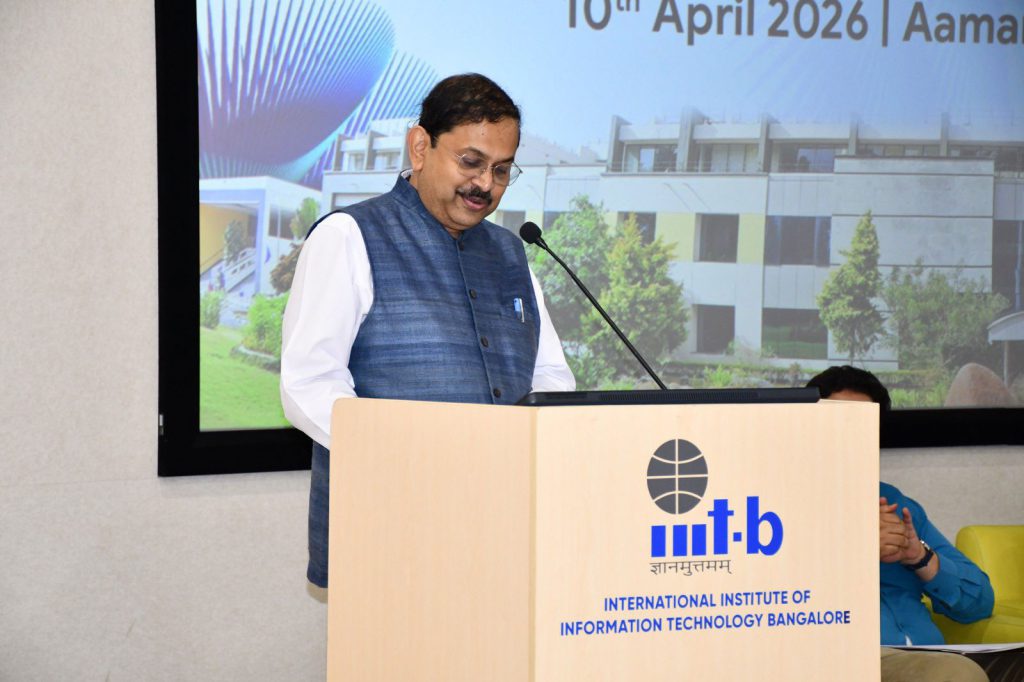
Director S. Kalal elaborated on ecosystem building: “Structured partnerships connect academia, students, and practitioners to public policy challenges, injecting fresh ideas into governance.”
IIIT-Bangalore’s Strategic AI Role
IIIT-Bangalore brings world-class capabilities in Data Science, Artificial Intelligence, and computational modeling to SSM. Dean R&D Prof. Srinath Srinivasa highlighted intervention science for complex systems: “Societal challenges involve interdependencies where changes trigger cascading effects. We develop frameworks to model stability, ensuring data-driven interventions yield sustained outcomes.”
Director Prof. Debabrata Das affirmed commitment: “Technology transforms governance. As an LKI, we’ll deliver actionable insights through advanced analytics for inclusive, sustainable development.”
The institute’s strengths – NIRF 2025 rank 69, NAAC A+ grading, cutting-edge labs – equip it perfectly for this mandate. Specialized programs in CSE, ECE, DSAI, and Digital Humanities position IIIT-Bangalore to tackle real-world policy puzzles, from urban planning to agricultural optimization.
Ceremony Highlights Strategic Vision
Prof. Das welcomed dignitaries, setting a collaborative tone. Chief Guest K.S. Rejimon officiated the inauguration, praising IIIT-Bangalore’s entry into the LKI network. S. Kalal outlined SSM’s broader NITI Aayog mandate, welcoming the institute as a key partner in state capacity enhancement.
Discussions focused on practical applications: AI for resource allocation, predictive analytics for disaster management, and machine learning for equitable service delivery. Faculty showcased ongoing projects like causal inference models and federated learning for privacy-preserving policy simulations.
Bridging Academia and Policy Challenges
IIIT-Bangalore’s LKI role bridges computational research with public policy. Unlike traditional think tanks, it emphasizes scalable tech interventions: agent-based simulations for economic reforms, NLP for citizen feedback analysis, and graph neural networks for supply chain resilience.
This aligns with NEP 2020’s multidisciplinary push and complements peers like IIT Delhi’s public systems programs. Early collaborations target southern states – Karnataka’s AI mission, Kerala’s health analytics – scaling northward via NITI’s federal structure.
Student involvement amplifies impact: capstone projects now feed SSM roadmaps, while hackathons address state-specific SDGs. Industry ties with Infosys, Wipro in Electronic City provide live datasets and validation.
National Ecosystem and Future Roadmap
SSM’s LKI network – spanning 10+ institutions – creates a decentralized think tank ecosystem. IIIT-Bangalore leads DSAI verticals, partnering IITs/NITs on domain expertise. NITI Aayog facilitates joint workshops, data sandboxes, and policy labs.
Phase 1 targets 15 states with AI roadmaps by 2027: digital agriculture in MP, urban mobility in TN, skill mapping in UP. IIIT-Bangalore pilots causal AI dashboards for real-time policymaking, reducing decision latency from months to days.
Prof. Srinivasa envisions “intervention science as governance’s new frontier,” modeling trade-offs in multidimensional reforms. Prof. Das eyes global benchmarks: “Singapore’s Smart Nation, Estonia’s e-governance – India scales smarter through data ecosystems.”
IIIT-Bangalore: Deemed University Excellence
Established in 1998 as a public-private partnership, IIIT-Bangalore pioneered IT-focused education. Its Electronic City location fosters unmatched industry synergy – 100% placements averaging ₹30+ LPA, alumni at Google, Microsoft, McKinsey.
Research thrusts span AI ethics, societal systems, cybersecurity. State-of-the-art infrastructure includes NVIDIA DGX clusters, IoT testbeds. Experiential curricula – live projects, internships – produce job-ready graduates tackling Industry 5.0 challenges.
NIRF 69 ranking reflects ascent; NAAC A+ validates quality. Vibrant alumni fuel mentorship, funding startups via IIIT-B Ventures.
Implications for Viksit Bharat 2047
IIIT-Bangalore’s LKI designation accelerates India’s policy-tech fusion. States gain predictive tools for budget allocation, crisis response, inequality metrics – transforming federalism into a data commonwealth.
By 2030, SSM aims for AI-embedded governance across 28 states: personalized education via DSAI, predictive healthcare, climate-adaptive agriculture. IIIT-Bangalore’s interventions could unlock ₹10 lakh crore in economic value through optimized policies.
This inauguration signals academia’s pivot from silos to service. As Prof. Das noted, “Data science powers inclusive growth.” IIIT-Bangalore leads NITI’s mission – evidence-based, tech-driven, Bharat-centric – shaping tomorrow’s governance today.
Disclaimer
The information in this article is based on available public sources and official statements as of the time of publication. While we aim for accuracy, we do not guarantee completeness or correctness. We advise readers to verify key details from official sources before making any decisions. The website (iitiimsamvaad.com) is not liable for any loss or damage arising from the use of this content. The authors are also not responsible for any such loss or damage.