
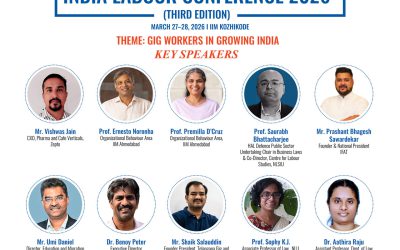
IIM Kozhikode Hosts Third Labour Conference
IIM Kozhikode’s third India Labour Conference spotlights gig workers, urging fair practices in India’s digital economy amid flexibility paradoxes and low wages.


IIM Kozhikode’s third India Labour Conference spotlights gig workers, urging fair practices in India’s digital economy amid flexibility paradoxes and low wages.
IIT Bombay researchers Prof Ruchi Anand and Prof P I Pradeepkumar developed DNA aptamers – short synthetic nucleic acid strands – to block bacterial resistance enzymes, resensitizing drug-resistant pathogens to existing antibiotics. Unlike developing new drugs, this practical approach leverages known antibiotic safety profiles while addressing the global antimicrobial resistance crisis through stable, modifiable aptamers.

The 2026 class of CAS Future Leaders, a prestigious leadership and career‑development programme run by CAS (a division of the American Chemical Society), includes a strong contingent of Indian‑born and Indian‑origin scientists. The 31 early‑career researchers, selected from top PhD and postdoctoral programmes worldwide, will participate in an intensive training initiative culminating at the ACS Fall 2026 meeting in Chicago.
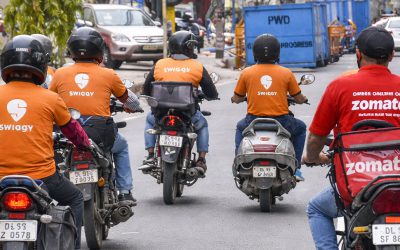
Labour oversupply, fragmented workforces, and algorithmic control enable gig platforms to absorb strikes quietly, revealing a growing power imbalance between app‑based companies, their workers, and India’s evolving labour laws. Even when delivery partners stage city‑wide protests, platforms can maintain service levels without overt confrontation, underscoring how structural advantages shield companies from accountability.
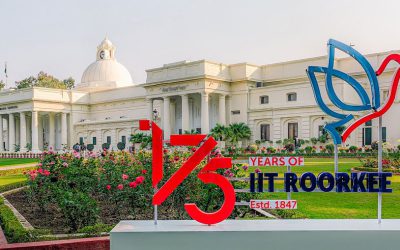
The Indian Institute of Technology Roorkee successfully hosted the AHEAD2025 International Conference on Healthcare and Development, bringing together leading scholars, policymakers, economists, and practitioners from India and abroad to address critical challenges in health systems and development. The event, organised by the AHEAD Lab at IIT Roorkee, was accompanied by a five‑day capacity‑building workshop on large‑scale data analytics in health and well‑being, underscoring the institute’s role as a knowledge partner in evidence‑based policymaking.

IIM Bangalore’s startup and entrepreneurship centre, NSRCEL, has spent over a decade refining its incubation model, evolving from a mentor‑led hub into a more structured engine for early‑stage innovation. At the same time, India’s deeptech ecosystem is gaining momentum, with venture capital commitments expected to deepen in 2026 as investors increasingly back science‑driven startups.
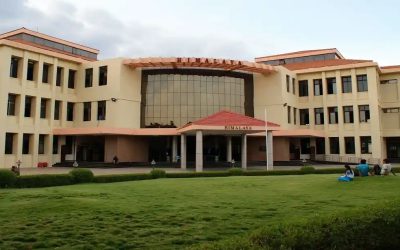
IIT Madras has established a pioneering Centre for Advanced Research on Spirituality, Science and Society, funded by Rs. 5 crore contribution from alumnus and spiritual leader Sant Rajinder Singh Ji Maharaj. The interdisciplinary hub will explore meditation’s scientific impacts, consciousness studies, and societal well-being, integrating science, humanities, medicine, and architecture to advance global research on human health and spiritual experiences.
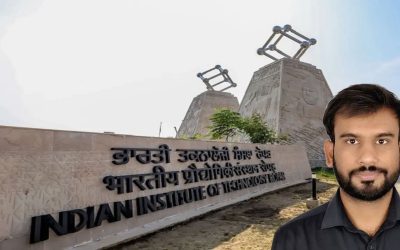
The Indian Institute of Technology Ropar has appointed Nikhil Swami as its Public Relations Officer to strengthen its media outreach and elevate the institute’s brand visibility in India and abroad. With over six years of experience in communications, Swami is expected to amplify IIT Ropar’s achievements and institutional narrative through strategic media engagement.
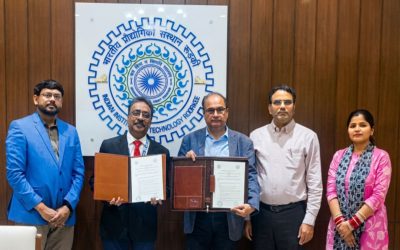
The National Institute of Technology Jamshedpur has signed a memorandum of understanding with IIT Roorkee to deepen academic and research ties between the two premier technical institutions. The agreement aims to foster joint research projects, shared supervision of PhD students, and enhanced exchange opportunities for students and faculty.
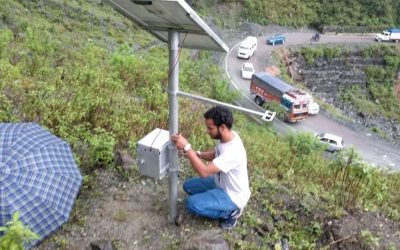
A low‑cost early warning system developed by IIT Mandi’s Professor Kala Venkata Uday can predict landslides up to three hours in advance with over 90% accuracy. Installed across 60 sites in Himachal Pradesh, the AI‑powered device uses sensors and machine learning to detect subtle slope movements and trigger timely alerts for at‑risk communities.