

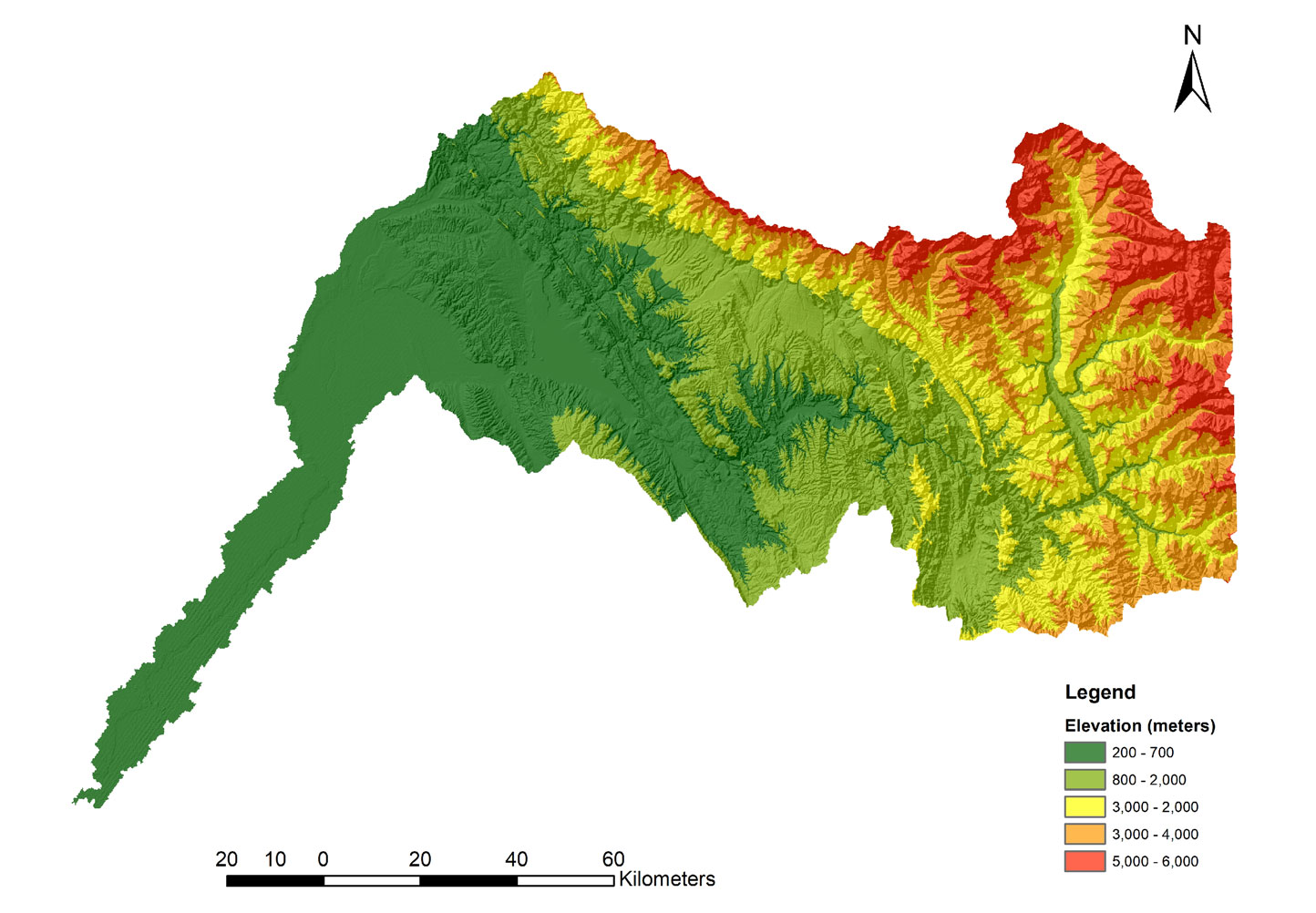
Scientists at IIT Mandi have conducted a groundbreaking study on the Beas Basin. This study helped in pinpointing zones of high groundwater potential and forecasting areas prone to worsening water scarcity ahead. Employing advanced remote sensing and GIS techniques, the team segmented the basin into precise groundwater categories. This helped in yielding a vital map to inform policy and resource strategies.
Groundwater Zones
The western Beas Basin emerges as the richest in groundwater, encompassing Kangra district, Dehradun, Gopipur, Jwalamukhi, Jawali, Nurpur, Pong Dam vicinity, lower Dharamshala, and Una border – marked as very high to high availability with robust recharge prospects.
Central regions like Mandi district, Balh Valley, Sundernagar, and Jogindernagar register moderate levels, stable now but needing vigilant oversight to avert depletion.
Eastern hilly zones including Kullu, Manali, Banjar, Ani, upper Mandi, and Rohtang Pass Himalayas show low to very low availability, with projections signaling intensified shortages absent interventions.
Study Details
Led by IIT Mandi’s School of Civil and Environmental Engineering – faculty Derix P. Shukla, Deepak Swami, and researcher Utsav Rajput – the work appears in Environmental Earth Sciences, featuring a 2022 groundwater map.
Analysis spanned 2012-2021 rainfall plus land use, slope, elevation, geology, soil, and drainage via satellite remote sensing. It also used GIS multi-factor overlay, and predictive modeling.
Method and Impact
This cost-effective, rapid approach skips new gear, suiting vast terrains for nationwide use in conservation, recharge, and management by officials.