
Indian Researchers Solve 70-Year Ferrocene Puzzle
IIT Madras and IISc Bengaluru researchers have synthesized a carbon-free molecule with a ferrocene-like sandwich structure, solving a 70-year chemistry challenge using osmium and boron rings.







IIT Madras and IISc Bengaluru researchers have synthesized a carbon-free molecule with a ferrocene-like sandwich structure, solving a 70-year chemistry challenge using osmium and boron rings.

IIT Roorkee researchers identified antiviral compounds in cow urine distillate reducing Chikungunya viral load by 99.85 percent, publishing findings in ACS Agricultural Science & Technology for affordable Ayurveda-inspired therapeutics.
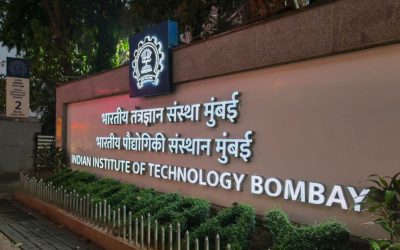
A year after launching reforms in its teaching‑learning methods, IIT Bombay is now preparing to revamp its conventional assessment practices. The institute aims to recognise diverse kinds of learners and talents while ensuring that its grading system continues to support students’ placement prospects.

ANRF has selected 10 institutions, including IITs, NITs, and IIMs, to host Convergence Research Centres tackling archaeology, AI, rural development, digital humanities, and sustainable livelihoods through multidisciplinary collaboration.

Led by Prof. Jayanarayanan Kuttippurath and his team at the Centre for Ocean, River, Atmosphere and Land Sciences (CORAL), the research highlights the vulnerability of wheat, rice, and maize – India’s and the world’s primary food grains – to rising ozone levels.

IIT Gandhinagar’s workshop brings policymakers and experts together to design climate-resilient cities through integrated planning, sustainable infrastructure and stronger urban governance.

IIT Roorkee’s PSP study guides policy and investment for pumped storage hydropower to enable renewable integration and grid stability.

Researchers from the Indian Institute of Technology Kharagpur, in collaboration with the Physical Research Laboratory, have uncovered new insights into the Moon’s deep interior by studying ancient iron‑ and titanium‑rich rocks believed to be 4.3–4.4 billion years old. The work, grounded in high‑pressure laboratory experiments, not only helps solve a long‑standing lunar puzzle but also stands to inform the design and scientific goals of India’s upcoming Chandrayaan‑4 sample‑return mission.

IIT Kanpur researchers unveil Renoir, a new computational tool that maps how cell‑to‑cell signalling shapes gene activity in spatial context, accelerating cancer and developmental research.

Indian Institute of Management (IIM) Sambalpur hosted the World Water Day 2026 celebrations, organised by Youth4Water‑India, with the theme “Our Water Bodies, Our Pride.” The event focused on raising awareness about water conservation and climate action through youth‑led initiatives and community engagement.